Featured Heavy-Duty Racking Systems for Kiwi Warehousing
Precision-machined structural steel, heavy-duty carton flows, and high-density narrow aisle systems designed to withstand demanding dynamic loads and Southern Pacific seismic zone challenges.
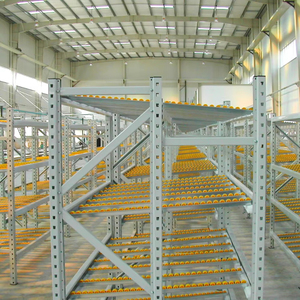
Picking Flow Racking Carton Flow Rack Logistics Storage Racks Roller Racking
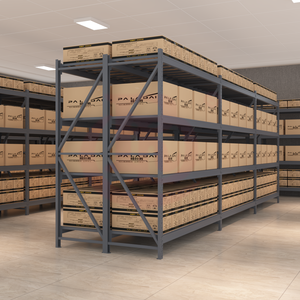
Heavy Duty Mobile Thickened 5 Layer Adjustable Cold-Rolled Steel Pallet Rack
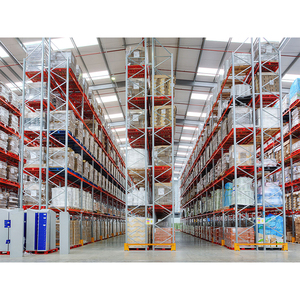
Industrial Heavy Duty Metal Warehouse Shelving System Adjustable Steel Storage Rack
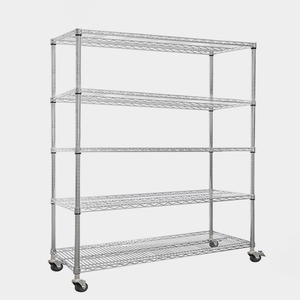
Racks Heavy Duty Metal Steel Storage Shelves 5 Layer Wire Shelf Racks
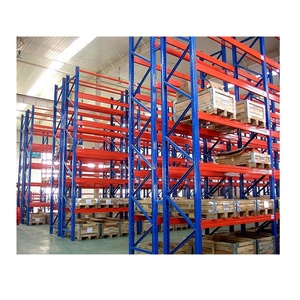
Longspan Shelving Rack High Bay Narrow Aisle Selective Pallet Racking
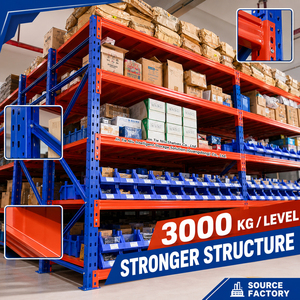
3000KG Per 5 Layers Heavy Load Storage Shelving With Steel Panels
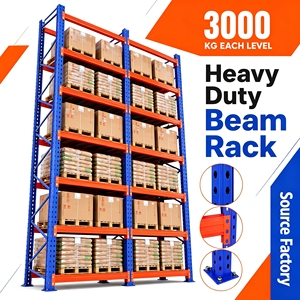
Factory Direct 3000kg High Load Metal Pallet Racking Industrial Steel Rack
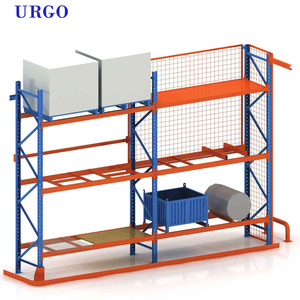
Very Narrow Aisle Pallet Rack / VNA Heavy Duty Racking System
Navigating Seismic Engineering & Bin Storage in New Zealand
Why standard overseas catalogue racking fails Kiwi building consents, and how purpose-engineered steel storage mitigates catastrophic rack shed collapse during major seismic events.
The Geotechnical Reality of Aotearoa Warehousing
Warehouses across New Zealand operate in one of the most geologically dynamic regions on earth. From the strike-slip fault networks traversing the Wellington fault line to the deep alluvial gravels and liquefaction zones of the Canterbury Plains, racking cannot simply be treated as furniture; it is an engineered building structure regulated under the New Zealand Building Act 2004.
Following the 2011 Christchurch earthquakes and the 2016 Kaikōura event, standards bodies radically overhauled storage expectations. The publication of AS/NZS 4084:2023 (Steel Storage Racking) codified rigorous mandatory limits on upright displacement, ductileness ratios, connection stiffness, and baseplate anchorage performance under cyclic seismic shear stresses.
As a trusted direct exporter to New Zealand, our engineering office pairs nearly seven decades of structural manufacturing authority with localized FEA (Finite Element Analysis) site calculations. We calculate the exact spectral acceleration factors based on your facility's territorial authority (TA) zoning, soil class (from Class A Hard Rock to Class E Very Soft Soil), and building importance levels (IL2 vs IL3 logistics hubs).
Application Scenarios Across New Zealand's Primary Sectors
Configured specifically for the unique ambient, mechanical, and logistical realities of New Zealand supply chains.
South Auckland & Waikato "Golden Triangle" Distribution
Surging industrial land rents in Drury, Highbrook, and Wiri have driven modern 3PLs upward. Our high-bay selective pallet racking and narrow-aisle configurations allow facilities to utilize clear ceiling heights of up to 13.5 meters. Equipped with heavy-gauge roll-formed uprights and stepped beams, these systems handle continuous high-throughput carton sorting for national retail chains.
Canterbury Cold Chain & Primary Dairy Exporters
From Hornby to Rolleston, South Island cold storage units maintain -25°C environments for butter, beef, and horticultural exports. At sub-zero temperatures, standard steel risks embrittlement. Our hot-rolled structural steel channel and high-ductility cold-rolled profiles retain structural toughness, paired with dense drive-in and pallet flow roller designs that resist intense forklift shunting.
Hawke’s Bay & Marlborough Viticulture / Orchards
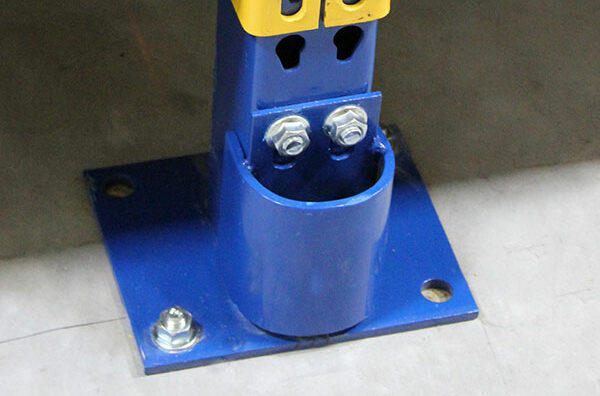
Bulk grape, apple, and kiwifruit harvesting demands rugged bin storage racking capable of carrying stacking weights of up to 3000kg per bay. During harvest peak, forklift traffic is relentless. Our systems integrate heavy bolt-on straddle column protectors, heavy baseplate anchors, and heavy-gauge open-wire mesh decking that accommodates variable plastic and timber crate geometries.
Structural Channel Rack vs. Roll-Formed Steel: The NZ Decision Matrix
Engineered comparison for warehouse managers balancing capital expenditure against seismic impact resistance.
| Structural Attribute | Roll-Formed Teardrop / Slot Rack | Structural C-Channel Bolted Rack | Kiwi Engineering Code Implication |
|---|---|---|---|
| Steel Yield Strength | High-Tensile Cold-Rolled Q235B / Q355B (355 MPa) | Hot-Rolled Structural Steel ASTM A36 / Q235 (250 MPa) | Governed by AS/NZS 4600 (Cold-Formed) vs NZS 3404 (Structural) |
| Seismic Plastic Ductility | Moderate Ductility (μ ≈ 1.5 - 2.0) | High Ductility (μ ≥ 2.5) | NZS 1170.5 requirements for Wellington & Christchurch Zone 1 |
| Forklift Impact Tolerance | Lower; requires heavy wraparound column guards | Ultra-High; resists repeated heavy knocks | Mandatory WorkSafe NZ rack damage reporting criteria |
| Aisle Reconfigurability | Rapid tool-less 50mm / 75mm beam adjustment | Bolted connection; requires manual torque check | High agility for mixed-SKU FMCG distributors |
| Floor Slab Thickness Minimum | 150mm - 180mm reinforced concrete | 200mm+ with deep anchor embedment (120mm+) | Critical for preventing slab punch & edge shear blowouts |
| Marine & Moisture Corrosion Resistance | Automated high-durability electrostatic powder coat | Hot-Dip Galvanized (HDG) or heavy epoxy paint | Required for coastal uninsulated packhouses (Port of Tauranga) |
Local Market Trends Driving Industrial Storage Procurement
The confluence of safety governance, real estate pressure, and automated supply chain architecture across New Zealand.
1. Rigorous Producer Statement Enforcement (PS1 / PS4)
New Zealand city councils (Auckland Council, Christchurch City Council, Hutt City) no longer approve warehouse consents on generic manufacturer load tables. Every major racking installation now requires an authorized Producer Statement 1 (PS1 - Design) from a registered Chartered Professional Engineer (CPEng), followed by a PS4 (Construction Review) signoff. We export comprehensive calculation packs, weld certifications, and material test reports (MTRs) to fast-track Kiwi engineering signoffs.
2. WorkSafe New Zealand Rack Safety Culture
Under the Health and Safety at Work Act 2015 (HSWA), company directors face strict personal liability for warehouse hazards. This has led to the death of unregulated, unbranded pallet racks in the commercial sector. Kiwi logistics directors demand certified Safe Working Load (SWL) signage on every beam row, high-visibility end-of-aisle crash barriers, and engineered bolt-on repair systems that restore damaged upright capacity without unstacking the entire warehouse bay.
3. Transition to Automated Storage & Retrieval (AS/RS)
Labor scarcity across regional New Zealand has accelerated investments in automated mini-load systems, autonomous mobile robots (AMRs), and high-density carton flow rollers. Our precision-engineered bin storage modules maintain manufacturing tolerances down to ±1.0mm over 10-meter runs, ensuring automated crane shuttles and turret trucks execute flawlessly without mechanical binding or sensor disruption.
Engineering Pedigree Trusted by Global Fortune 500 Enterprises
Leveraging nearly seven decades of heavy-duty storage manufacturing, world-class paint automation, and end-to-end containerized export workflows.
Certified Compliance: RMI & AS/NZS Dual-Engineering
Unlike regional trade brokers, our facilities manufacture in full alignment with both current Rack Manufacturers Institute (RMI / ANSI MH16.1) and AS/NZS 4084 standards. Every cold-rolled coil and structural beam section undergoes tensile yield verification, ensuring true load ratings and predictable seismic behavior under high cycling.
Automated Multi-Million-Dollar Powder-Coat Lines
Our proprietary electrostatic powder-coating lines produce an ultra-tough, pinhole-free finish that withstands the high humidity and coastal maritime air characteristic of New Zealand port cities. Enhanced chemical pre-treatment and thermal curing prevent rust creep under scratched surfaces.
Comprehensive Export Project Management
Exporting to New Zealand requires meticulous logistics discipline. Our dedicated project management teams handle everything from CAD layout optimization to precision container stuffing. We utilize bespoke steel bundling frames that protect beam lock-tabs during sea transit, reducing port handling damage to zero.
Engineered In-Situ Bolt-On Repair Systems
When low-height forklift collisions occur, replacing entire upright frames introduces immense operational downtime. We engineer certified bolt-on structural repair kits that allow certified technicians to restore upright capacity safely in place, conforming directly to international rack maintenance guidelines.
Frequently Asked Questions for New Zealand Procurement Teams
Critical technical clarifications regarding compliance, biosecurity, seismic engineering, and installation across North and South Islands.
Do your heavy-duty bin racking systems comply with the updated AS/NZS 4084:2023 standard?
Yes. All racking exported to the New Zealand market is specifically fabricated to meet or exceed AS/NZS 4084:2023 (Steel Storage Racking) specifications. We perform both physical prototype testing and advanced finite element analysis (FEA) to verify upright torsional rigidity, beam-to-column connector shear performance, and baseplate uplift resistance under dynamic cyclic loadings.
Can you assist our New Zealand consulting engineers with PS1 and PS4 Building Consent Documentation?
Absolutely. While the official Producer Statement 1 (PS1 - Design) and Producer Statement 4 (PS4 - Construction Review) must be signed off by a chartered CPEng engineer registered in New Zealand, we provide the complete structural calculation package. This includes raw steel mill certificates, section properties, beam load deflection curves, baseplate anchor shear/pullout values, and 3D CAD models to streamline local council consent approvals.
How do you engineer for the drastic seismic variations between Auckland and Wellington/Christchurch?
New Zealand's seismic hazard coefficient varies dramatically—Auckland has a relatively low hazard factor (Z ≈ 0.13), whereas Wellington (Z ≈ 0.40) and parts of Canterbury require extreme ductility considerations. We customize the steel profile thickness, upright frame depth, horizontal/diagonal bracing patterns, and anchor bolt embedment depths (often upgrading from single mechanical anchors to dual chemical epoxy anchors) to match the site-specific spectral acceleration demands.
What biosecurity and packaging protocols do you follow for clearance through Ports of Auckland and Tauranga?
The New Zealand Ministry for Primary Industries (MPI) enforces some of the world's strictest biosecurity controls. We ship all heavy racking on certified ISPM-15 heat-treated timber dunnage or 100% all-steel shipping skids to eliminate phytosanitary risks. All ocean containers are thoroughly inspected, vacuumed, and fumigated prior to sealing, ensuring fast container devanning without costly port quarantine delays.
What is the difference between standard pallet racking and heavy-duty bin storage racking?
While standard pallet racking utilizes open beam pairs designed for timber Chep pallets (1200x1000mm), heavy-duty bin storage racking incorporates specialized drop-in steel panels, heavy wire decks, or gravity roller beds. This allows the system to support concentrated point-loads from heavy plastic produce bins, steel tote boxes, and fluid containment crates without risking localized deck deflection or dislodgement.
What are the recommended slab thickness requirements for high-load installations in NZ?
For installations where frame loads exceed 8,000kg to 12,000kg, a minimum reinforced concrete slab thickness of 165mm to 200mm (with a minimum compressive strength of 30-35 MPa) is typically required to develop adequate anchor embedment and prevent concrete shear cone failure. Our engineering office provides customized baseplate layout schematics showing exact reaction forces per post to allow your structural engineer to verify slab capacity.
Ready to Optimize Your New Zealand Facility with Certified Racking?
Speak directly with our heavy-duty storage engineering team. From CAD warehouse layouts and seismic structural reports to seamless ocean freight delivery into Lyttelton, Tauranga, or Auckland—we deliver safety, capacity, and longevity.