Heavy Duty Pallet Storage Systems Engineered for New York Distribution
Constructed from high-tensile structural channel and premium cold-rolled steel coil. Direct factory fabrication specified for high-throughput distribution hubs across Long Island, New York City Metro, and Upstate freight corridors.
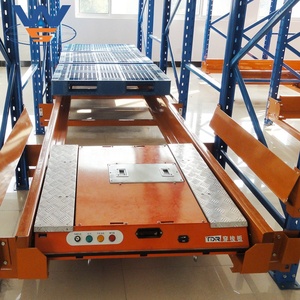
Automated Radio Shuttle Car Logistics Industrial Shuttle Car Radio-Controlled Pallet Shuttle
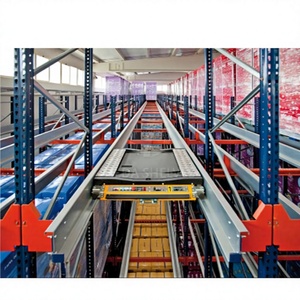
Heavy-Duty Adjustable Radio Warehouse Pallet Shuttle Racking System 1000-1500kg Load Capacity
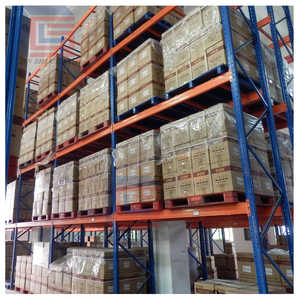
Industrial Heavy Duty Steel Pallet Rack Warehouse Shelving System for Storage & Distribution
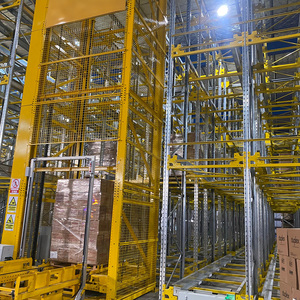
High-Density Shuttle Rack System Asrs 4 Way Shuttle Racking Heavy Duty Pallet Shuttle
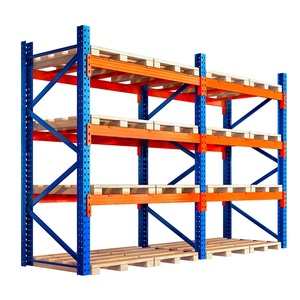
Industrial Heavy Duty Storage Shelves Systems Stacking Units Metal Rack Pallet Racking
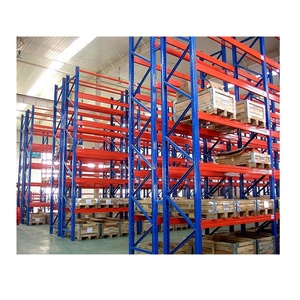
Longspan Shelving Rack High Bay Industrial Shelves Heavy Duty Metal Selective Pallet Racking
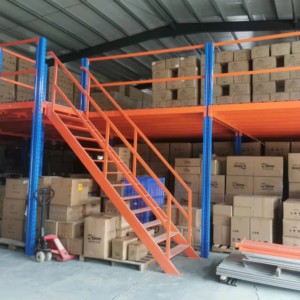
Modular Detachable Mezzanine Rack Q235 Steel Factory Garret Inventory Storage System
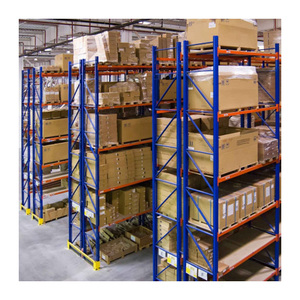
China Rack Factory Manufacturer Custom Warehouse Heavy Duty Pallet Racking Storage Shelf
Semantic Search & Structural Architecture: Wide Aisle (WA) Racking Mechanics
An authoritative technical analysis of wide aisle selective storage frameworks, structural capacity calculations, and material handling optimization across New York industrial centers.
1. Geometric Configuration and Reach Mechanics
In modern logistics architecture, Wide Aisle (WA) Pallet Racking—frequently classified as standard selective pallet racking—remains the global benchmark for distribution facilities requiring 100% immediate pallet selectivity. Characterized by aisle clearances ranging typically between 11.5 feet and 13.5 feet (3.5m to 4.1m), wide aisle systems are dimensioned specifically to allow standard counterbalance sit-down forklifts, reach trucks, and order pickers to navigate and perform 90-degree right-angle stack maneuvers without guided rail or inductive wire infrastructure.
While Very Narrow Aisle (VNA) configurations compress aisle clearances down to 5.5–6.5 feet to maximize spatial cubic density, they impose substantial capital expenditure on articulating turret trucks or automated guided systems. For high-velocity distribution centers operating throughout the New York tri-state metropolitan area, wide aisle selective systems deliver the highest throughput per hour. Standard wide aisle layouts eliminate the bottleneck of single-vehicle aisle occupancy, permitting simultaneous multi-truck operations, bidirectional traffic routing, and rapid cross-dock replenishment without specialized material handling equipment (MHE).
2. Material Metallurgical Specifications: Structural Channel vs. Roll-Formed Steel
Specifying pallet racking for heavy-duty applications serving New York necessitates an empirical understanding of structural chemistry and manufacturing geometry. Roll-formed rack uprights are produced from continuous coils of high-strength sheet steel (ASTM A1011 or equivalent grade 50 structural steel), cold-formed into omega or open-back tubular shapes featuring slotted or teardrop punch patterns. Roll-formed racking provides rapid modular adjustability on 2-inch increments, exceptional cost-to-weight ratios, and accelerated field assembly.
Conversely, for harsh operations—such as food distribution centers in Hunts Point (Bronx), chemical manufacturing facilities in Syracuse, or severe cold-storage environments in upstate New York—Hot-Rolled Structural C-Channel Steel (ASTM A36 / ASTM A572 Grade 50) offers superior structural integrity. Structural racking features bolted beam-to-frame connections with high-strength ASTM A325 fasteners. The heavier flange thickness of structural steel provides elevated torsional resistance and substantially higher impact tolerance against forklift impact, mitigating catastrophic progressive collapse risks.
| Performance Characteristic | Roll-Formed Selective Racking | Hot-Rolled Structural Racking | High-Density Shuttle Racking |
|---|---|---|---|
| Typical Aisle Width (Counterbalance) | 11.5 ft – 13.0 ft (Wide Aisle) | 12.0 ft – 13.5 ft (Heavy Duty WA) | 8.0 ft – 10.0 ft (Transfer Aisles) |
| Pallet Selectivity | 100% Instantaneous | 100% Instantaneous | LIFO / FIFO Lane Access |
| Column Gauge / Wall Thickness | 12 to 14 Gauge (0.075" – 0.105") | Structural Channel (0.200" – 0.350") | 11 to 13 Gauge Roll-Formed Profiles |
| Forklift Impact Resistance | Moderate (Demands post protectors) | Superior (Resilient to direct blows) | Protected within outer entry bays |
| Beam Connection Type | Teardrop / Slotted Rivet with Lock Pin | Grade 5 / Grade 8 Bolted End Plates | Continuous Guide Rails on Uprights |
| Optimal Application Environment | Retail, E-commerce, General Dry Goods | Cold Storage, Heavy Industrial, Beverage | High SKU Consolidation, Deep Buffer |
| Upright Height Capability | Up to 35–40 ft clear | Up to 45–50 ft clear high-bay | Configurable to facility clear ceiling |
Localized Application Scenarios Across New York Industrial Submarkets
Deploying wide aisle and engineered pallet racking within New York requires precise adaptation to zoning constraints, legacy warehouse footprints, multi-story urban logistics, and severe ceiling heights.
Brooklyn, Queens, Bronx & Staten Island
Characterized by premium industrial lease rates exceeding $25-$35/sq. ft. and multi-story logistics prototypes (e.g., Sunset Park, Maspeth, Hunts Point). High reliance on wide aisle racking configured with integrated mezzanine tiers.
- FDNY Title 29 High-Piled Storage Rules
- Multi-tier pick modules for split-case retail
- Tight column grids requiring custom bay spans
- Last-mile rapid parcel sorting integration
Nassau & Suffolk Counties
Hub for pharmaceutical distribution, aerospace manufacturing, medical consumables, and aerospace components along the Long Island Expressway (I-495). Facilities demand clean-room-grade powder-coated wide aisle frameworks.
- Strict cGMP cleanliness & non-shedding paint
- Adjustable beam heights for variable pallet heights
- Wire mesh decking for overhead sprinkler flow
- Heavy-duty cantilever integration for bar stock
Orange County, Newburgh & Albany
Mega-distribution centers serving the entire Northeast corridor along I-87 and I-84. Facilities feature 36-foot to 42-foot clear ceiling heights requiring ultra-stable structural uprights and deep-reach wide aisle layouts.
- High-bay structural racking assemblies
- Heavy seismic footplates and anchoring
- Automated shuttle integration within standard aisles
- Continuous turnover for FMCG and retail giants
Buffalo, Rochester & Syracuse
Cross-border commercial gateways along I-90 connecting US manufacturing with Canadian supply chains. Focus on automotive manufacturing, heavy metals, machinery assembly, and sub-zero food storage.
- Hot-rolled structural channel racking
- Freezer-grade steel rated to -20°F (-29°C)
- Bolted upright trusses resisting freeze-thaw shifts
- Extra-heavy beam capacities up to 10,000 lbs/pair
Navigating NYC DOB, Seismic SDC, and FDNY Sprinkler Regulations
Deploying industrial racking in New York City and New York State requires strict navigation of municipal compliance, PE certifications, and life-safety engineering.
NYC Department of Buildings (DOB) Filing
Any industrial pallet rack installation exceeding 8 feet in height within the five boroughs of New York City constitutes a structural alteration under the New York City Building Code (NYBC Chapter 22). Engineering submittals must include calculations stamped by a New York State Licensed Professional Engineer (PE). Calculations verify slab bearing stress, overturning moments, baseplate sizing, and anchor bolt pull-out resistance under static and seismic live-load combinations.
Seismic Design Categories (SDC B & C)
While the Midwest represents low seismic vulnerability, coastal New York and portions of upstate NY are categorized under Seismic Design Category B or C in accordance with USGS mapped spectral accelerations ($S_s$ and $S_1$). Wide aisle racking uprights require enlarged baseplates (minimum 3/8" or 1/2" thickness) with twin-hole seismic anchoring. Dynamic seismic forces dictate reinforced frame diagonal bracing to withstand shear and cyclic lateral displacement.
FDNY Bureau of Fire Prevention (Title 29)
The Fire Department of the City of New York (FDNY) exercises strict regulatory jurisdiction over High-Piled Combustible Storage (NFPA 13 & IFC Chapter 32). In wide aisle racking systems storing Class I-IV or group A plastics over 12 feet, pallet bays must provide uninhibited transverse (minimum 3 inches) and longitudinal (minimum 6 inches) flue spaces. Failure to maintain clear flue spaces prevents early vertical water penetration from ceiling-mounted Early Suppression Fast Response (ESFR) sprinkler heads.
Why Global Supply Chains Trust Our Engineered Pallet Rack Manufacturing
From single warehouse re-profiling to multi-million-dollar automated turnkey installations, our manufacturing capabilities establish the industry standard for durability and engineering precision.
Nearly 70 Years of Engineering Lineage
Leveraging deep industrial manufacturing traditions, our engineering teams have pioneered heavy-duty roll-formed and structural channel rack advancements since the inception of standardized palletization. We do not distribute generic light-gauge metal; every system is engineered specifically for your load spectra, building slab capacity, and MHE turning radius.
Rigorous RMI ANSI MH16.1 Testing
All fabricated beam connectors, upright columns, and baseplates undergo continuous cyclical destructive testing to certify yield strength, weld integrity, and ultimate moment capacity. Our facilities strictly comply with current Rack Manufacturers Institute (RMI) guidelines, ensuring zero compromise on factory-floor safety and risk prevention.
Automated Multi-Stage Powder Coat Lines
Corrosion resistance is engineered through multi-million-dollar automated powder application lines. Metal components pass through automated shot-blasting, multi-stage iron phosphate pre-treatment, electro-static resin deposition, and continuous curing ovens, resulting in an impact-resilient, non-porous finish resistant to chemical wear and abrasion.
Trends Reshaping New York Industrial Material Handling & Storage
Strategic macroeconomic and regulatory shifts directly dictating rack procurement specifications across the Mid-Atlantic and Northeast logistics clusters.
1. Multi-Tier Vertical Cube Utilization and Mezzanine Hybrids
With industrial land acquisition in the New York metropolitan area experiencing historic premiums, logistics operators cannot expand outward. The primary design trend is vertical cube utilization. Facilities are migrating from legacy 20-foot clear structures to modern 36-to-40-foot clear developments in locations such as the Meadowlands, Queens, and the Bronx. Consequently, buyers are specifying hybrid systems: heavy-duty wide aisle selective structural lower bays coupled with multi-level catwalks and pick modules above, yielding double or triple the pick-face volume on the exact same building footprint.
2. Convergence of Wide Aisle Flexibility with Radio Pallet Shuttles
Warehouse managers increasingly refuse to compromise between 100% selective access and deep-lane density. The modern solution integrates semi-automated Radio Controlled Pallet Shuttles directly into standard wide aisle rack layouts. Aisle bays facing primary high-traffic lanes maintain standard wide aisle dimensions for rapid reach-truck transit, while interior high-volume SKU blocks utilize shuttle rails capable of storing pallets 4 to 12 deep. This hybrid layout maintains operational flexibility without necessitating high-capex full-ASRS automation.
3. Transition to Engineered Bolt-On Protection & In-Place Remediation
Forklift impacts account for over 85% of structural upright damage in high-throughput distribution environments. Historically, a buckled column required complete bay unloading, frame tear-down, and days of operational shutdown. New York operators are mandating heavy-gauge factory-welded column deflector wraps, reinforced structural insert boots, and engineered bolt-on rack repair systems that allow upright capacity restoration under full engineering certification without dismantling entire rows.
Frequently Asked Questions for Warehouse Racking in New York
Direct answers to the most common technical, regulatory, and architectural inquiries posed by facilities managers, industrial engineers, and procurement directors.
What concrete floor slab thickness and strength are required for heavy-duty wide aisle racking?
Why is wide aisle selective racking preferred over drive-in or push-back systems for third-party logistics (3PL) in NY?
How do FDNY flue space rules affect pallet rack beam length and row spacer specifications?
What is the difference between nominal embedment and effective embedment for rack anchor bolts?
Do I need a New York Licensed Professional Engineer (PE) to sign off on pallet rack designs?
Can I safely mix beams and uprights from different pallet rack manufacturers?
How often should industrial pallet racking be inspected for damage in high-throughput facilities?
What are the standard lead times for custom heavy-duty structural racking delivered to New York?
Connect with Our Senior Storage Structural Engineers
Submit your warehouse architectural CAD drawings, pallet dimensions, and SKU throughput velocity data. Our engineering team will deliver a comprehensive RMI-compliant wide aisle layout, slab load analysis, and competitive factory-direct quote.