Engineered Selective Pallet Racking Systems
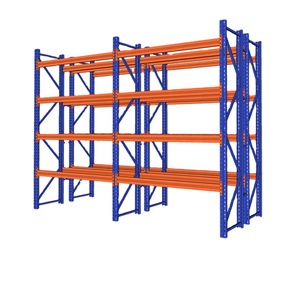
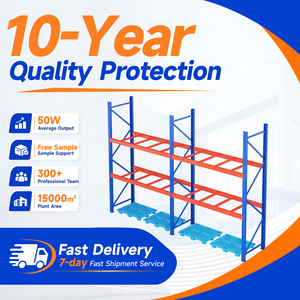
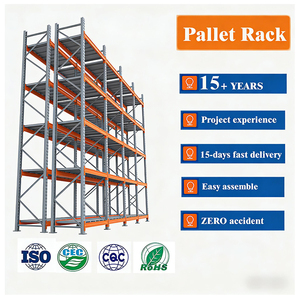
Certified, high-capacity roll-formed and structural configurations designed to handle EUR (800×1200 mm) and FIN (1000×1200 mm) standard storage units in high-throughput distribution environments.
The Moscow Logistics Belt: High-Density Pressure & Selective Storage Dynamics
The Greater Moscow logistics hub—anchored by the MKAD ring, the Central Ring Road (TsKAD), and major transit arteries such as the M-4 Don, M-10, and M-11 corridors—constitutes over 55% of the Russian Federation's entire Class A and B+ warehousing stock. As regional e-commerce, pharmaceutical cold-chains, and modern retail distribution networks experience unprecedented consolidation, the demand for certified, highly resilient selective pallet racking systems has surged significantly.
In hubs such as Chekhov, Podolsk, Domodedovo, Noginsk, and Sheremetyevo, warehouse vacancy rates have steadily tracked at sub-1.5% levels. For facility operators, logistics directors, and third-party logistics (3PL) conglomerates, the primary operational imperative is not merely obtaining generic shelving, but deploying structural and cold-formed selective racks capable of maximizing clear heights from 11.5 meters up to 14.5 meters without compromising dynamic safety factors or seismic resilience under GOST standards.
“Engineering selective racking for the Moscow market requires navigating dual palette formats (EUR 800×1200 mm and FIN 1000×1200 mm), rapid stock turn rates in VNA configurations, and strict adherence to GOST R 55525-2017 load stability parameters.”
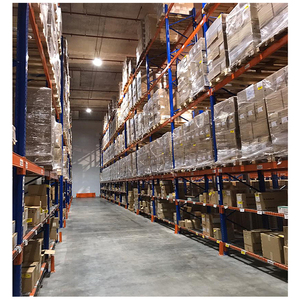
Selective pallet racking remains the unquestioned workhorse of Moscow's distribution infrastructure. Offering 100% immediate accessibility to every pallet position, it enables rapid inventory velocity for omnichannel retailers like Wildberries, Ozon, and X5 Retail Group. However, rapid material degradation, sub-zero warehouse temperatures in non-heated peripheral zones, and severe lift-truck collisions present critical operational challenges that standard catalog racks fail to solve.
Engineering Differences: Structural Channel vs. Roll-Formed Selective Racks
Selecting between heavy hot-rolled structural steel channel and high-tensile cold roll-formed uprights determines long-term ROI, impact survivability, and vertical structural capacity.
Structural Steel Resilience
Fabricated from C-channel hot-rolled steel profiles with bolted connections. Ideal for high-turnover Moscow logistics facilities subject to frequent lift-truck contact. Offers superior impact tolerance, eliminating sudden structural buckle failures in bottom tiers.
Cold Roll-Formed Flexibility
Engineered from premium Q235B and Q355B high-yield structural coil. Continuous multi-roll forming yields continuous column integrity with standard 50mm or 75mm beam adjustment pitches. Reduces deadweight while maintaining rigorous Euler buckling safety factors.
Automated Electrostatic Coating
Multi-stage automated pre-treatment and thermal powder-coating lines produce an anti-corrosive, scratch-resistant surface. Tested to withstand extreme thermal cycles from +35°C summer peaks down to -30°C unheated winter docking environments.
| Performance Dimension | Roll-Formed Selective (Q355B) | Hot-Rolled Structural Channel | Moscow Operating Relevance |
|---|---|---|---|
| Nominal Yield Strength ($F_y$) | 355 MPa (high tensile strength) | 235 – 345 MPa | Critical for high-bay spans (12m+) under strict deflection limits |
| Forklift Impact Resistance | Moderate (requires wrap-around post guards) | Exceptional (thick structural flanges) | Essential in fast-paced 24/7 cross-dock distribution hubs |
| Reconfigurability | Tool-free teardrop / hook connector slots | Bolted end-plate assembly | Preferred when SKU heights shift frequently across seasonal spikes |
| Sub-Zero Performance (-30°C) | Requires notch-toughness verification | High resilience against brittle cracking | Cold storage distribution hubs along TsKAD and M-4 corridors |
| Cost / Weight Ratio | Optimal CAPEX | Higher steel mass / premium investment | Roll-formed delivers highest ROI for standard 1,000–3,000 kg pallets |
Localized Applications Across the Moscow Oblast Supply Chain
Engineered storage solutions customized for specific logistical demands across key logistics clusters.
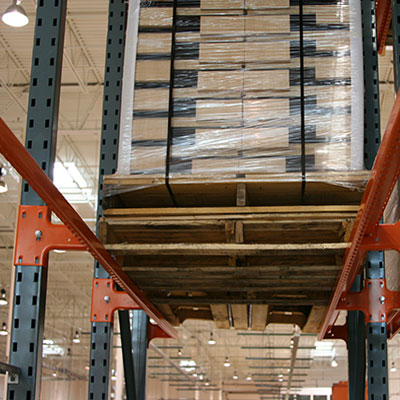
1. E-Commerce & Retail Fulfillment Hubs (Chekhov & Podolsk)
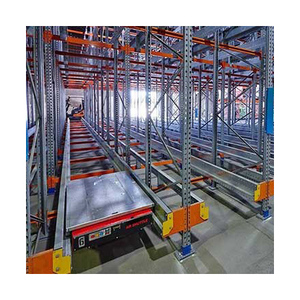
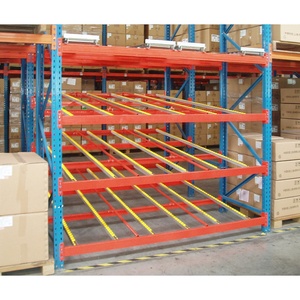
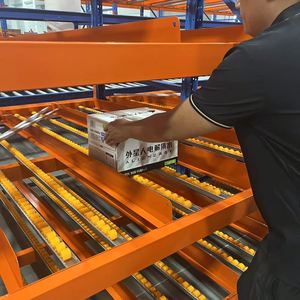
Facilities handling over 250,000 daily SKU variations require hybrid selective racks that combine high-density vertical pallet reserves with lower-level carton flow order-picking modules. By integrating 4-claw safety beam connectors and wire-guided Very Narrow Aisle (VNA) configurations, vertical cube utilization reaches 92% of nominal building height.
- Dual-pallet beam depths accommodating both EUR (800mm) and FIN (1000mm) frames
- Integrated anti-collapse rear safety back-mesh to protect high-traffic picking lanes
- Full alignment with GOST R 55525-2017 annual mandatory inspection standards
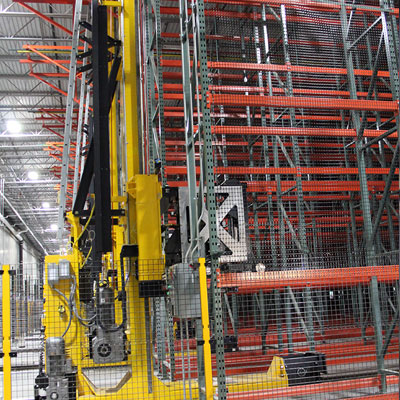
2. Cold Chain Logistics & Deep-Freeze Storage (-25°C to -30°C)
Situated in the Domodedovo and Vnukovo agro-logistics zones, frozen food and pharmaceutical hubs demand strict steel micro-alloying to prevent low-temperature ductile-to-brittle transitions. We employ specialized hot-dip galvanized or chemically inert epoxy-polyester coatings that resist moisture condensation during intensive defrost-cycle ventilation.
- High-resilience baseplate anchoring designed for thermal-insulated frost slab designs
- Specialized heavy-gauge steel channel front guards resisting reach-truck impact
- Thermal-bridge isolation pads positioned below column footing baseplates
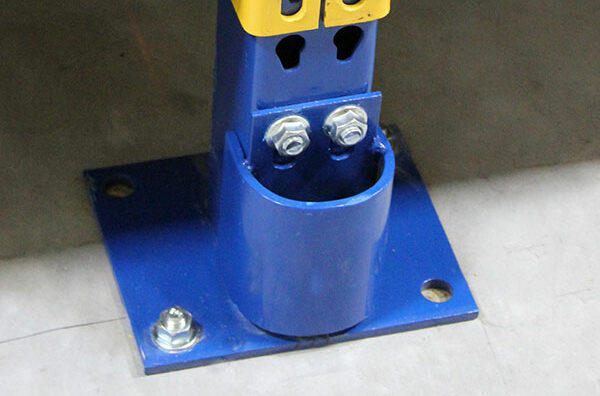
3. Heavy Machinery & Industrial Parts Distribution (Khimki & Noginsk)
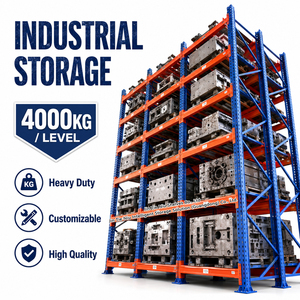
Distributors of industrial components, automotive assemblies, and electrical transmission gear require selective bays rated from 3,000 kg up to 4,500 kg per level. These installations employ boxed step-beams with drop-in galvanized steel deck panels and integrated load distribution beams to prevent point-load deformation under high concentrated stresses.
- Heavy-duty bolt-on wrap-around column protectors extending 400mm above finished slab
- High-tensile anchor studs with minimum 120mm effective embedment depth ($h_{ef}$)
- Structural cross-bracing frameworks maximizing lateral and longitudinal stiffness
Key Market Drivers Transforming Moscow Storage Facilities
Three strategic industry shifts are reshaping procurement criteria for racking systems across central Russian distribution hubs.
1. Height Maximization to 14.5+ Meters
With Moscow land acquisition costs escalating along the TsKAD outer ring, new build-to-suit logistics parks are pushing clear ceiling heights past traditional 10-meter thresholds to 14.5 meters. This demands enhanced upright section modules ($W_x$) and precise deflection tolerance (L/200 down to L/300) under maximum distributed static loads.
2. Fire Safety & ESFR In-Rack Sprinklers
Federal fire safety standards (SP 4.13130 and SP 5.13130) require strict coordination between beam levels, transverse flues (minimum 75mm clear gap between back-to-back pallets), and in-rack ESFR sprinkler networks. Our engineered selective frames maintain factory-calibrated flue spacing to ensure compliance and pass civil protection safety audits.
3. Mandatory GOST R 55525-2017 Testing
Russian standards mandate strict static load certification and annual dynamic testing for all operating warehouse racking. Systems manufactured with inferior low-grade steel fail residual deformation tolerances during static proof-load test cycles. Our systems are verified by finite element method (FEM) analysis for reliable certification.
Nearly 70 Years of Engineering Integrity: The Global Manufacturing Advantage
Combining decades of precision engineering with advanced manufacturing automation to deliver industrial storage solutions worldwide.
Dual Certification Standard
Every system is fully aligned with ANSI MH16.1 / Rack Manufacturers Institute (RMI) standards, CE directives, and certified compatible with GOST R 55525 technical requirements.
Multi-Million Dollar Automated Lines
High-precision automated continuous cold-roll rollformers, robotic seam-welding arms, and computer-controlled electrostatic powder coating guarantee sub-millimeter component tolerances.
Direct Project Engineering Support
From slab anchor stress review and seismic site calculations to customized warehouse CAD design, our senior structural engineers assist clients through every deployment stage.
Anchor Embedment Verification
Rigorous calculation of nominal embedment vs. effective embedment ($h_{ef}$) ensuring slab punching shear integrity under full static and seismic loads.
Beam Profile Integrity
Closed box beams and interlocking step profiles with continuous robotic seam welding provide high torsional stiffness and lateral resistance.
Structural Protection Systems
Heavy steel column wraps, end-of-aisle safety bullnoses, and guide rails that minimize accidental mast strikes and protect key structural uprights.
Fast Modular Scalability
Standardized components permit flexible reconfiguration, allowing logistics hubs to quickly adapt upright heights as SKU dimensions evolve.
Frequently Asked Questions: Sourcing Selective Racking in Moscow
Key technical, structural, and regulatory questions faced by regional project managers and logistics directors.
Q1 How do racking systems conform to GOST R 55525-2017 standards?
GOST R 55525-2017 governs the design, manufacturing, erection, and operational safety of steel storage racks across the Russian Federation. Compliance requires rigorous static calculation dossiers, certified material traceability certificates, safety pin pull-out test reports (resisting a minimum 5 kN shear force), and clearly stamped load capacity rating plaques displayed on all rack frames.
Q2 How are dual EUR (800×1200) and FIN (1000×1200) pallets configured?
In standard Moscow distribution hubs, a standard 2700mm beam level accommodates three EUR pallets with required 75mm clearances, while a 3600mm beam bay supports three FIN pallets or four EUR units. Our design engineers calculate beam deflection under both symmetric and asymmetric loading patterns to ensure deflection remains below L/200 under peak operational loads.
Q3 What floor slab thickness is required for 12-meter selective racks?
For high-bay installations extending to 12 meters with upright frame loads exceeding 18,000 kg, concrete slabs must typically be at least 200mm to 250mm thick with C20/25 or C25/30 compressive strength. Our engineers evaluate slab punching shear, concrete cracking risk, and specify anchor embedment depths to ensure seismic and static safety.
Q4 How does sub-zero cold storage impact steel specification?
Under continuous sub-zero conditions (-20°C to -30°C), conventional carbon steel risks cold embrittlement and sudden impact failure. We utilize high-toughness steel grades with certified Charpy V-notch impact values at -20°C or -40°C, combined with specialized low-temperature powder coatings to protect steel integrity.
Q5 What documentation is required for local customs and building clearance?
Imported racking systems must be accompanied by comprehensive structural calculations, EAC technical regulation compliance declarations (TR CU 010/2011 "On the safety of machinery and equipment"), factory mill test certificates (EN 10204 3.1), and complete installation blueprints translated into Russian.
Q6 Can upright frame extensions be added safely to existing racks?
Frame extensions are viable only when comprehensive recalculation verifies that base upright section properties, concrete slab capacities, anchor tension values, and lateral bracing remain within allowable stress parameters under the heightened center of gravity and increased wind or seismic overturning moments.
Ready to Engineer Your Moscow Storage Facility?
Whether you are developing a new Class A logistics terminal along the TsKAD ring or reconfiguring an existing warehouse hub in Podolsk or Chekhov, our senior structural engineering team delivers optimized, fully certified selective racking layouts tailored to your exact payload profile.