Heavy-Duty & Shuttle-Compatible Racking Systems for Russian Warehouses
Constructed from certified low-temperature Q355B and 09G2S high-strength structural steel, our storage solutions are specifically designed to endure the demanding logistics and thermal extremes of Eurasian freight hubs.
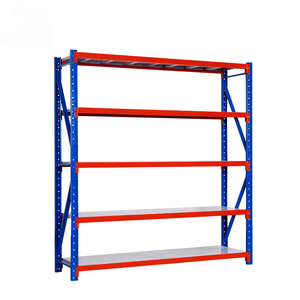
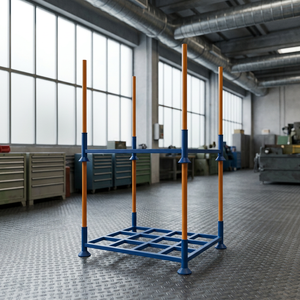
Cheap Warehouse Racking Storage Shelf Rack 2000KG 2200KG 2200KG 2300KG 2400KG 2500KG Pounds Tons
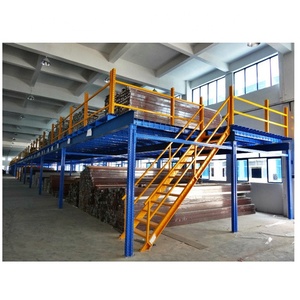
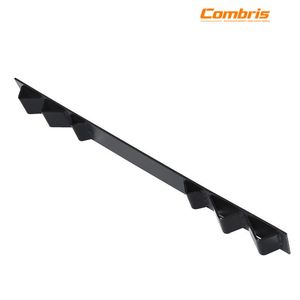
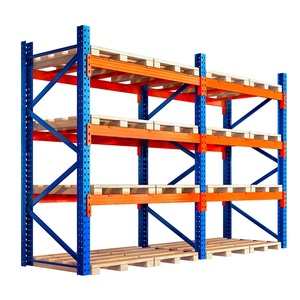
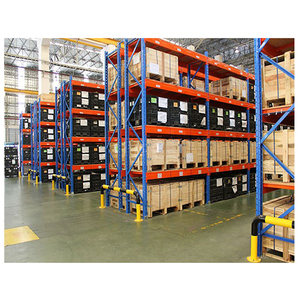
Industrial Heavy Duty Storage Shelves Systems Stacking Units Metal Rack Warehouse Steel Pallet Racking
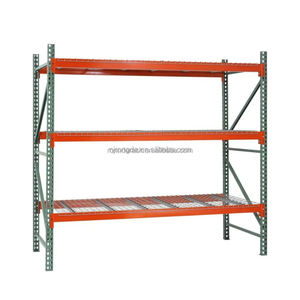
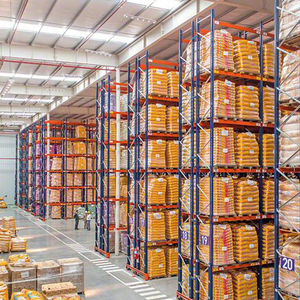
Customized Adjustable Steel Heavy Duty Warehouse Storage Pallet Rack System Teardrop Pallet Rack
Engineering Authority: Implementing Radio Shuttle Technology Across the Russian Federation
Modern intralogistics across the Russian Federation is undergoing an unprecedented structural transformation. Driven by the rapid expansion of domestic e-commerce giants, centralized federal food distribution, and severe warehouse footprint constraints in Class-A logistics parks surrounding Moscow, St. Petersburg, and the Urals, industrial enterprises can no longer rely on space-inefficient selective rack setups or labor-heavy drive-in configurations. Our heavy-duty Radio Pallet Shuttle Racking System represents the definitive technological leap, delivering deep-lane high-density automated storage with maximum volumetric efficiency.
Operating a semi-automated or fully automated shuttle racking facility in Russia presents distinct engineering hurdles that generic European or standard Asian racking suppliers fail to accommodate. From sub-zero cold room brittle fracture risks to strict national GOST load certifications and dual-pallet format compatibility, our manufacturing infrastructure delivers tailored metallurgical formulations and geometric profiles engineered specifically for Russian industrial norms.
Overcoming Sub-Zero Metallurgical Embrittlement in Russian Cold Stores (-30°C)
Russia represents one of the largest per-capita frozen food, poultry, and ice cream distribution networks in Eurasia. In ultra-low-temperature facilities across Siberia and Central Russia operating between -25°C and -30°C, ordinary commercial structural steels (such as Q235B or S235JR) undergo a rapid shift known as the ductile-to-brittle transition temperature (DBTT). Under repeated forklift loading vibrations and dynamic radio shuttle movements, standard steels can suffer sudden catastrophic cracking without prior visible deformation.
To eliminate this failure mode, our specialized export racking lines destined for Russian cold chains utilize low-temperature alloy steels such as 09G2S and premium-grade Q355D/E with guaranteed Charpy V-notch impact toughness tested at -40°C. In parallel, our radio shuttle vehicles deployed in Russian cold stores are fitted with heated LiFePO4 battery enclosures, IP65-sealed optical sensors with anti-condensation lenses, and sub-zero aerospace synthetic lubricants to ensure uninterrupted 24/7 autonomous pallet transfers.
Dual-Pallet Geometry: Seamless Handling of Euro (800x1200) and Industrial (1000x1200 / 1200x1200) Pallets
Unlike Western European markets which standardize almost exclusively on the standard EUR-pallet (800x1200mm), warehouse operations in Russia routinely handle a heterogeneous mix of EUR-pallets, FIN-pallets (1000x1200mm), and heavy industrial platforms (1200x1200mm) historically specified under Russian GOST 9078-84 and GOST 9557-87. Standard guide rails frequently fail when handling such diverse footprints, leading to pallet deflection, track binding, or uneven wheel wear.
Our engineered shuttle rails feature an optimized cold-formed profile with dual-positioning centering guides and heavy-duty load flanges. Integrated photo-electric sensor arrays on our intelligent shuttles automatically detect pallet depth, entry orientation, and overhang dimensions, dynamically adjusting acceleration curves and lift strokes to handle variable pallet dimensions up to 1,500 kg per unit load without mechanical modification.
Mandatory Compliance: GOST R 55525-2017 & Seismic Design Across CIS Territories
Federal regulations within the Russian Federation enforce strict compliance with national standard GOST R 55525-2017 ("Storage equipment. Demountable (foldable) racks. General technical conditions") and GOST R 57381-2017 for shuttle-based installations. These standards stipulate rigorous calculation models for upright frame plumbness, beam deflection limits (strictly capped at 1/200th of span under full design capacity), and concrete slab anchor embedment depths.
Furthermore, logistics developments in seismic zones—including the North Caucasus, Lake Baikal region, Sakhalin, and parts of the Altai territory—require specialized seismic moment frames, reinforced base plates, and heavy-gauge diagonal bracing. Our in-house engineering team calculates seismic design spectra under Russian SNiP II-7-81* (Construction in Seismic Regions) and SP 14.13330, verifying every upright, anchor bolt, and connection node to prevent structural resonance or beam dislodgement under regional earth tremors.
Where Shuttle & Heavy-Duty Racking Drives Russian Supply Chains
Strategic implementations across critical commercial sectors and high-throughput distribution hubs throughout the Russian Federation.
Moscow Oblast Mega E-Commerce Fulfillment
Serving major Russian online retail marketplaces (such as Wildberries, Ozon, and Yandex Market) around the Central Ring Road (TsKAD). Multi-deep radio shuttle systems store massive reserve buffer inventory, feeding dynamic picking mezzanines and sortation centers with high pallet turnaround speeds.
St. Petersburg Maritime & Cold Logistics
Positioned near the Baltic maritime gateway and Big Port St. Petersburg, where multi-temperature storage facilities handle meat imports, frozen seafood, and agricultural produce. Deep-lane shuttle racking maximizes volumetric cubic meter utilization while slashing refrigeration energy costs by up to 35%.
Ural & Siberian Transshipment Hubs
Strategic logistics clusters in Yekaterinburg and Novosibirsk connecting European Russia with East Asian rail corridors. Our heavy-duty roll-formed and structural racks store industrial machinery, automotive spares, and building supplies under extreme seasonal temperature fluctuations ranging from +35°C in summer to -38°C in winter.
Trends Reshaping Russian Warehouse Storage Architecture
Key macroeconomic drivers shaping storage equipment specifications across Russia and CIS markets through 2030.
Acute Labor Scarcity & Shift to Automation
Severe shortages of certified forklift operators across Russian industrial regions have driven procurement teams toward semi-automated pallet shuttle systems. Radio shuttles cut forklift aisle travel by up to 75%, allowing a single operator to manage hundreds of pallet movements per shift.
Escalating Class-A Land & Construction Costs
With rental yields for modern logistics space near major Russian ring roads reaching historic premiums, vertical warehouse expansion up to 14–16 meters has become standard. Shuttle systems maximize high-bay vertical density without the massive capital expenditure of fully automated crane-based AS/RS.
Direct Direct-from-Factory Supply Chain Procurement
Russian engineering directors and 3PL enterprises are increasingly partnering directly with Tier-1 export manufacturers. This avoids intermediary markups, ensures full design traceability under GOST parameters, and secures tailored containerized maritime or rail logistics direct from production lines.
High-Density Storage Systems: Engineering Comparison
Understand how Radio Shuttle Racking outperforms traditional high-density formats in Russian industrial facilities.
| Storage System | Space Utilization | Pallet Damage Risk | Operating Principle | Sub-Zero Efficiency | Operator Productivity |
|---|---|---|---|---|---|
| Radio Pallet Shuttle | Very High (85% - 90%) | Minimal (Shuttle Transports) | FIFO or LIFO Switchable | Superior (-30°C LiFePO4) | Highest (Up to 45 Pal/Hr) |
| Drive-In Racking | High (70% - 75%) | High (Mast Enters Bay) | Strictly LIFO | Moderate (Slow Mast Travel) | Low (15-20 Pal/Hr) |
| Selective Pallet Rack | Moderate (40% - 45%) | Low (Direct Access) | 100% Direct Accessibility | Low (High Cubic Air Volume) | High Per SKU Pick |
| Gravity Pallet Flow | Very High (80% - 85%) | Moderate (Roller Pressure) | Strictly FIFO | Sensitive (Roller Freeze) | High Self-Feeding |
Why Russian Importers & General Contractors Rely on Our Manufacturing
Carrying nearly 70 years of engineered pallet racking heritage, automated manufacturing lines, and dedicated international project teams.
Fully Automated Paint Finishing Lines
Multi-million dollar continuous automated powder-coating lines pre-treat steel with advanced silane conversion and electrostatic epoxy powder baked at 200°C for exceptional salt-spray, moisture, and corrosion resistance.
Precision Cold Roll-Forming Lines
Continuous CNC-controlled automated punch and rolling mills guarantee uniform upright frame and guide rail geometry, holding punching pitch tolerances within ±0.1mm for seamless on-site shuttle track alignment.
Both Structural & Roll-Formed Profiles
As one of the few global manufacturers engineering both heavy hot-rolled structural steel channel racks and high-tensile cold roll-formed uprights, we provide the exact structural resilience required for demanding installations.
Full Project Life-Cycle Management
From initial DWG building CAD review, slab core strength analysis, and 3D simulation to container packaging optimization and bilingual English/Russian technical documentation, our dedicated team ensures trouble-free execution.
Frequently Asked Questions for Russian Procurement Managers
Crucial commercial, technical, and regulatory guidance for importing and operating storage racking in the Russian Federation.
Accelerate Your Warehouse Efficiency with Russia-Ready Shuttle Racking
Whether you are engineering a deep-freeze cold storage warehouse in St. Petersburg, a mega e-commerce hub along the Moscow TsKAD, or an industrial parts depot in the Urals, our engineering directors will deliver complete layout optimization, structural load calculations, and turnkey factory-direct export proposals.
Inquire Now