Anchoring
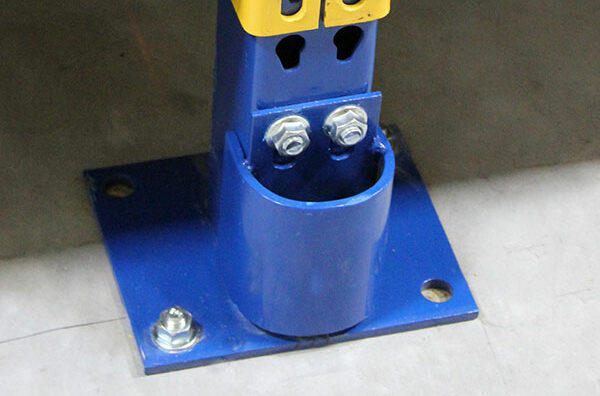
Anchor Bolts: Nominal Embedment vs. Effective Embedment
Why embedment depth resisting structural moment differs from drilled hole depth when racking undergoes lateral deflection.
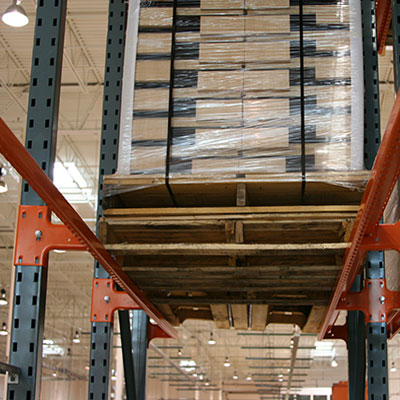
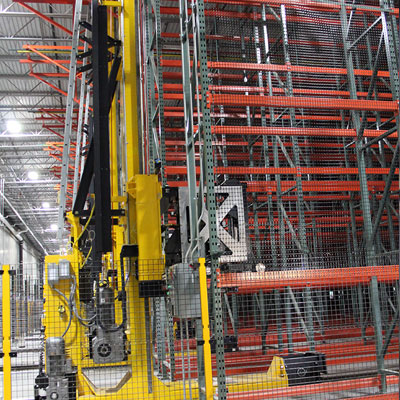
Modern distribution centers, automated fulfillment hubs, and heavy logistics facilities operate under extraordinary operational pressures. With vertical clear heights exceeding 40 feet and lift truck operators pushing rapid cycle speeds, pallet integrity deviations and accidental push-throughs represent significant catastrophic liabilities. Industrial rack safety netting serves as the primary flexible defensive envelope, designed specifically to contain shifting freight, deflect dynamic pallet dislodgement, and eliminate dropped-object incidents across vulnerable pedestrian aisles and work corridors.
Unlike rigid containment alternatives, an engineered netting barrier delivers kinetic energy absorption through tensile fiber elongation. When a forklift operator inadvertently pushes a 2,500-pound pallet too deep into a selective bay, or when broken pallet stringers collapse at elevated tiers, industrial safety netting decelerates and contains the mass. It prevents progressive structural rack trauma while ensuring complete adherence to OSHA General Duty Clause provisions and NFPA 13 flue space regulations.
Rigid welded wire screen panels resist dynamic pallet impacts through localized rigidity, transferring peak collision shear loads directly into rack upright framing and anchor bolts. Engineered knotless synthetic netting dissipates kinetic impact across an elastomeric perimeter cable grid. This reduces point-load stress on structural rack columns by up to 68% during dynamic drop events.
Specified by UNARCO RACKING structural engineers to match pallet load velocities, aisle access models, and flue clearance constraints.
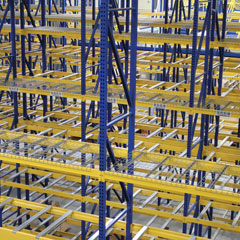
Designed with rigid heavy-gauge steel stand-off brackets (1" to 12" overhang) to accommodate pallet overhang while maintaining continuous drop protection along exterior racking bays and pedestrian thoroughfares.
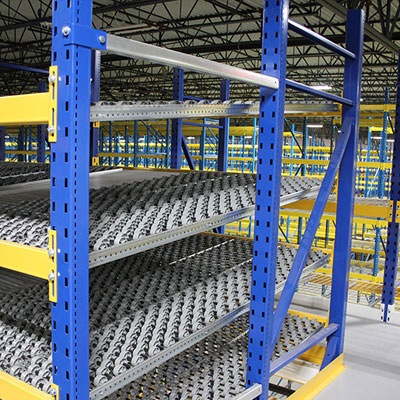
Ultra-dense, small-aperture containment mesh (1" to 2" square mesh) designed for multi-level order picking modules to prevent individual case goods and split-case items from falling into human pick corridors.
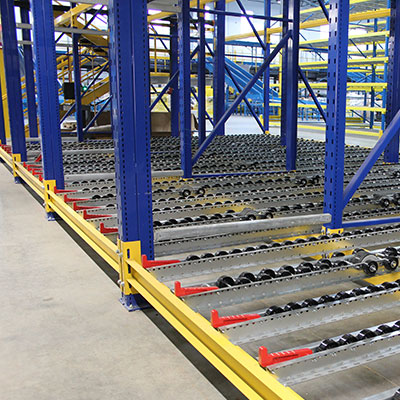
Central flue barrier nets engineered to partition back-to-back rack runs. Prevents stored inventory from breaching the mandatory 6-inch vertical flue space, maintaining uninhibited fire sprinkler water suppression.
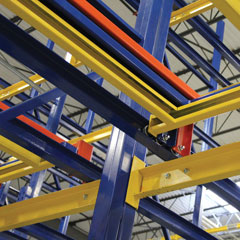
Tensioned horizontal cable slider netting systems engineered for active loading faces, drive-in tunnels, and staging lanes requiring frequent forklift accessibility combined with immediate fall containment.
Full-height continuous containment nets built with high-tenacity UV-treated synthetic polymers to prevent stray cartons or pallet debris from falling into high-speed crane guide rails and shuttle corridors.
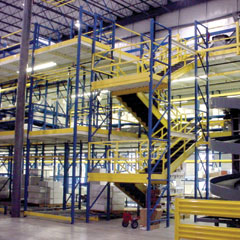
Heavy-duty perimeter netting barriers hung beneath and around structural steel mezzanines and picking catwalks to catch errant stock and protect sorting equipment located on lower operational decks.
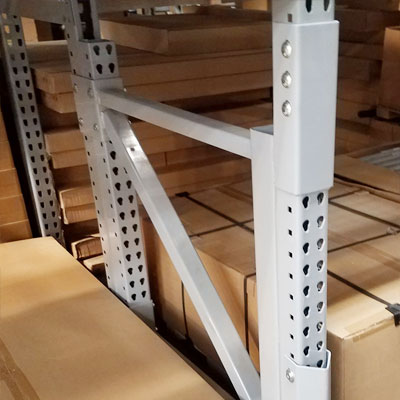
Multi-strand knotted or woven high-molecular polymer grids engineered to absorb up to 10,000+ ft-lbs of dynamic impact, suited for heavy raw material, drum, and structural bulk-load warehousing.
Every facility demands tailored engineering: mesh dimensions, cable gauges, standoff dimensions, and seismic anchors configured around your specific uprights.
Procurement teams within global 3PL enterprises, cold chain operations, and e-commerce supply chains are re-evaluating risk management models. Sourcing rack safety netting is transitioning from an ad-hoc maintenance purchase into an integrated capital engineering specification. Warehouse operators are confronting four dominant procurement transformations:
Automated warehouses cannot tolerate stray carton drops. A single loose carton resting on an automated shuttle track or VNA guide rail triggers millions in downtime. Procurement managers are standardizing continuous vertical containment curtains engineered to tight dimensional clearances to protect high-speed automated robotics.
Global property insurers (such as FM Global) are enforcing rigorous audits on transverse and longitudinal flue spaces. Traditional steel stops bend or get removed by operators. Flexible synthetic flue netting maintains uninhibited sprinkler water penetration while preventing pallets from encroaching on critical flue chimneys.
ESG directives among global retailers are eliminating toxic PVC and poorly degradable netting. Procurement frameworks are prioritizing 100% recyclable, UV-stabilized, non-halogenated polypropylene and polyester netting materials that achieve zero toxic off-gassing during facility fires.
The historical approach to pallet rack fall containment relied upon heavy welded wire mesh panels or chain-link fencing bolted directly to rack frames. While rigid, these legacy steel systems exhibit notable systemic weaknesses: heavy structural dead-weight, high freight cubes, susceptibility to permanent weld-joint deformation, and substantial labor installation expenses requiring multi-man scissor lift crews.
The contemporary evolution favors high-tenacity, knotless woven polymeric textiles utilizing ultra-high molecular weight polyethylene (UHMWPE), high-tenacity polyester, and polypropylene. These flexible textiles deliver equivalent or superior containment ratings (up to 10,000+ ft-lbs) while weighing less than 15% of steel panels. Furthermore, elastomeric recoil properties allow modern netting to absorb substantial forklift bumps without permanent structural plastic deformation, reducing recurring facility repair costs and safeguarding upright column geometries.
A rigorous engineering comparison to guide procurement teams and safety officers in choosing the optimal system.
| Performance Parameter | High-Tenacity Synthetic Netting | Rigid Welded Wire Mesh Panels | Solid Sheet Metal Paneling |
|---|---|---|---|
| Impact Dynamic Energy Absorption | Superior (dynamic elastic elongation) | Moderate (localized weld shear risk) | Poor (permanent plastic bucking) |
| Dead-Weight Added to Uprights | Extremely Low (<0.12 lbs/sq.ft) | Moderate to High (1.8 - 3.2 lbs/sq.ft) | Extremely High (4.5+ lbs/sq.ft) |
| Sprinkler Water Permeability | 100% Uninhibited NFPA 13 Flow | High (subject to wire grid pitch) | 0% (Zero permeability, requires in-rack heads) |
| Retrofit Installation Velocity | Rapid (cable tension, minimal hardware) | Slow (multi-bolt brackets & heavy panels) | Extremely Slow (heavy framing requirements) |
| Sub-Zero Freezer Performance | Maintains elasticity to -40°F (-40°C) | Cold embrittlement risks at welds | Prone to condensation frost buildup |
| Freight & Global Shipping Volume | Minimal (compact folded rolls) | Bulky (stacked steel skids) | Extremely Bulky & Heavy |
All UNARCO RACKING safety netting configurations are engineered to integrate seamlessly with RMI / ANSI MH16.1 compliant selective, push-back, pallet flow, and structural cantilever rack systems.
UNARCO RACKING manufactures structural and roll-formed pallet racking and engineered warehouse storage systems for distribution centers, e-commerce fulfillment, cold storage and retail. As pioneers of the pallet rack industry, we design complete systems — not just components.
Our customer base spans every level of the supply chain, including long-term partnerships with Fortune 500 companies. Every rack and protective accessory is fabricated in strict compliance with current RMI standards, and our engineers support each project from layout and seismic design to onsite project management and installation.
Years of pallet rack engineering leadership
Engineered storage product families from a single source
Systems fabricated to current RMI specifications
Fortune 500 supply chain partnerships worldwide
Delivering comprehensive facility protection through integrated structural engineering and dedicated project support.
Decades of highly engineered project experience to design the most efficient, code-compliant storage and fall protection solutions.
Learn MoreProject engineers manage your racking and safety netting projects from preliminary load sizing to final commissioning — one point of accountability.
Column protectors, guard rails, and net containment systems designed to eliminate damage and keep your team safe.
Multi-million-dollar investment in advanced powder-coat lines provides tough, corrosion-resistant steel brackets and frames.
Our structured engineering methodology ensures exact load rating, proper bracket offsets, and zero site disruption.
Evaluation of pallet sizes, unit weights, overhang dimensions, and aisle traffic.
Mesh strength selection, kinetic energy absorption modeling, and bracket engineering.
High-tenacity knotless weave manufacturing, bound borders, and powder-coated steel hardware.
Tensioned aircraft cables, turnbuckles, and flush or offset upright attachments.
Verification against OSHA 1910, ANSI MH31.1, and NFPA 13 building requirements.
Practical engineering data on rack anchoring, frame safety, and structural integrity.
Why embedment depth resisting structural moment differs from drilled hole depth when racking undergoes lateral deflection.
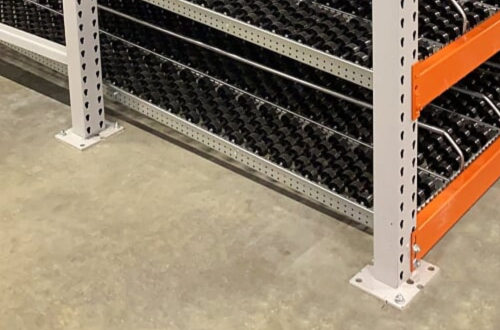
Reference embedment values verifying concrete slab thickness requirements under dynamic seismic forces.
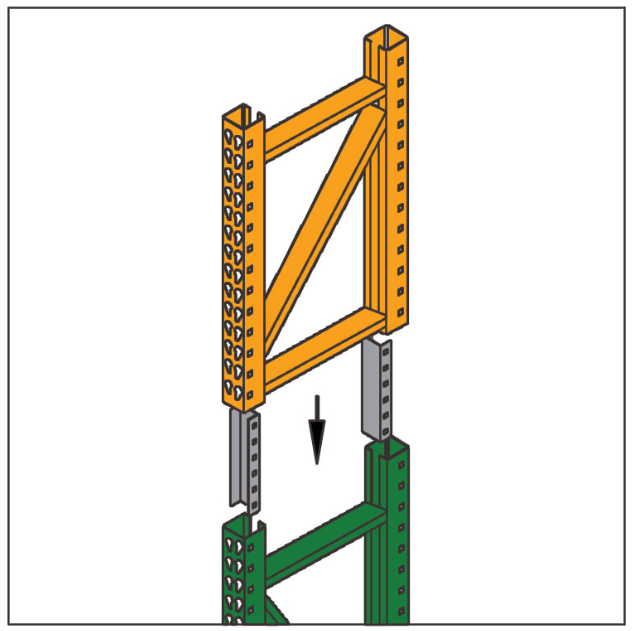
Structural checks required before extending upright columns to support high-bay safety netting enclosures.
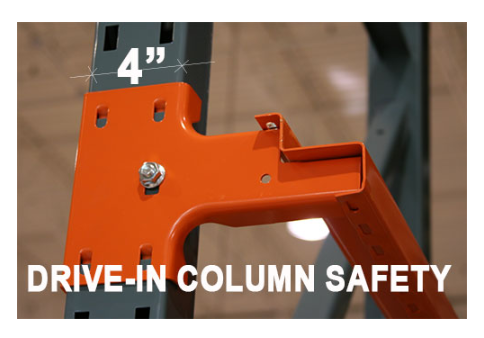
Securing high-risk tunnel entrances and forklift loading paths against dropped merchandise.
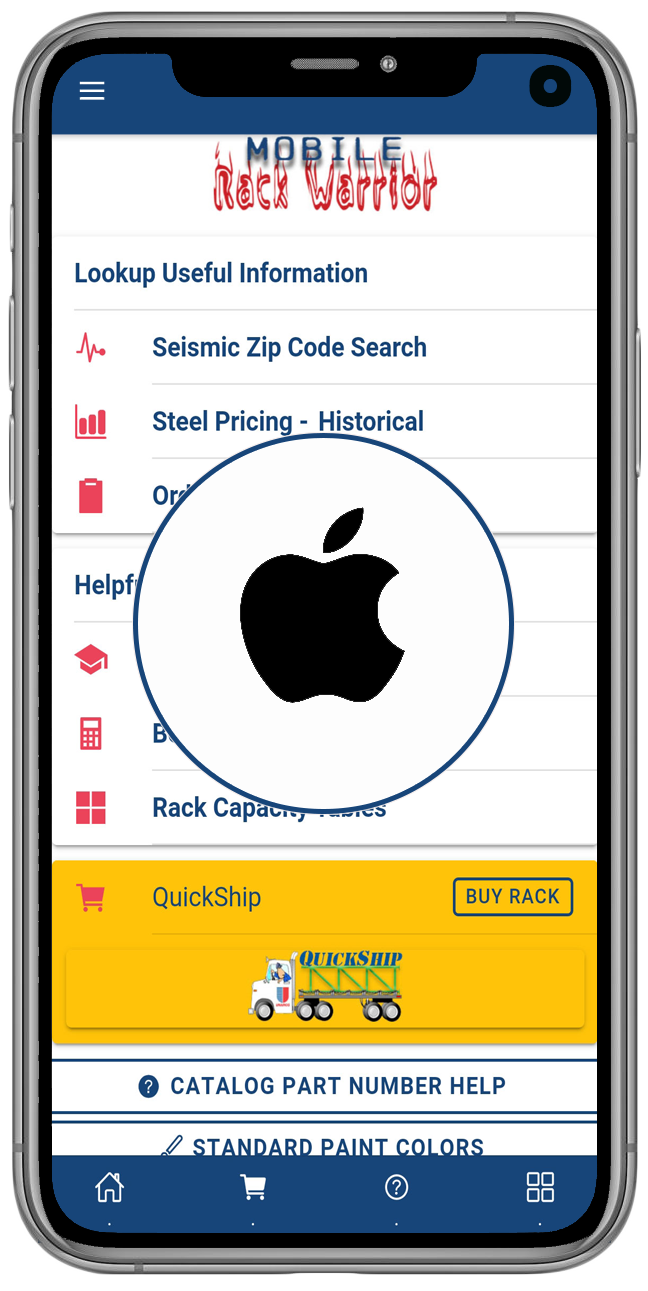

Calculate beam capacities, seismic design factors, and flue space containment dimensions directly from the facility floor with our proprietary engineering software suite.


Comprehensive engineering clarity addressing regulatory compliance, installation mechanics, and procurement specifications.
Rack safety netting is manufactured from high-tenacity synthetic yarns (such as UV-stabilized polypropylene or high-tenacity polyester) designed to stretch and absorb dynamic kinetic impact through elastic elongation. This dynamic deceleration prevents dangerous recoil and avoids transferring high point-load shear forces into rack upright columns.
Wire mesh panels provide rigid physical containment but add significant dead-weight load onto the rack structure (1.8 to 3.2 lbs/sq.ft compared to <0.12 lbs/sq.ft for netting). Wire mesh can also experience localized weld failure when impacted directly by pallet forks, creates sharp cut hazards, and incurs substantial shipping and rigging costs compared to compact rolls of engineered netting.
OSHA regulates warehouse falling-object hazards under General Duty Clause Section 5(a)(1) as well as 29 CFR 1910.176(b), mandating that stored materials must be secured against sliding, falling, or collapsing into working aisles. Rack safety netting provides compliant physical containment across upper racking levels, pick tunnels, and emergency egress routes.
For fire safety, NFPA 13 requires a minimum continuous 6-inch longitudinal flue space between back-to-back rack runs to allow early vertical heat venting and uninhibited sprinkler water penetration. Flue netting barriers prevent pallets from being pushed past the rear beam face into this vital flue zone while presenting virtually zero obstruction to sprinkler spray cone patterns, satisfying insurance auditors such as FM Global.
Yes. UNARCO RACKING supplies modular bracket systems that mount cleanly into existing teardrop or keyhole frame punches, or clamp around structural steel columns without requiring field drilling, cutting, or welding. Because structural rack uprights are not structurally compromised, factory load certifications and RMI engineering compliance remain completely intact.
Netting capacity is evaluated in foot-pounds (ft-lbs) of dynamic kinetic energy rather than static weight alone. For split-case pick modules and carton containment, ratings typically range from 1,250 ft-lbs to 2,500 ft-lbs with a dense 1" to 2" mesh aperture. For heavy pallet loads (2,000 to 3,500 lbs), systems should be specified for 5,000 ft-lbs to 10,000+ ft-lbs ratings utilizing heavy-gauge borders, steel turnbuckles, and tensioned 3/16" or 1/4" aircraft wire rope.
UNARCO RACKING specifies high-performance virgin polymers engineered specifically for harsh industrial atmospheres. In cold storage and deep-freeze operations (-40°F / -40°C), our knotless polypropylene netting maintains flexibility without embrittlement or micro-fracturing. The synthetic fibers are chemically inert, moisture-resistant (preventing rot and mold), and UV-stabilized against artificial and natural light degradation.
To provide an accurate engineering proposal, please prepare your racking elevation drawings or bay dimensions (upright height and beam length), pallet weight specifications, required standoff offset distance (for pallet overhang), whether flush or back-to-back flue mounting is needed, and special environment parameters (such as cold storage or seismic design category). Direct inquiries can be forwarded to [email protected].
Connect with our engineering specialists for custom load ratings, layout audits, and rapid quotations: [email protected]