Engineered Heavy Duty Pipe & Industrial Storage Racks
Explore our top-tier, high-capacity roll-formed and structural steel storage solutions built for industrial manufacturing, tubing distribution, fulfillment hubs, and cold chain logistics.
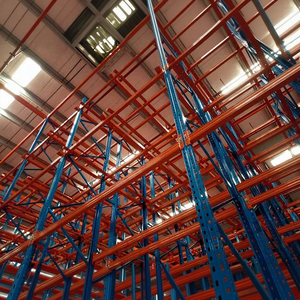
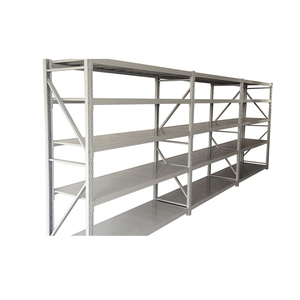
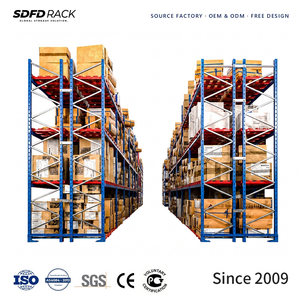
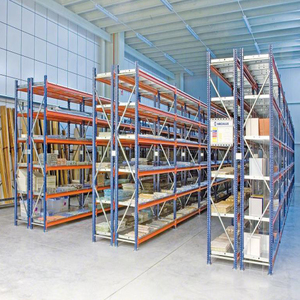
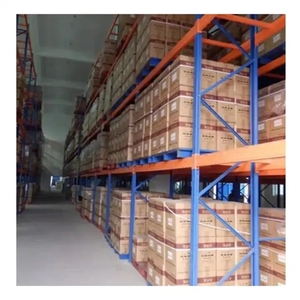
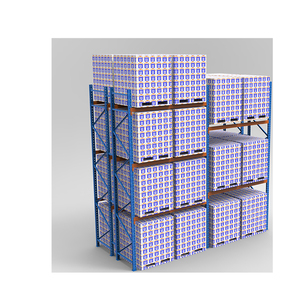
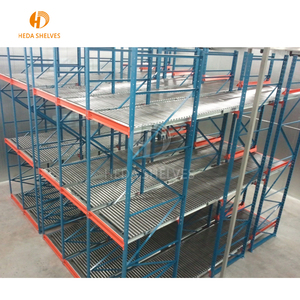
Heavy Duty Pipe Storage Racking: Structural Mechanics & Safety Compliance
In the logistics and warehousing of long, cumbersome materials—specifically steel pipes, PVC conduit, industrial tubing, and structural profiles—standard selective pallet racking configurations prove architecturally insufficient. Industrial pipe storage requires specialized structural physics to manage non-uniform lateral pressures, eccentric live loads, and massive line weights without structural deflection. As a leading manufacturer among China Best Heavy Duty Pipe Storage Racking Suppliers, our engineering philosophy integrates certified hot-rolled structural steel channel and premium cold-formed sections that comply with international structural guidelines, including RMI (ANSI MH16.1) and EN 15512.
When evaluating heavy-duty storage for pipe and tube materials, structural cantilever racking systems serve as the engineering benchmark. Unlike conventional pallet racks constrained by front vertical columns, cantilever designs utilize free-standing, high-yield vertical columns connected to horizontal bases with high-tensile anchor assemblies. Cantilever arms project outward at a calibrated angle (typically 1° to 2° upward pitch) to actively counter load-induced deflection. When industrial pipes are mechanically bundled or individually placed across arms, the upward camber prevents roll-off risks and balances dynamic point loading across the structural spine.
Torsional Rigidity
Fabricated using heavy wide-flange I-beams and closed-tube braces that effectively eliminate column twisting under heavy, asymmetric pipe bundle loads.
Seismic-Certified Anchoring
Engineered baseplates utilizing site-specific finite element analysis (FEA) to verify embedment depths, slab core strengths, and lateral shear forces.
Corrosion Protection
Advanced thermo-cured architectural powder-coating lines and hot-dip galvanization options guarantee zero degradation in coastal and outdoor pipe yards.
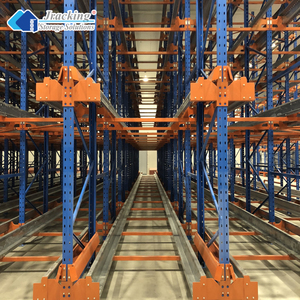
Furthermore, heavy tubing warehouses frequently encounter mixed inventory handling: bundle-packed tubular goods alongside palletized connectors, flanges, and fittings. To address this functional necessity, our engineering ecosystem combines specialized heavy-duty pipe racks with reinforced selective pallet racking, teardrop industrial racking, and high-density radio shuttle systems. This unified spatial configuration delivers holistic warehouse optimization, eliminating cross-contamination of handling flows and maximizing vertical clear heights up to 15+ meters.
Technical Comparison: Pipe & Industrial Storage Configurations
Compare mechanical attributes across specialized heavy-duty structural systems to align with your facility's operational velocity and product profiles.
| System Architecture | Typical Payload / Arm or Bay | Material Selectivity | Structural Profile | Optimal Tube/Pipe Application |
|---|---|---|---|---|
| Heavy Structural Cantilever | 1,000 kg – 6,000 kg per arm | 100% Instant Selectivity | Hot-Rolled Q235B/Q355B H-Beam | Heavy steel pipes, drill rods, timber bundles, extrusions |
| Roll-Formed Cantilever Rack | 300 kg – 1,200 kg per arm | 100% Instant Selectivity | Cold-Roll Formed High-Yield Steel | Medium PVC conduit, copper tubing, electrical raceways |
| Heavy-Duty Selective Pallet Rack | 1,500 kg – 4,500 kg per tier | 100% Pallet Accessibility | Teardrop / Box Beam Construction | Palletized short pipe segments, elbows, flanges, valves |
| Automated Radio Shuttle System | 1,000 kg – 2,000 kg per lane | High-Density Channel FIFO/LIFO | Galvanized Cold-Rolled Precision Rail | High-throughput standardized crated pipe fittings & parts |
| Crank-Out Cantilever (Roll-Out) | 1,000 kg – 3,000 kg per shelf | 100% Overhead Crane Access | Precision Machined Gear-Driven Steel | Precision stainless steel tubing, molds, tool steels |
Future Procurement Trends for Industrial Pipe Racking
Strategic supply chain shifts influencing capital expenditure and structural specifications across global distribution centers.
Transition to High-Yield Q355B Steels
Global logistics engineering is transitioning away from standard low-carbon steels toward micro-alloyed Q355B structural grades. This delivers higher tensile yield strength, reduced dead weight on facility slabs, and greater resistance to impact forces caused by high-tonnage sideloaders and forklifts.
Full Digital FEA Simulation in Quoting
Procurement directors increasingly demand project-specific Finite Element Analysis (FEA) reports before issuing purchase orders. Verified computational modeling predicts stress concentration points, seismic base reactions, and multi-tier arm deflections under varying thermal and structural load conditions.
Standardized Environmental Coatings
With corporate carbon mandates and harsh outdoor exposure requirements, buyers now demand non-VOC, heavy-duty multi-stage powder coating systems or ISO 1461-compliant hot-dip galvanization that yields salt spray test performance exceeding 1,000+ hours without blister or red rust formation.
Technological Trajectories: The Future of Tubing Storage
Discover how robotics, crane automation, and IoT health monitoring are transforming traditional mechanical pipe yards.
The heavy steel and industrial piping sector has historically lagged behind consumer FMCG warehouses regarding automated material handling due to the sheer bulk, weight, and irregular geometries of long-span goods. However, labor constraints, operator safety protocols, and real estate density demands are catalyzing transformative engineering innovations.
Automated Stacker Crane Integration (AS/RS)
Custom structural cantilever uprights are now engineered with tighter millimetre-level tolerances to integrate seamlessly with twin-mast automated stacker cranes. These robotic hoists manipulate 6-meter to 12-meter pipe bundles into high-bay compartments up to 24 meters without operator intervention.
Embedded IoT Structural Strain Sensors
Next-generation pipe racking incorporates fiber-optic or piezoelectric strain gauges welded into critical beam-to-column connections. Real-time telemetry notifies operations when point loads exceed safety thresholds or when dynamic forklift impacts compromise anchor integrity.
Automated AGV Sideloader Compatibility
Racking footprints are optimizing guide rail geometries and heavy-duty floor channel profiles to accommodate driverless, laser-guided 4-directional sideloaders, eliminating pedestrian hazards in ultra-narrow aisle (VNA) high-tonnage pipe storage environments.
Enterprise Capabilities & Manufacturing Excellence
Why top global logistics operators, regional distributors, and Fortune 500 supply chains partner with our engineering infrastructure.
RMI & ANSI MH16.1 Design
Every structural upright, roll-formed profile, and cantilever arm is fabricated in rigorous compliance with recognized international industrial storage standards.
In-House Seismic Engineering
Our dedicated structural engineering staff provides custom slab evaluations, regional seismic coefficient calculations, and CAD layout designs for turnkey implementation.
Multi-Million Dollar Paint Lines
State-of-the-art automated pre-treatment and electrostatic powder-coat lines provide tough, uniform impact- and corrosion-resistant finishes on all steel surfaces.
Engineered Impact Protection
Comprehensive portfolio of wrap-around column protectors, bolt-on straddle guards, and heavy aisle bumpers to protect uprights from dynamic vehicle collisions.
Frequently Asked Questions (Procurement & Engineering)
Authoritative insights addressing critical inquiries regarding load capacities, seismic anchorage, column spacing, and international logistics.