Engineered Heavy-Duty Industrial Racking Systems
Explore our heavy-duty roll-formed and structural steel storage solutions built for maximum volumetric efficiency, heavy layer loads, and rigorous international safety standards.
Engineering Whitepaper: Heavy-Duty Drive-Through Racking Mechanics
A technical structural evaluation of continuous rail storage systems, mechanical load transfers, and cross-aisle accessibility dynamics for high-density warehousing.
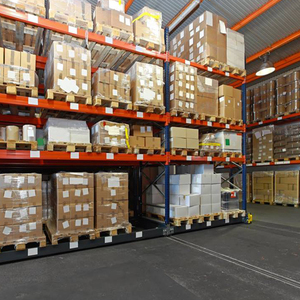
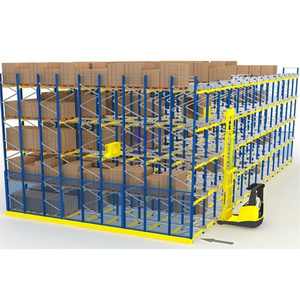
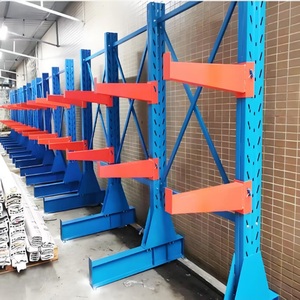
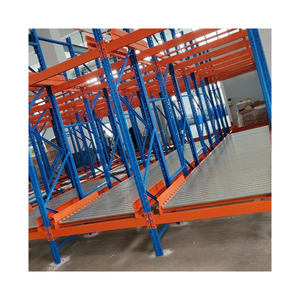
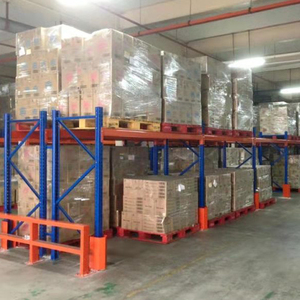
Drive-Through pallet racking represents an advanced pinnacle of vertical space optimization, delivering between 60% and 80% higher storage density compared to conventional selective pallet racking. Unlike static single-deep or double-deep installations requiring alternating access aisles, drive-through systems eliminate interior forklift aisles entirely. Forklifts directly enter the racking bays from either end of the block, depositing and retrieving unit loads placed on heavy-duty cantilevered side rails spanning the full depth of the storage lane.
The core structural distinction between Drive-In Racking and Drive-Through Racking lies in logistical operational accessibility:
- Drive-In Racking (LIFO - Last-In, First-Out): Features an enclosed dead-end configuration with rigid cross-bracing along the back uprights. Lift trucks enter and exit through the same front bay entrance, meaning the last pallet loaded is the first pallet retrieved. This setup is optimized for uniform, long-shelf-life products with high SKU concentration.
- Drive-Through Racking (FIFO - First-In, First-Out): Features completely open portal access at both ends of each bay lane. Goods are entered from the loading aisle and retrieved systematically from the opposing retrieval aisle. This makes Drive-Through configurations crucial for strict expiration control, date-coded perishable inventory, high-velocity food and beverage distribution, and pharmaceutical manufacturing cold-storage facilities.
Structural Integrity Alert: Torsional Bracing without Internal Cross-Ties
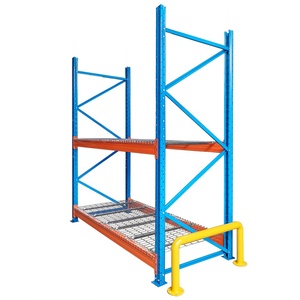
Because Drive-Through racking must allow forklifts to traverse through the entire lane depth from one end to the other, conventional mid-frame back bracing and interior horizontal spacer beams cannot be utilized. Structural stability depends on top horizontal portal ties, rigid overhead roof bracing trusses, anchored column baseplates with calculated effective embedment depths, and reinforced arm brackets engineered to resist extreme torsional twisting under dynamic forklift impact.
Structural Comparison: Hot-Rolled Structural Channel vs. Cold Roll-Formed Profiles
As a leading Chinese manufacturer and global exporter, our engineering group fabricates heavy-duty drive-through systems using both hot-rolled structural steel channels (ASTM A36 / Q235B & Q355B) and high-yield cold-formed steel coils. Specifying the proper metallurgy depends directly on traffic frequency, forklift handling speeds, and warehouse temperature extremes.
| Engineering Parameter | Structural Steel Channel (Hot-Rolled) | High-Yield Roll-Formed Steel |
|---|---|---|
| Raw Material Profile | C-Channel Structural Steel (Solid web and heavy flanges) | Multi-bend Omega (Ω) profile cold-rolled from steel strip |
| Forklift Impact Resistance | Exceptional (Thick flanges withstand glancing forklift shocks) | Moderate to High (Requires heavy-gauge welded base reinforcement) |
| Cold Storage Performance (-30°C) | Superior impact toughness and low brittle fracture vulnerability | Optimal when using specific low-temp certified Q355D steel grades |
| Connection Method | Heavy-duty structural Grade 5/Grade 8 high-strength bolts | Tear-drop slot or boltless connector teeth with safety locking pins |
| Typical Weight per Bay | Heavy (Higher shipping mass, maximized mechanical lifespan) | Lighter (Optimized freight cube efficiency, lower raw material tare) |
| Best Application Arena | Severe industrial environments, heavy beverage lines, cold storage | Fast-turnover commercial distribution, moderate pallet weights (<1,500kg) |
Future Procurement Trends in Industrial Pallet Racking
Anticipating structural automation, seismic resilience requirements, and environmental standards that procurement leaders must consider over the next decade.
1. Retrofit-Ready Hybrid Automation
Global logistics centers are rapidly transitioning static drive-through bays into semi-automated 2-way and 4-way radio shuttle channels. Modern procurement focuses on universal support rails capable of carrying standard timber pallets today while embedding precision-engineered wheel tracks for automated robotic shuttles tomorrow.
2. Strict Seismic FEA Modeling
Building code revisions (including IBC 2024 and Eurocode 8) mandate rigorous site-specific soil, slab, and seismic acceleration modeling. Global buyers now demand Finite Element Analysis (FEA) computer validation and certified third-party structural stamps confirming beam deflection criteria under combined lateral and vertical seismic loading.
3. High-Durability Powder Coatings
Eco-efficient closed-loop electrostatic powder coating lines with automatic phosphate pre-treatment are replacing traditional air-dry painting. Advanced thermoset polyester powders provide scratch-resistant finishes (>80 μm film thickness) designed to prevent micro-fracturing and corrosion in humid deep-freeze facilities down to -35°C.
Technological Evolutions in Drive-Through Racking Systems
How cutting-edge manufacturing tolerances, smart telemetry, and metallurgical advances improve warehouse safety and operational uptime.
The industrial racking sector is evolving from passive steel shelving into an integrated component of intelligent supply chain infrastructure. The drive-through format, while historically considered simple, is undergoing substantial engineering innovation:
Smart Impact Sensor Telemetry
Impact sensors mounted directly onto drive-through entry uprights alert safety directors in real time when a forklift strikes an arm or column. By recording impact forces exceeding RMI safety thresholds, facilities can address structural damage before catastrophic failure occurs.
Floor-Mounted Heavy Guide Tracks
High-precision structural angle guides and low-profile tapered steel rails align lift truck chassis within millimetric tolerances inside the bay. This mechanical guidance prevents forklift mast contact with vertical uprights, increasing picking speeds while reducing frame collisions by over 85%.
Ultra-High Yield Cold-Formed Steels
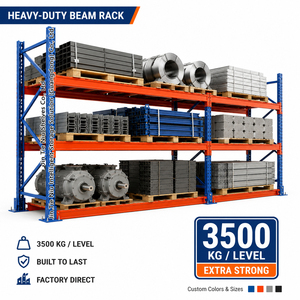
By using micro-alloyed, cold-rolled steel grades boasting yield strengths exceeding 450 MPa, modern upright profiles deliver reduced dead weight without compromising flexural rigidity. This reduces international shipping costs per container while preserving rated layer capacities up to 3,500kg per level.
Enterprise Strengths: Decades of Engineering & Manufacturing Rigor
Why Tier-1 logistics operators, international distributors, and Fortune 500 corporations rely on our specialized racking manufacturing facilities in China.
Nearly 70 Years of Engineering Lineage
Our manufacturing philosophy follows stringent industry guidelines, utilizing proven RMI / ANSI MH16.1 specifications and FEM 10.2.02 codes to deliver industrial-grade racking systems designed for structural longevity.
Multi-Million Dollar Automated Powder Coating
Our multi-stage pre-treatment, automatic zinc phosphate wash, and high-precision electrostatic powder-coat lines ensure complete paint coverage, uniform film thickness, and maximum corrosion resistance in humid or sub-zero environments.
Comprehensive Column Protection & Safety Accessories
From bolt-on heavy-gauge straddle column protectors and floor-anchored steel bull-nose deflectors to welded double-leg upright frames, our safety hardware shields vulnerable entry columns against daily equipment collisions.
Global Export Logistics & In-House Project Management
Dedicated bilingual project engineering teams oversee every stage—from custom CAD layout drafting and structural calculations to safe seaworthy packing, container load optimization, and comprehensive installation manuals.
Frequently Asked Questions: Global Racking Procurement
Authoritative technical answers to standard questions encountered by warehouse planners, engineers, and supply chain procurement managers.
What international design standards do your heavy-duty drive-through racks comply with?
How is structural stability maintained in drive-through racks without rear cross-bracing?
What warehouse slab specifications are required for heavy-duty drive-through installations?
Can damaged drive-through uprights be repaired using modular kits, or must frames be replaced?
What information is needed to receive a complete CAD layout and engineering quote?
How do hot-dip galvanized finishes compare with electrostatic powder coatings for cold storage?
What are typical production lead times, and how are materials bundled for ocean freight?
Ready to Engineer Your High-Density Storage Facility?
Consult directly with our structural engineering team to optimize your facility's storage capacity. We provide detailed CAD layouts, structural calculations, and competitive FOB/CIF export pricing tailored to your operational requirements.
Contact Us