Heavy Duty Multi-Tier & High-Density Storage Systems
Engineered from Q235B and high-yield Q355B cold-rolled structural steel. Every unit profile is rigorously calculated to satisfy dynamic load deflection thresholds, vertical seismic forces, and continuous intralogistics throughput.
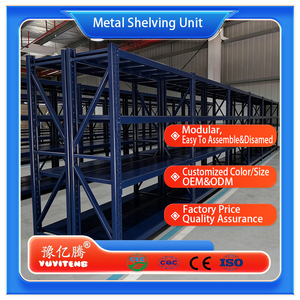
Multi-tier Metal Storage Rack Heavy Duty Warehouse Shelving System
- Load Rating: 800 – 2,500 kg/tier
- Deck Type: Solid Steel / Perforated Galvanized
- Pitch Adjust: 50mm / 75mm Incremental
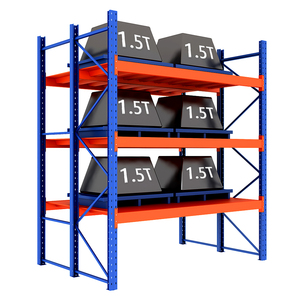
Warehouse Shelving Units Multi-level Steel Pallet Racking System Boltless Racks
- Beam Load: 1,000 – 4,500 kg/level
- Frame Profile: Cold Rolled Omega Section
- Standard: RMI / ANSI MH16.1 Standard
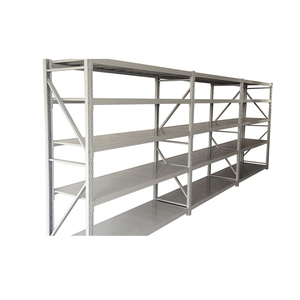
Shelf Factory Warehouse Multi-layers Blue Light Duty Use Racking Storage
- Capacity: 150 – 400 kg/layer
- Assembly: 100% Boltless Interlocking
- Coating: Electrostatic Micro-powder
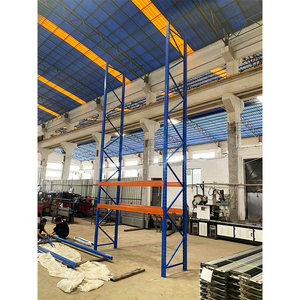
High-Capacity 5 Layer Steel Warehouse Rack with Large Load Capacity
- Bay Capacity: Up to 18,000 kg total
- Upright Pitch: 75mm Adjustability
- Safety Factor: 1.5 to 1.65 Structural FEA
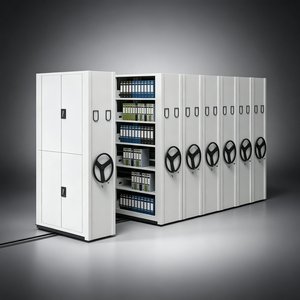
High Density Mobile Shelving System Steel Manual Electric Compact Racks
- Drive Mode: Mechanical Hand-Crank / PLC Electric
- Rail Profile: In-Floor / Surface Mounted CNC Steel
- Volume Gain: +85% Footprint Efficiency
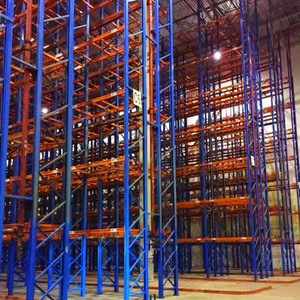
Warehouse Gravity Pallet Rack Narrow Aisle Racking 1000 to 3000 KG
- Flow Speed: Speed Controller Drum Braking
- Rotation: 100% Strict FIFO Automation
- Capacity: 1,000 – 3,000 kg / Pallet Position
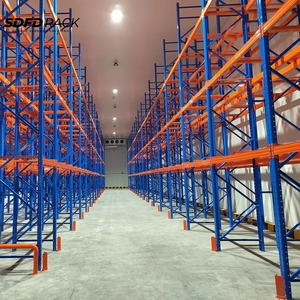
Heavy Duty Industrial American Teardrop 5-Level Pallet Racking System
- Connection: Teardrop Interchangeable (2" pitch)
- Lock Pin: Patented Spring-Activated Auto Lock
- Standard: Compliant with ANSI MH16.1 & RMI
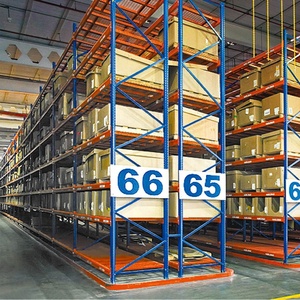
Narrow Aisle VNA Pallet Racking System Adjustable Cold Rolled Steel
- Aisle Width: 1,600 – 1,800 mm Ultra-Narrow
- Vertical Reach: Up to 16.5 Meters Elevation
- Guidance: Mechanical Floor Angle / Magnetic Wire
Years Collective Engineering Heritage
RMI / ANSI MH16.1 Code Compliance
Annual Precision Steel Throughput
Global Tier-1 & Fortune 500 Projects
Finite Element Engineering for Extreme Vertical Storage
Multi-tier racking systems and rack-supported intermediate mezzanines represent complex engineering structures subjected to high static gravity forces, dynamic seismic acceleration, and active horizontal braking loads from order-picking machinery. As China's premier manufacturer, our fabrication starts with premium certified continuous strip steel (Q235B and high-yield Q355B with up to 355 MPa minimum yield strength).
Every upright column undergoes multi-stage continuous roll forming. The resulting omega-shaped profile incorporates multiple structural stiffening ribs along the web and flanges, preventing torsional buckling under high axial stress. Unlike standard light-duty boltless shelving, our heavy-duty multi-tier uprights maintain a strict factor of safety compliant with the American Rack Manufacturers Institute (RMI MH16.1) and European EN 15512 specifications.
Deflection Performance Threshold: Floor primary beams and walkway secondary purlins are strictly engineered to remain below L/200 under total design dead + live load, and L/300 under dynamic pallet impact conditions, safeguarding operational safety.
Surface treatment is executed through a continuous 7-stage pre-treatment line including acid pickling, zinc phosphate conversion coating, and high-voltage electrostatic automated thermosetting powder coating (average 60–80 microns dry film thickness). This eliminates peeling risks and delivers salt-spray corrosion resistance exceeding 500 hours under ASTM B117 standards.
| Structural Metric | Engineering Standard | Compliance Moat |
|---|---|---|
| Base Material | GB/T 700 Q235B / Q355B | ✓ Chemical Mill Verified |
| Upright Perforation | 50mm / 75mm CNC Punching | ✓ ±0.1mm Cumulative Tol. |
| Structural Weldment | AWS D1.1 / EN ISO 15614 | ✓ 100% Robot Mig Welded |
| Deflection Limit | ANSI MH16.1 (L/180 min.) | ✓ Exceeds to L/240 |
| Floor Deck Load | 300 – 1,200 kg/m² Uniform | ✓ FEA Stress Certified |
| Seismic Anchorage | IBC Chapter 16 / ASCE 7 | ✓ Dynamic Site Calculated |
Why Global Logistics Engineers Specify Our Factory
From engineering concept to final site turnover, we eliminate the risks of multi-tier modular construction with unmatched domestic manufacturing integration.
In-House Structural Engineering
Decades of project-level calculation experience using ANSYS and SAP2000 to deliver full seismic, wind, dead, and dynamic load documentation tailored to regional building codes.
Strict RMI & Global Standards
Fabrication executed under RMI ANSI MH16.1, Australian AS4084, and European FEM 10.2.02 codes, providing Fortune 500 multinationals seamless local regulatory approval.
Automated Powder Paint Lines
Continuous automated conveyorized powder coating line guaranteeing pinhole-free curing, superior film thickness, and maximum abrasion resistance in intense warehouse conditions.
End-to-End Project Delivery
Dedicated project engineers oversee layout simulation, containerized export packing, clear component stamping, and direct onsite structural installation supervision worldwide.
Future Procurement Trends: Navigating the 2026–2030 Horizon
Global supply chain directors and third-party logistics (3PL) executives are transitioning from commodity-driven purchasing to Total Cost of Ownership (TCO) lifecycle procurement.
Integration with AMR & Robotic Automation
Procurement teams are no longer sourcing static manual shelving in isolation. Multi-tier mezzanine walkways are increasingly mandated to support Autonomous Mobile Robot (AMR) wheel-surface pressures, requiring high-torsion galvanized punch decking, precise floor joints (<1.5mm variation), and integrated conveyor vertical transfer shafts.
Factory-Direct Modular Decoupling
To hedge escalating overseas freight and regional distributor margins, major e-commerce enterprises now procure directly from verified Tier-1 Chinese manufacturers. By specifying standardized beam connectors, teardrop punch profiles, and pre-engineered seismic bases, buyers achieve 28–38% capital expenditure reduction.
Carbon Accounting & Steel Traceability
Cross-border procurement policies, including the EU Carbon Border Adjustment Mechanism (CBAM), necessitate transparent cradle-to-gate mill certificates. Our multi-tier racking production incorporates traceable low-carbon electric arc furnace (EAF) steel options and VOC-free powder coats to streamline customs compliance.
Smart Sensors, High-Strength Thin-Wall Profiles & Hybrid Modularity
The global intralogistics landscape is experiencing a paradigm shift. Industrial land costs near metropolitan transportation corridors have risen over 45% in the last five years, rendering conventional single-tier warehousing economically non-viable. Consequently, heavy-duty multi-tier racking is rapidly evolving into integrated, multi-story structural micro-fulfillment centers.
Key technological developments our R&D engineering center is leading include:
1. Ultra-High-Strength Thin-Wall Cold-Formed Steel: By utilizing micro-alloyed steel sheets, our structural engineers reduce deadweight by 14% while improving flexural load capacities. This lowers baseplate foundation pressure on standard 150–200mm warehouse concrete slabs without requiring expensive sub-floor pile driving.
2. IoT Health-Monitoring Strain Transducers: Modern high-bay multi-tier installations can be fitted with non-destructive, surface-mounted optical strain gauges. These digital telemetry nodes continuously track localized beam deflection, floor vibration, and accidental forklift collisions, streaming real-time structural health status to facility warehouse management software (WMS).
3. Plug-and-Play Sprinkler & Lighting Integration: Pre-punched conduit pathways along vertical uprights and horizontal stringers permit factory-integrated ESFR (Early Suppression, Fast Response) fire sprinkler brackets and energy-saving low-voltage LED sensor strips, reducing overall field installation timelines by more than 30%.
Engineering Whitepaper Insight: A properly engineered 3-tier rack mezzanine triples usable picking positions within an identical roof footprint. When amortized across a 10-year facility lease, the capital investment represents less than 18% of the recurring cost of leasing equivalent standalone ground-level industrial warehouse real estate.
| Warehouse Parameter | Single-Level Conventional | Multi-Tier Mezzanine Rack |
|---|---|---|
| Storage Density | Baseline (100%) | Up to 320% Expansion |
| Footprint Utilization | 35 – 45% Floor Area | 85 – 92% Usable Volume |
| Order Picking Speed | Linear Walk Times | Zoned Multi-Tier Picking |
| Expansion Flexibility | Fixed Real Estate Move | 100% Demountable / Expandable |
| Sprinkler Pipe Integration | Ceiling Suspended Only | Integrated Sub-Tier NFPA 13 |
Frequently Asked Technical Questions (FAQ)
Engineered clarifications addressing structural safety, building code compliance, concrete slab requirements, and global project execution.
What concrete slab thickness and strength are required for heavy-duty multi-tier racking? ▾
Generally, a 2-tier or 3-tier rack-supported system requires a minimum reinforced concrete slab thickness of 150mm to 250mm (6 to 10 inches) with a compressive strength of at least 3,000 to 4,000 PSI (20 to 30 MPa). During our engineering discovery phase, our project engineers analyze your exact soil compaction coefficient and slab reinforcement drawings to calculate maximum concentrated baseplate point loads, selecting wedge or chemical anchor embedments that mitigate concrete punch shear failure.
How do you handle fire suppression (NFPA 13) and municipal building permits? ▾
All multi-tier platforms designed for overseas installation incorporate standardized open-grid steel mesh or slotted perforated steel decking (providing 50% or greater water-drop penetration) in full accordance with NFPA 13 sprinkler penetration standards. Furthermore, we provide certified structural calculation sheets, load application drawings, and PE (Professional Engineer) stamps upon request to expedite local city building permit approvals.
What is the structural difference between structural channel and roll-formed racking? ▾
Structural channel racking is manufactured from hot-rolled C-channel steel bolted directly together, offering extraordinary impact resistance against heavy forklift collisions, making it the premier choice for exterior yards, harsh freezer cold-storage, and heavy push-back systems. Roll-formed racking is fabricated from high-yield cold-rolled coil steel into custom tubular or omega sections; it is lighter, highly cost-efficient, faster to install, and enables rapid vertical pitch adjustments on 50mm or 2-inch increments.
Can damaged uprights be repaired onsite without dismantling the entire multi-tier system? ▾
Yes. We engineer engineered bolt-on column reinforcement splices and heavy-duty straddle protectors. Provided the structural damage has not deformed the beam connector plates or upper tier floor stringers, certified upright replacement kits can be installed in-situ while utilizing localized vertical jacking posts, preventing complete bay unloading and eliminating costly operational downtime.
What parameters must I provide to receive an engineered layout and price quotation? ▾
To produce an optimized CAD proposal within 24–48 hours, our technical team requires: (1) Architectural warehouse CAD drawing indicating clear ceiling height, column spans, and egress doors; (2) Pallet or SKU dimensions (Width × Depth × Height) and maximum unit weight; (3) Intended material handling equipment (reach truck, order picker, or manual cart); (4) Local seismic zone acceleration values if known; and (5) Environmental operating conditions (ambient dry, chemical exposure, or cold storage).
How are components bundled and packaged to prevent maritime container damage? ▾
Upright frames and long mezzanine floor beams are strapped with high-tensile steel banding, separated by corrugated dunnage pads, and wrapped with heavy-gauge waterproof polythene film. All small structural brackets, connectors, and anchor hardware are sealed in reinforced wooden crating with desiccants. Individual bundles are tagged with alphanumeric tags matching the warehouse layout assembly drawings for seamless onsite offloading.
Do your systems support third-party WCS and automated conveyors? ▾
Yes. Our engineering department routinely coordinates with international warehouse automation system integrators. We custom-fabricate cantilevered conveyor support brackets, spiral chute landing frames, and reciprocating vertical lift (VRC) structural enclosures integrated directly into the multi-tier mezzanine steel framework.
Request an Engineered Layout & Seismic Load Calculation
Collaborate directly with our senior racking engineering specialists. Submit your warehouse architectural layout, clear heights, and unit load profiles to receive a comprehensive, RMI-compliant structural proposal within 24 hours.