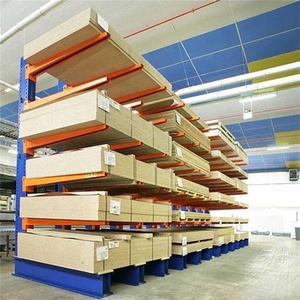
Engineering Fleet & Core Systems
High-Density Heavy-Duty Push Back Racking & Engineered Systems
Explore our certified, structural-grade warehouse storage families configured for exceptional duty cycles, variable pallet dimensions, and harsh industrial environments.
Nearly 70
Years Engineering Pedigree
100%
RMI / ANSI MH16.1 Compliance
6-Deep
Push Back Cart Modularity
Fortune 500
Global Industrial Partnerships
Comprehensive Engineering Whitepaper
Structural Mechanics, Kinematics, & Volumetric Densification
A technical dissertation on how precision-engineered push back racking eliminates honeycombing, conserves footprint, and ensures failsafe operational durability.
As modern international supply chains navigate skyrocketing real estate valuations, geopolitical disruptions, and the relentless expansion of SKUs, warehouse engineering has migrated from straightforward static containment to dynamic, high-density velocity systems. As an industry-leading China top heavy duty push back racking manufacturer and exporter, our technical mandate is clear: deliver hyper-dense pallet storage infrastructures that reconcile maximum volumetric utilization with minimal forklift maneuvering dwell time. Push back racking systems represent the pinnacle of mechanical simplicity matched with kinematic efficiency—offering up to 90% greater storage density than conventional selective pallet rack while avoiding the deep-lane structural vulnerabilities and operator fatigue inherent in drive-in racking.
The core kinematic architecture of heavy-duty push back racking hinges upon a nested-cart carrier carriage assembly suspended along precision-pitched structural steel inclined rails. Typically engineered on an elevation gradient of approximately 3/8-inch per foot (roughly 2.5% to 3%), this pitch harnesses natural gravitational force to glide stored unit loads effortlessly to the front pick face without motorized drives or electrical circuitry. When loading, the forklift driver places the initial pallet onto the uppermost nested cart. To load subsequent unit loads, the operator approaches the bay, aligns the next pallet against the first, and uses the forklift's motive thrust to gently push the existing pallet backward, thereby exposing the next sequential cart underneath. This process accommodates configurations ranging from 2-deep, 3-deep, 4-deep, and up to 5-deep or 6-deep per lane.
Unlike drive-in racking—which forces the forklift truck and operator to navigate inside narrow, unbraced vertical structural bays susceptible to catastrophic mast collisions—push back systems confine all forklift operations strictly to the exterior loading aisle. This architectural boundary minimizes lift truck travel distances, slashes cross-aisle cycle times by as much as 40%, and shields the upright columns and diagonal truss bracing from constant mechanical impact. Because each lane operates autonomously on a Last-In, First-Out (LIFO) inventory cycle, distinct SKUs can be concentrated vertically across identical column bays. This drastically curbs the severe space penalties known as "honeycombing" that plague traditional drive-in layouts when production lots do not fill an entire bay.
| Engineering Attribute | Heavy Duty Roll-Formed Push Back | Heavy Duty Structural Channel Push Back | Standard Drive-In Rack Comparison |
|---|---|---|---|
| Steel Substrate Grade | High-Yield Q235B / Q355B (50,000 PSI min yield) | Hot-Rolled ASTM A36 / Structural C-Channel | Standard Cold-Rolled Carbon Strip |
| Standard Pallet Depth Range | 2-Deep to 4-Deep Modular Formats | 2-Deep to 6-Deep Heavy Industrial Formats | 2-Deep to 10-Deep Tunnel Formats |
| Rated Load Capacity / Cart | Up to 1,500 kg (3,300 lbs) per pallet station | Up to 2,000+ kg (4,400 lbs) per pallet station | Restricted by rail cantilever deformation limits |
| Wheel Bearing Kinematics | Shielded, permanently lubricated steel ball bearings | Heavy-duty flanged ductile iron / sealed bearings | Non-rolling static steel ledge rails |
| Impact Resistance Index | Medium-High (Integrated column deflector plates) | Extreme (Impact absorbing structural channel lips) | Low (Direct risk to uprights inside lanes) |
| Cold Storage Performance (-30°C) | Standard grease limitations require special lube | High-performance low-temp cryo-greases standard | Prone to structural embrittlement without metallurgy certs |
Structural reliability in high-capacity push back manufacturing requires uncompromising geometric tolerances and strict compliance with the Rack Manufacturers Institute (RMI) ANSI MH16.1 specifications. As seasoned Chinese exporters shipping hundreds of deep-lane push back containers worldwide—ranging from North America and the European Union to Latin America and the Middle East—we integrate precision roll-forming with multi-axis automated robotic welding. Upright frames are engineered utilizing heavy closed-tube or teardrop configurations with reinforced return flanges to resist torsional buckling under asymmetrical live loads. The push back cart assemblies are laser-cut from high-tensile structural plate, outfitted with linked safety stops to prevent pallet dislodgment, and fitted with anti-lift hooks so nested carts cannot derail during abrupt pushing or retrieval actions.
Manufacturing Excellence
Why Tier-1 Distributors & Global EPC Contractors Choose Us
Combining nearly 70 years of engineered warehouse storage pedigree, multi-million-dollar automated finishing lines, and end-to-end accountable project management.
RMI & ANSI MH16.1 Compliance
Every structural push back frame, nested rail beam, and baseplate connection is fully engineered to conform to strict ANSI MH16.1 standards, ensuring verifiable load ratings and safety margins.
In-House Project Engineering
Dedicated civil and mechanical project engineers model site-specific structural FEA, verify soil-bearing dynamics, concrete slab anchor embedment depths, and calculate zone-tailored seismic ratings.
Roll-Formed & Structural Channel
We are among the few premier exporters providing both high-precision cold roll-formed uprights and rugged hot-rolled structural steel channel options fabricated under one single facility roof.
Automated Powder-Coat Lines
State-of-the-art multi-million-dollar automated electrostatic powder coating lines provide continuous corrosion shielding, rigorous salt-spray resilience, and scratch-resistant finishes for harsh environments.
Single-Point Project Management
From preliminary CAD concept layouts and production oversight to international ocean logistics and onsite installation supervision, our project engineers eliminate operational friction.
Impact Protection & Longevity
We supply specialized bolt-on straddle column protectors, heavy-duty floor-anchored bull-nose guards, and reinforced upright leg configurations to drastically slash system lifecycle maintenance costs.
Fortune 500 Vetted Quality
Decades of long-term supply chain partnerships with global 3PL operators, cold chain giants, and Fortune 500 enterprises stand testament to our stringent zero-defect quality control culture.
Global Export Experience
Exporting turnkey, containerized push back systems globally with fully compliant export steel packaging, knock-down modular carrier cart designs, and localized code documentation.
Strategic Sourcing Intelligence
Emerging Trends Shaping Global Racking Procurement (2025–2030)
How supply chain leaders are de-risking capital investments, adapting to seismic tightening, and optimizing total cost of ownership (TCO) in automated and dense storage environments.
Seismic Code Harmonization
Procurement teams increasingly face localized enforcement of heightened International Building Code (IBC) and Eurocode 8 standards. Modern push back procurement requires site-specific anchor embedment simulations, heavy baseplate design, and certified steel mill traceability from Chinese manufacturers to avoid costly regulatory commissioning shutdowns.
Cold Chain & ESG Energy Mandates
With sub-zero refrigeration representing one of the highest operational costs in logistics, cold storage operators are transitioning from standard selective racks to 4-deep and 5-deep push back systems. Squeezing maximum cubic density inside refrigerated envelopes drives double-digit kilowatt energy savings per pallet position stored over a multi-year horizon.
Hybrid Automation Synergy
Forward-thinking supply chain developers are deploying push back rack as dynamic buffer zones alongside automated storage and retrieval systems (AS/RS). By feeding high-speed automated cranes from heavy-duty push back accumulator lanes, facilities achieve smooth peak-throughput surge buffering without investing millions in redundant robotic cranes.
Engineering Horizon
R&D Horizons: Next-Generation Push Back Engineering
Discover how kinematic cart design, self-governing speed retarders, and digital twin metallurgy are reshaping heavy-duty warehouse storage.
Eddy-Current Dynamic Braking
In deep 5-deep and 6-deep push back systems carrying heavy pallets exceeding 1,500 kg, uncontrolled gravity roll-back can create shock loads. Our newest engineering integrates non-contact eddy-current magnetic dampening inside nested guide tracks, regulating cart glide speeds uniformly regardless of weight fluctuations or ambient temperature shifts.
IoT-Enabled Structural Strain Monitoring
The dawn of Smart Logistics brings micro-sensor load-cell brackets and vibration transducers mounted to primary structural uprights and cart channels. By streaming real-time live deflection data to central warehouse management software, systems alert facility directors of abnormal forklift impacts or severe bay overloading prior to mechanical failure.
Ultra-Low Profile Nested Cart Geometries
Traditional multi-tier nested carts can consume significant vertical bay height, which steals overall storage capacity in buildings with strict clear-ceiling restrictions. Advanced high-strength structural laser unibody press-brake forms now slash cart profile stacking heights by over 25%, preserving vital vertical clearance for additional vertical tiers.
Engineering Inquiry Resolution
Frequently Asked Questions: Push Back Racking Procurement
Direct answers from our senior warehouse engineering team regarding seismic compliance, structural vs. roll-formed options, cold storage modifications, and shipping economics.
What specific manufacturing standards and seismic codes do your push back racking systems satisfy?
All of our push back systems, structural upright frames, load beams, and cart guide rails are engineered in rigorous compliance with the Rack Manufacturers Institute (RMI) specifications—specifically ANSI MH16.1 (Specification for the Design, Testing and Utilization of Industrial Steel Storage Racks). Furthermore, for export shipments headed to seismically active regions across North America, Latin America, Japan, and New Zealand, our engineering department performs finite element structural calculations conforming to the latest editions of the International Building Code (IBC) and ASCE 7. We evaluate site-specific seismic accelerations (Ss, S1), building soil site classes, and concrete slab specifications to calculate baseplate footprints, gauge thicknesses, anchor bolt embedment depths, and cross-bay portal tie requirements.
How do I determine whether to specify structural steel channel or cold roll-formed steel for push back racking?
The choice between structural steel and roll-formed steel comes down to application intensity, load magnitude, and operational environment:
Roll-Formed Racking: Fabricated from high-strength continuous coiled steel (Q235B or Q355B), roll-formed systems provide superior cost efficiency, lighter dead load on concrete slabs, and ease of vertical adjustability with modular connector teardrop/keyhole clips. This makes roll-formed push back ideal for standard dry distribution centers handling loads up to 1,200 kg (2,600 lbs) per cart where lift truck operators have sufficient clearance.
Hot-Rolled Structural Channel Racking: Built from heavy structural C-channel steel with rigid bolted connections, structural systems offer unmatched resistance against forklift impacts, abuse, and torsional stresses. We strongly mandate structural channel for heavy-duty manufacturing environments, loads exceeding 1,500 kg (3,300 lbs), high-turnover cross-docking facilities, and cold storage/freezer warehouses where forklift maneuverability can be compromised.
What critical data points are required to engineer an accurate, project-ready push back quotation?
To eliminate costly revisions and provide an optimized engineering layout, procurement teams should prepare:
- Architectural Building Drawings: Precise DWG/CAD floor plans indicating building columns, clear ceiling heights under roof trusses, ESFR sprinkler drop lines, floor expansion joints, and overhead door locations.
- Pallet Load Profiles: Exact width, depth, overall height (including pallet and overhanging product), and certified maximum weight per loaded pallet. Push back cart frames must be custom-sized to avoid pallet overhang jamming adjacent carts.
- Pallet Bottom Construction: Wood GMA style, plastic runner, or perimeter base skid specs to verify wheel/cart interaction.
- Forklift Specifications: Lift truck type (counterbalance, reach truck), mast maximum collapsed and extended heights, turning radius, and rated lifting capacity at max reach.
- Environmental Conditions: Ambient temperatures (especially cold storage/freezer levels) and facility geographic zip code for seismic site modeling.
Can push back racking systems be successfully deployed in deep-freeze cold storage facilities?
Yes. In fact, push back racking is one of the premier high-density options for sub-zero cold storage (down to -30°C / -22°F). However, standard industrial components must be re-engineered for cryogenic operation. As an experienced exporter, our cold-chain specifications incorporate low-temperature certified steel chemistry to prevent cold-embrittlement fractures. Furthermore, all cart carriage flanged guide wheels are outfitted with stainless-steel or specialized low-temperature, synthetic food-grade silicone lubricants that do not congeal or seize under extended freezing conditions. The nesting cart clearance is also expanded slightly to accommodate accidental frost or ice buildup on the tracks without binding.
How are modular nested carts packaged and shipped internationally from China to safeguard dimensional tolerances?
Push back carrier carts and inclined guide track rails demand strict dimensional straightness; any bending during ocean transit will impede smooth gravity rolling. We engineer our nested cart assemblies with precision knock-down modularity. Carts are nested in dedicated heavy-gauge steel shipping jigs, wrapped in protective vapor-corrosion-inhibitor (VCI) films, and secured with heavy polyester banding inside 40-foot high-cube (40HC) shipping containers. Upright frames are bundled with protective dunnage between frames to eliminate paint chafing, and critical small parts (bearings, anti-lift clips, structural grade hardware) are boxed in moisture-barrier crating. Comprehensive packing lists and color-coded component tagging ensure smooth onsite unloading and installation.
What maintenance schedules and safety procedures are necessary to ensure push back operational integrity?
Push back racking possesses extraordinary reliability because it relies solely on gravity rather than complex electrical belts or gearboxes. However, adherence to regular safety maintenance protocols is essential:
- Monthly Visual Inspection: Check that the front pick-face push back stops and column safety straddle protectors are intact without structural deformation. Verify that no broken timber pallets or loose stretch-wrap have fallen into the cart lanes.
- Quarterly Kinematic Audit: Verify the free-gliding action of empty carts by manually pushing back the assembly to confirm smooth return roll-out under gravity. Examine wheel flange bearings for uniform tracking and absence of mechanical resistance.
- Annual Structural Fastener Check: Inspect beam-to-frame connector locks, rail mounting brackets, and anchor bolt torque values against original engineering design parameters.
Accelerate Your Warehouse Volumetric Efficiency Today
Contact our senior project engineering group for comprehensive structural layouts, custom load tables, and competitive FOB/CIF export pricing tailored to your unique facility geometry.