High-Density Industrial Stacking Racks & Pallet Handling Systems
Direct manufacturer supply of engineered roll-formed and structural steel storage racks. Each system is engineered to provide maximum load integrity, corrosion resistance, and flexible warehouse space optimization.
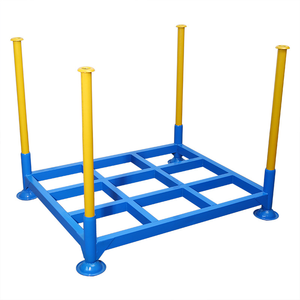
Corrosion Protection Warehouse Stacking Rack Foldable Storage Pallet Rack
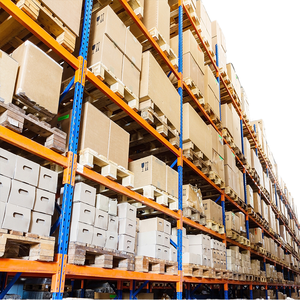
Customized Stacking Racks System Adjustable Industrial Pallet Shelf
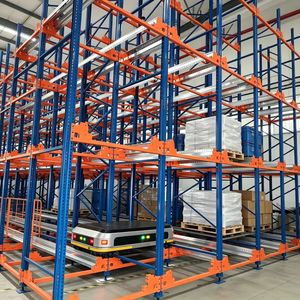
Radio Shuttle Multi-Level Steel Heavy Duty Pallet Storage System
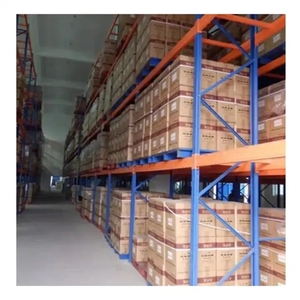
Industrial Shelving Medium Shelf Duty Steel Rack Storage Equipment
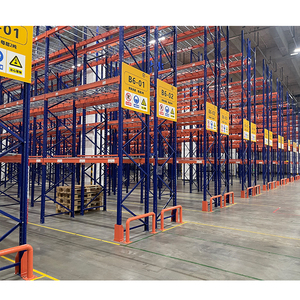
Latin America Storage Solution Heavy Duty Steel Pallet Racking System
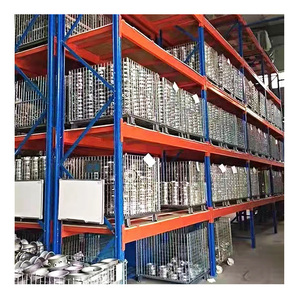
Narrow Aisle Selective Warehouse Racking Heavy Duty Pallet Shelf
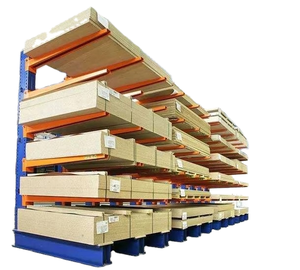
Adjustable Mobile Cantilever Racks Large Load Capacity Storage
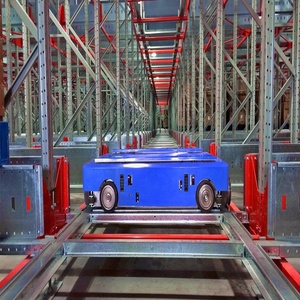
High-Efficiency Radio Shuttle Pallet Racking System 500-2000kg Load
Next-Generation Procurement Dynamics & Structural Engineering Trends
A rigorous examination of supply chain macroeconomics, automated warehouse integration, and structural longevity standards for B2B procurement leaders and EPC logistics directors.
Future Procurement Trends
Global procurement has transitioned from transactional price-per-kilogram bargaining to calculating Total Cost of Ownership (TCO). Modern supply chain engineers prioritize high-yield cold-formed steel coils (SS400, Q355B) that reduce deadweight while elevating structural seismic threshold capacities.
Procurement teams demand direct-from-mill raw material batch certifications, mill test reports (MTRs), and full compliance with ANSI MH16.1 specifications to eliminate installation liabilities in automated distribution centers.
Automation & Hybrid Modularity
Static storage has permanently shifted toward automated and semi-automated ecosystems. Facilities are increasingly deploying hybrid rack architectures that seamlessly combine Automated Storage and Retrieval Systems (AS/RS) with high-density Radio Shuttle lanes.
These systems demand manufacturing tolerances within tenths of a millimeter (±0.5mm profile deflection) to ensure continuous shuttle velocity and eliminate vehicle rail jamming during high-throughput multi-shift sorting cycles.
Anti-Corrosion Surface Chemistry
Cold chain logistics, refrigerated pharmaceuticals, and high-humidity equatorial distribution centers require superior corrosion defense. Traditional liquid paint has been displaced by multi-stage thermoset epoxy-polyester electrostatic powder coating and continuous hot-dip galvanization.
Automated pre-treatment baths (degreasing, phosphating, nano-ceramic passivation) ensure zero paint flaking, achieving over 1,000 hours of continuous salt-spray resistance under ASTM B117 laboratory standards.
Finite Element Seismic Verification
Building codes globally (including IBC 2024 and Eurocode 3) now enforce stringent non-building structural verification. Engineering departments leverage advanced Finite Element Analysis (FEA) software to simulate dynamic load responses under cyclic seismic vibrations.
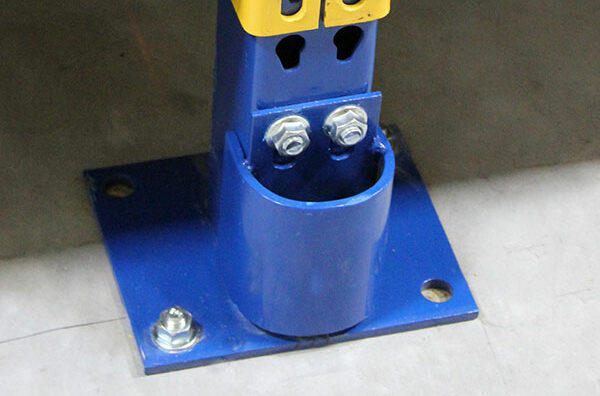
Upright column footplates are pre-engineered with dual-anchor embedment layouts, engineered gusset reinforcements, and energy-absorbing structural beam connectors to prevent catenary rack frame collapse during severe earthquakes.
Supply Chain Redundancy & Nesting
Global sea freight container volatility has made packaging optimization a decisive margin driver. Next-gen pallet stacking racks feature high-ratio foldable posts and nestable bases that achieve an 8:1 collapsed volume ratio.
This allows international distributors to pack over 280 units per 40ft High Cube container, dramatically reducing per-unit shipping amortizations and providing localized temporary staging agility during peak third-party logistics (3PL) seasons.
Sustainable Circular Steel Lifecycles
Decarbonization criteria are increasingly included in global EPC warehouse tenders. Racking fabricators operate under stringent ISO 14001 environmental frameworks, utilizing scrap-reduced automated laser perforation and fully recyclable dry powder recovery loops.
By delivering high-tensile modular systems that can be field-reconfigured or recycled without toxic emissions, tier-one manufacturers assist global operators in meeting corporate ESG and LEED accreditation targets.
Structural System Performance & Dynamic Capacity Comparison
Benchmark engineering data comparing cold-formed vs. structural hot-rolled pallet stacking rack architectures.
| Storage System Type | Primary Steel Grade | Dynamic Capacity | Forklift Impact Resistance | Surface Treatment | Best Application Scenarios |
|---|---|---|---|---|---|
| Foldable Stacking Racks | Q235B Tubular Structural | 1,000 - 2,000 kg / Tier | Moderate Impact | Electrostatic Powder (60-80μm) | Bulk seasonal warehousing, temporary overflow, tire handling |
| Heavy Duty Pallet Racks | Q355B / ASTM A1011 | 1,500 - 4,500 kg / Bay | High Channel Defense | Epoxy-Polyester / Pre-Galv | Selective SKU fulfillment, high-bay distribution centers |
| Radio Shuttle High-Density | SS400 High Precision | 500 - 2,000 kg / Runner | Structural Rail Shield | Heavy Powder / Galvanized Track | Cold storage (-25°C), high-throughput food & beverage |
| Cantilever Stacking Systems | Q235B / Q355B Heavy Channel | 800 - 3,500 kg / Arm | Heavy Flange Column | Outdoor Galvanized / Powder | Lumber, steel extrusions, continuous aluminum piping |
| Narrow Aisle (VNA) Racks | High Yield Cold Formed | 2,000 - 4,000 kg / Level | Guided Rail Isolated | Precision Electrostatic | Constrained footprint, 100% selective high-density logistics |
Nearly 70 Years of Engineered Storage Integrity & Global Compliance
As pioneers in the structural material handling industry, our engineering protocols align with Rack Manufacturers Institute (RMI) standards (ANSI MH16.1), providing global EPC contractors and distributors with uncompromised load safety and project execution excellence.
Frequently Asked Questions on Heavy Duty Pallet Stacking Racks
Authoritative technical guidance compiled by our structural engineering and international supply chain teams.
What specific structural standards do your pallet stacking racks comply with?
Our heavy-duty pallet racking systems and stacking racks are fully calculated, engineered, and fabricated in compliance with current Rack Manufacturers Institute (RMI) specifications (ANSI MH16.1 - Specification for the Design, Testing and Utilization of Industrial Steel Storage Racks). Furthermore, for European and international distribution, our manufacturing conforms to EN 15512, EN 15620, EN 15629, and AS4084-2012 standards, ensuring full structural compliance with regional building safety inspectorships worldwide.
What is the exact engineering difference between structural steel and roll-formed pallet racks?
Structural steel pallet racks are manufactured from hot-rolled C-channel structural steel with heavy bolted beam connections. This provides maximum impact resistance, making it ideal for severe, fast-paced forklift environments, outdoor yards, and harsh freezer warehouses. Roll-formed pallet racks are cold-formed from high-yield sheet coil (such as Q235B or Q355B), utilizing teardrop or slotted adjustable connections. Roll-formed systems are significantly lighter, cost-effective, faster to adjust in 50mm or 75mm increments, and represent the primary standard for general dry distribution centers.
How do you verify rack load integrity in earthquake-prone regions?
For projects located in seismic zones (e.g., California, Latin America, Japan, New Zealand), our structural engineering team performs site-specific seismic calculations under local building codes (such as IBC 2024 / ASCE 7). We analyze ground acceleration data (Ss, S1), building soil site class, clear stack height, and concrete slab specifications. Based on this data, we engineer enlarged baseplates, heavy anchor embedments, reinforced bracing diagonals, and increased upright column gauges to ensure non-catastrophic structural performance during seismic events.
What concrete slab thickness and anchor embedment are required for installation?
Standard selective and heavy-duty stacking racks typically require a reinforced concrete slab thickness between 150mm to 250mm (6 to 10 inches) with a minimum compressive strength of 3,000 to 4,000 PSI (20 to 30 MPa). Anchor bolt performance is governed by effective embedment depth rather than nominal drilled depth. In heavy installations, wedge anchors or chemical capsule anchors with embedments ranging from 100mm to 180mm are specified according to ACI 318 Appendix D anchor evaluation protocols.
How do nestable/foldable stacking racks lower maritime logistics costs?
Conventional welded storage bins consume massive non-productive volume during ocean transit. Our precision foldable stacking racks feature quick-detachable corner posts and nesting baseframes that collapse to an 8:1 volumetric ratio. A single 40ft High Cube container can hold up to 280 to 320 collapsed units compared to only 40 to 60 rigid frames. This reduces maritime freight costs by up to 75% per unit while providing flexible temporary buffer staging during seasonal logistics peaks.
Can damaged upright frames and stacking components be repaired in place?
Yes. Forklift impacts frequently damage the lower 600mm of front columns. Instead of undertaking costly full-bay teardowns and inventory disruptions, we supply engineered bolt-on rack repair kits fabricated from heavy structural C-channel with built-in internal deflector shields. When installed in accordance with RMI guidelines and verified by an engineer, these kits restore rated column capacity in place, drastically reducing maintenance downtime.
What parameters should buyers provide for an immediate custom engineering quote?
To receive an engineered project proposal, CAD drawing, and competitive manufacturer wholesale quote within 24 hours, provide: (1) Warehouse CAD floor plan or boundary dimensions including clear ceiling height; (2) Pallet specifications (Width × Depth × Height including cargo overhang); (3) Maximum weight per loaded pallet; (4) Required SKU throughput velocity (FIFO vs. LIFO); (5) Forklift model, mast height, and minimum turning radius; (6) Project geographical destination for seismic and climatic code evaluation.
Plan Your Heavy Duty Storage Infrastructure with Factory Engineers
Consult directly with our structural engineering team. Submit your building layout, target capacity, or custom pallet dimensions to receive complete load calculations, CAD layouts, and factory-direct volume pricing.
Contact Us