Precision Heavy-Duty FIFO & Pallet Storage Systems
Configured with heavy-gauge structural channels, roll-formed high-tensile uprights, and intelligent braking retarders. Engineered to streamline high-throughput First-In, First-Out workflows under maximum rated loads.
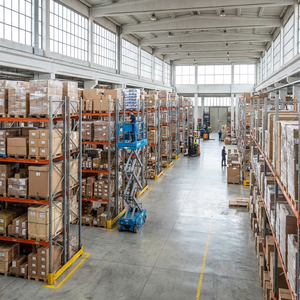
Heavy Duty Pallet Storage Rack Industrial Warehouse Steel Racking System Factory Direct Supplier
- Max Bay Capacity: Up to 24,000 kg
- Steel Profile: Roll-Formed / C-Channel
- Surface Finish: Thermo-set Powder Coat
- Standard: ANSI MH16.1 / RMI Compliant
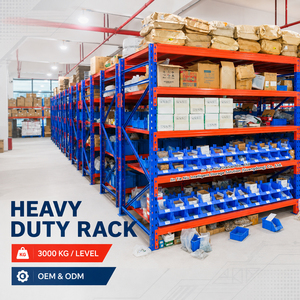
3000KG Per 5 Levels Warehouse Rack System With Steel Shelves For Parts Boxes And Bins Chinese Metal Shelves Storage Racks
- Payload / Tier: 600 - 1,000 kg UDL
- Vertical Adjustment: 50mm / 75mm Pitch
- Decking Type: Solid Ribbed Steel Decks
- Seismic Zone: Engineered to Zone 4
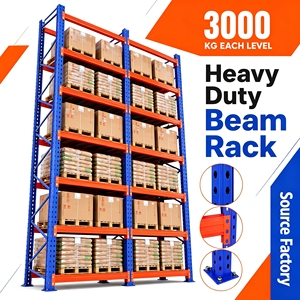
Factory Direct 3000kg High Load Metal Pallet Racking Industrial Steel Pallet Rack System for Warehouse Storage Heavy Goods
- Beam Capacity: 3,000 kg per pair
- Upright Profile: 90mm x 70mm x 2.0mm
- Safety Lock: High-Shear Gravity Safety Pins
- Pallet Depths: Single / Double Deep
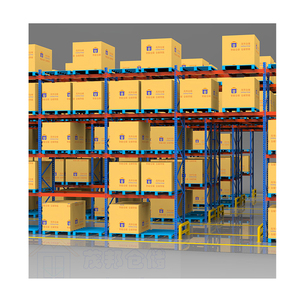
Industrial Heavy Duty Metal Shelving Single Deep Pallet Rack Selective Storage Warehouse Racking
- Accessibility: 100% SKU Direct Access
- Steel Grade: Q235B / Q355B Structural
- Deflection Limit: L/200 Standard (RMI)
- Aisle Format: Standard / Narrow / VNA
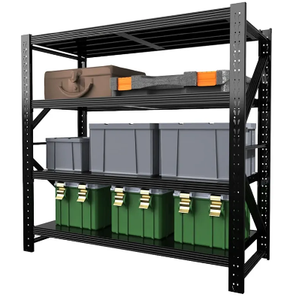
Industrial-grade Modular Steel Chrome Plated Pallet Rack System-250kg/Layer Heavy Duty Boltless Shelving 5-tier Narrow Aisle
- Tier Rating: 250 kg / Layer Uniform
- Connection: Boltless Wedge-Lock
- Anti-Corrosion: Chrome / Galvanized Option
- Assembly Time: < 20 Mins / Bay
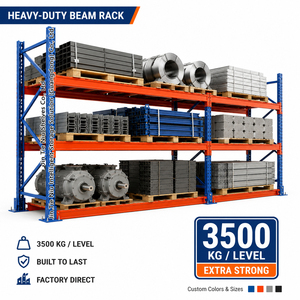
3500kg Extra Strong Industrial Steel Coil Motor Storage Heavy Duty Beam Pallet Warehouse Rack
- Max Capacity: 3,500 kg per storage level
- Design Focus: Coil Saddles & Point Loads
- Baseplate: Reinforced Welded Heavy Foot
- Impact Class: Heavy Plant Machinery Rated
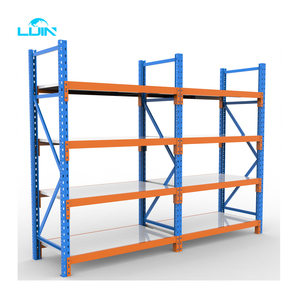
Boltless Adjustable Industrial Heavy Duty Pallet Racking System Warehouse Steel Metal Storage Racks Shelving Units
- Upright Pitch: 50mm / 75mm Incremental
- Steel Thickness: Upright 1.8mm - 2.5mm
- Beam Section: Box Beam / Step Beam
- Custom Colors: RAL Standard Matching
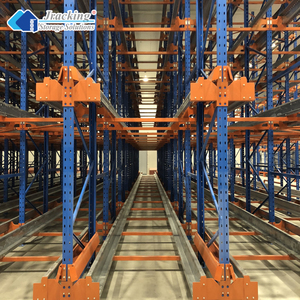
Automated Warehouse Steel Storage Racks Durable Radio Shuttle Racking System For Cold Storage
- Operating Temp: -30°C to +45°C (Cold Store)
- Automation: 24V / 48V Li-ion Shuttle Cart
- Lane Depth: Up to 40 Pallets Deep
- Density Gain: +85% vs Selective System
Structural Engineering Dynamics of Heavy-Duty FIFO Flow Racks
In modern industrial material handling, First-In, First-Out (FIFO) dynamic storage represents the pinnacle of floor area utilization and inventory turnover efficiency. Unlike static selective racking where forklift travel accounts for over 60% of total operator cycle time, gravity-driven pallet flow racking channels palletized freight down dedicated roller beds inclined at a calculated declination gradient—typically calibrated between 3.5% and 4.2% (7/16-inch to 1/2-inch per foot) depending on bottom-board wood grain, plastic runner configurations, and overall payload mass.
Our OEM/ODM manufacturing protocols address the critical engineering trade-offs between cold-formed roll-formed profiles and structural hot-rolled structural steel channels. While roll-formed uprights offer rapid adjustability via proprietary teardrop or keyhole connector slots punched on 50mm or 76.2mm centers, structural steel channels (ASTM A36 / Q355B) fabricated with welded heavy-gauge baseplates offer unparalleled impact resistance against heavy forklift fork collisions in busy FMCG, pharmaceutical distribution, and cold-storage operations.
Separator Mechanisms and Anti-Crush Dynamics at the Discharge Face
When pallets reach the extraction face of a 15-pallet-deep FIFO lane, dynamic line pressure builds significantly. Without mechanical intervention, the aggregate hydrostatic weight of upstream pallets exerts continuous forward thrust onto the leading pallet, pinching lift truck forks, compromising pallet stability, and creating severe tipping hazards. To solve this, our heavy-duty FIFO installations integrate engineered mechanical pallet separators.
These pneumatic or mechanical foot-pedal latch assemblies hold the trailing queue 150mm to 300mm behind the front pallet. Only when the forklift operator fully lifts and clears the lead load does the release mechanism actuate, allowing the subsequent unit load to index gently against the final cushioned end stops.
Why Global Logistics Operators Specify Our Infrastructure
Built upon nearly seven decades of structural engineering leadership, multi-million-dollar automated manufacturing plants, and a rigorous metallurgical quality assurance chain.
Finite Element Analysis (FEA)
Every upright configuration, beam connector, and lane bed undergoes rigorous FEA modeling to simulate seismic forces, torsional moments, and floor slab anchor embedment tolerances under maximum rated loads.
Multi-Million Dollar Coating Lines
Fully automated multi-stage pre-treatment, zirconium conversion coating, and electrostatic thermo-set powder spray booths deliver uniform 70–90 micron dry film thickness, resisting impact, corrosion, and extreme sub-zero cold room temperatures.
Strict RMI / ANSI Standards
All fabrication complies with Rack Manufacturers Institute (RMI) ANSI MH16.1 specifications. Full material traceability with mill test certificates (MTC) supplied for EN10204 3.1 steel compliance.
Turnkey Project Engineering
From CAD layout optimization, anchor bolt embedment calculation, and slab core-drilling evaluations to sea-freight packing protocols and on-site assembly supervision, we deliver complete end-to-end assurance.
High-Density Dynamic Storage Comparison
Evaluate mechanical parameters, aisle requirements, rotation characteristics, and capital allocation across heavy-duty industrial racking configurations.
| Racking Architecture | Inventory Rotation | Floor Area Efficiency | Lane Depth Capability | Forklift Aisle Demand | Optimum Industry Suitability |
|---|---|---|---|---|---|
| Pallet Flow (FIFO Live Storage) | Strict FIFO | 90% Max Utilization | 2 to 25 Pallets Deep | Dedicated Loading & Picking Aisles | Food & Beverage, Pharmaceuticals, Perishables |
| Radio Shuttle Cart Racking | FIFO or LIFO | 85% - 92% Dynamic | Up to 40 Pallets Deep | Single or Dual Access Aisles | Cold Storage, Deep Bulk Buffers, FMCG Distribution |
| Push Back Cart System | Strict LIFO | 75% Floor Efficiency | 2 to 6 Pallets Deep | Single Access Loading Face | Medium-Turnover SKU Buffering, General Warehousing |
| Drive-In / Drive-Through Rack | LIFO / FIFO (Drive-Thru) | 80% Static Density | Up to 10 Pallets Deep | Forklift Enters Storage Bay | Homogeneous Bulk Freight, Raw Material Reservoirs |
| Selective Pallet Racking | Any (Direct Access) | 40% - 50% (High Aisle Footprint) | Single / Double Deep | Aisles Every Bay Row | High-SKU Variety, Retail E-Commerce, Spare Parts Hubs |
Future Procurement & Technological Trends (2025–2035)
How automation, ESG green steel standards, and sensor-driven IoT rollers are transforming heavy-duty FIFO storage investments.
Convergence with AMR & AGV Material Flow
Traditional manual forklift loading is rapidly transitioning to autonomous mobile robots (AMRs) and automatic guided vehicles (AGVs). Future FIFO installations mandate laser-guided entry centering guides, millimetric pick-stop tolerances, and optical photoelectric sensors at discharge faces to ensure automated mast pickups without physical pallet snagging.
Intelligent Self-Regulating Braking Rollers
Next-generation dynamic flow tracks replace standard mechanical friction retarders with contactless eddy-current magnetic braking rollers. These maintenance-free rollers dynamically adjust braking torque in direct proportion to pallet mass, effortlessly handling 200 kg plastic pallets and 1,500 kg hardwood Euro-pallets in identical storage lanes without runaway acceleration.
Decarbonized Steel & Cold-Chain Energetics
Procurement mandates across Europe and North America prioritize green steel certified via EAF (Electric Arc Furnace) production with low embodied carbon footprints. Concurrently, escalating cold-chain power costs favor dynamic FIFO racking over standard selective racking, reducing cooled air volume requirements by 40% per stored metric ton of product.
Frequently Asked Technical Questions
Critical engineering considerations, code compliances, and site specifications answered by our chief racking design engineers.
What slope angle is required for heavy-duty pallet flow lanes, and how is it tested?
Standard heavy-duty FIFO pallet flow lanes require a slope pitch of 3/8-inch to 1/2-inch per foot (approximately 3.5% to 4.2% gradient). However, slope is contingent upon bottom-board quality: flat, hardwood pallets run smoothly at 3.5%, whereas grooved plastic pallets or softer softwood pallets with bottom runners perpendicular to roller direction require up to 4.2% pitch. Prior to mass production, our factory test facility builds physical 1:1 test tracks using actual client pallet samples under full load to verify rollability, restart friction after dwell time, and retarder braking efficiency.
How does our engineering team account for seismic design forces (IBC / ASCE 7)?
All seismic rack engineering is executed in compliance with ANSI MH16.1 and local building codes (IBC/UBC). Our structural engineers evaluate site-specific spectral acceleration parameters ($S_s$ and $S_1$), soil site classification, and concrete slab specifications. Based on these seismic coefficients, we specify heavy-duty baseplates, oversized seismic anchor bolts with certified effective embedment depths, and reinforced back-to-back row spacers to withstand vertical and lateral shear loads without joint failure or rack buckling.
What is the difference between roll-formed and structural steel in FIFO flow rack construction?
Roll-formed components are cold-rolled from steel coil, delivering exceptional strength-to-weight ratios, adjustable connector clips, and lower shipping mass—ideal for moderate-impact warehousing. Structural steel racks are hot-rolled C-channel sections (ASTM A36) with heavy bolted connections. Structural channels offer superior impact resistance against industrial reach trucks, thicker steel walls (typically 4mm to 6mm), and are standard for high-cycle distribution centers, food-processing cold storage, and harsh exterior loading zones.
How is pallet line pressure controlled in lanes exceeding 10 pallets deep?
Line pressure accumulates at approximately 8% to 10% of the aggregate downstream payload weight per pallet. In a 15-pallet lane carrying 1,000 kg pallets, the line pressure on the front pallet can exceed 1,200 kg, making safe extraction impossible. We engineer automatic mechanical pallet separators located directly behind the first position. When the first pallet docks, the separator pivots upward, mechanically locking the second pallet and trailing queue in place. When the operator picks the lead pallet, the mechanism indexes automatically, releasing only one pallet forward in a controlled cycle.
What concrete floor slab thickness and strength are required for heavy-duty racking installation?
For upright bay loads reaching 15,000 kg to 25,000 kg, typical industrial warehouse slabs must provide a minimum compressive strength of 3,000 to 4,000 PSI (20 to 28 MPa) with a continuous reinforced slab thickness of at least 6 to 8 inches (150mm to 200mm). The slab must be structurally sound and free from large control joints or subsurface voids directly under baseplate anchoring locations to ensure full anchor torque and pull-out resistance.
What export packing and sea-freight protection protocols do you implement?
Heavy-duty racking components are bundled using automated steel strapping and protective edge protectors. Upright frames and beams are nested on custom timber skids with foam interleaving to prevent surface abrasion. Critical components such as roller tracks, speed controllers, and mechanical separators are treated with vapor corrosion inhibitors (VCI), shrink-wrapped in moisture-barrier film, and crated in fumigated export-grade plywood crates, ensuring zero transit corrosion during transoceanic shipping.
Request an Engineered Layout & Production Quotation
Collaborate directly with our senior structural storage engineers. Send us your architectural floor plans, ceiling clearance elevations, pallet dimensions, and operational throughput targets for a complimentary CAD layout and feasibility study.