High-Capacity Industrial Racking & Pallet Systems
Direct from the source factory: certified structural channel and roll-formed racking architectures built to endure severe dynamic point-loading and seismic forces in high-throughput metal service centers.
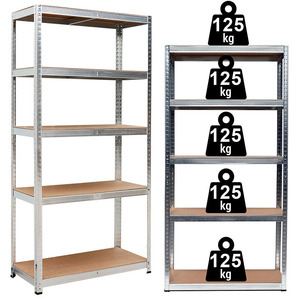
Light Duty Medium Duty Adjustable Multi-Layer Corrosion Protected Steel Aluminum Alloy Storage Shelf Boltless Warehouse Rack
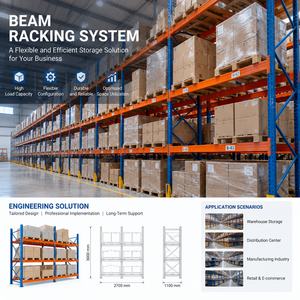
Selective Pallet Rack Logistics Warehouse Selective Pallet Racking Boltless Teardrop Beam Rack for Palletized Cargo Storage
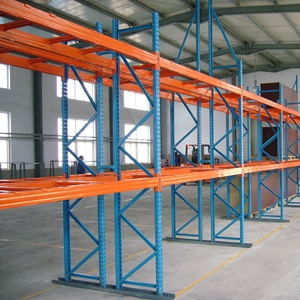
Adjustable Heavy Duty Pallet Rack Shelf Two Levels Custom High Load Capacity Industrial Warehouse Storage Pallet Racking System
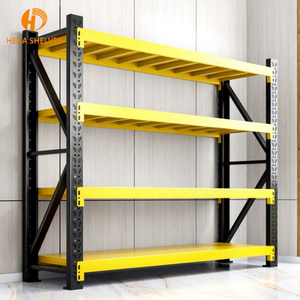
Boltless Adjustable Heavy Duty Load-Bearing 500kg/Layer Steel Racks Warehouse Industrial Stack Storage Racking Shelving System
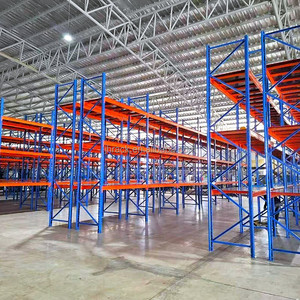
ODM Adjustable Beam Rack Industrial Heavy Duty Storage Shelves System Stacking Units Metal Rack Warehouse Steel Pallet Racking
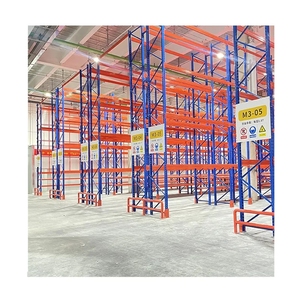
Adjustable Heavy Duty Steel Shelving Warehouse Racking Pallet Industrial Metal Racks For Storage
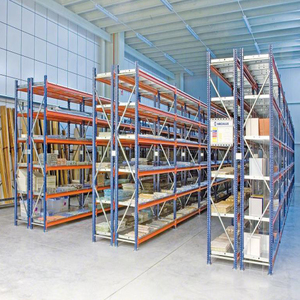
Pallet Racking Heavy Duty Teardrop Racking System 2000KG 2200KG 2300KG 2400KG 2500KG Pounds Tons
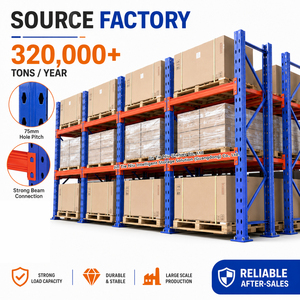
Source Factory Large Scale Multi Bay Heavy Load Warehouse Pallet Beam Storage Racking System
Engineering Structural Integrity for Extreme Point-Loads in Steel Coil Racking
In modern industrial logistics, heavy duty steel coil storage represents the apex of structural challenges. Unlike standard palletized consumer goods, hot-rolled, cold-rolled, galvanized, or stainless steel coils exert massive concentrated point loads on racking members. A typical single coil spans between 5 metric tons (11,000 lbs) and 35 metric tons (77,000 lbs) with outer diameters varying from 900 mm to 2,200 mm. When stored in multi-tier elevated configurations, these cylindrical loads generate tremendous lateral outward wedging forces, severe shear stresses at beam-to-column connections, and intense localized concrete slab punching stresses.
As premier OEM/ODM manufacturers and global exporters, our engineering teams deploy rigorous Finite Element Analysis (FEA) compliant with ANSI MH16.1: Specification for the Design, Testing and Utilization of Industrial Steel Storage Racks and European standard EN 15512. We eliminate the systemic risks of catastrophic racking collapse through structural channel members (ASTM A36 and ASTM A572 Grade 50), precision-milled V-cradles with calculated wedge-break angles, and vibration-damping polyurethane saddle linings that safeguard cold-rolled coil edges from scratching, ovalization, and plastic deformation.
Finite Element Stress Distribution (FEA)
Every custom beam weldment undergoes dynamic loading simulations to eliminate fatigue hot spots. Saddle inclination geometry is optimized at 15° to 22.5° to distribute tangential wedging forces symmetrically into horizontal tie-beams, preventing torsional distortion.
Hot-Rolled Structural Channel Framing
While roll-formed teardrop profiles serve standard pallet warehousing, heavy steel coils necessitate thick-walled structural steel channels (C-sections up to C8x18.75). Bolted structural frame connections resist accidental impact from overhead bridge crane loading and heavy heavy-duty VNA trucks.
Surface Protection & Coil Geometry Integrity
Direct metal-to-metal resting generates pressure marks and surface oxidation. Our OEM racks integrate cast-polyurethane saddles, vulcanized neoprene strips, or ultra-high-molecular-weight polyethylene (UHMW-PE) blocks to shield premium automotive exterior-grade steel coils.
Technical Specification Matrix: Heavy Duty Coil Storage Typologies
To assist plant engineers, material handling integrators, and industrial procurement managers, the following comparative engineering matrix outlines standard structural envelopes fabricated across our export manufacturing lines:
| Racking Topology | Coil Loading Envelope | Standard Coil OD (mm) | Frame Column Section | Anchorage / Foundation Spec | Seismic Rating (US/EU) |
|---|---|---|---|---|---|
| Selective Structural Coil Rack | 10 – 30 MT / level | Ø 800 – 2,100 mm | Structural C5x9 – C8x18.75 | Dual 3/4" × 7" Wedge Anchors | IBC Seismic Zones 1 – 4 (Cat D/E) |
| Floor-Mount Modular Coil Cradles | 20 – 45 MT / bay | Ø 1,000 – 2,400 mm | Box Beam Tubular H-Section | Direct Slab M24 Chemical Studs | Zone 4 High Velocity Peak PGA |
| AS/RS Heavy Coil High-Bay Rack | 5 – 20 MT / cell | Ø 600 – 1,800 mm | High-Precision Structural Beam | Micro-Adjustable Precision Baseplates | Dynamic AS/RS Crane Resonance Class 1 |
| Slit Coil Cantilever / Stacker | 2 – 8 MT / arm | Ø 400 – 1,400 mm | Heavy Tapered Structural Flange | Pre-stressed Embed Plate Anchor Cage | AISC 360-16 / EN 1993 Structural Steel |
Nearly 70 Years of Precision Engineering & Global Supply Chain Dominance
For nearly seven decades, our manufacturing infrastructure has represented the high watermark of heavy-duty industrial storage fabrication. Rather than acting as a broker or third-party fabricator, our vertically integrated plant houses heavy-gauge structural roll-forming lines, computerized plasma beam-cutting centers, state-of-the-art robotic welding stations certified to AWS D1.1, and multi-million-dollar automated electrostatic powder-coating lines.
We operate as a trusted contract manufacturing partner for global material handling integrators, supplying Fortune 500 corporations across steel fabrication, automotive stamping, aerospace coil processing, and maritime transshipment hubs. Every production heat undergoes ultrasonic testing (UT), weld penetrant testing, tensile yield evaluation, and salt-spray corrosion resistance tests exceeding ASTM B117 standards.
Technological Evolutions & Global Procurement Trends in Coil Storage Systems
Key technological shifts shaping the next decade of heavy industrial warehouse logistics: automated coil transfers, dynamic weight sensing, and seismic resiliency under evolving global building codes.
1. Transition from Uncontrolled Floor Stacking to High-Bay High-Density Storage
Historically, steel coils have been floor-stacked using rudimentary wooden skids or ground trenches (often pyramidal 2-high or 3-high stacking). However, rising industrial land acquisition costs and stringent OSHA safety enforcement are accelerating the retirement of floor staging. Pyramidal stacking presents significant hazards: an uncontrolled roll of a 25-ton coil can cause structural building failure, and retrieve-efficiency for lower-tier coils is exceptionally poor (requiring multiple crane moves). Modern manufacturing plants are shifting procurement toward dedicated 2-to-5 tier selective structural coil racks, which liberate up to 72% of square footage while granting 100% immediate selectivity to crane and heavy VNA forklifts.
2. Integration of Autonomous Guided Vehicles (AGVs) and AS/RS for Heavy Loads
Automated Storage and Retrieval Systems (AS/RS) are no longer restricted to lightweight totes and standard 1,000 kg pallets. Heavy-duty coil storage is transitioning rapidly toward automated unit-load AS/RS stacker cranes equipped with hydraulic mandrel or saddle end-effectors. These systems demand exceptionally tight manufacturing and erection tolerances (deflection within L/800 under peak coil impact). OEM fabrication requires CNC robotic welding, post-weld shot blasting, and laser-guided hole punching to ensure millimeter alignment along racking rails exceeding 40 meters in height.
3. Real-Time Dynamic Structural Health Monitoring (IoT Sensors)
The implementation of industrial IoT strain gauges and tri-axial vibration sensors embedded directly within critical upright frame columns and saddle weldments represents a decisive industry trend. Heavy coils dropped from crane hooks exert dynamic shock factors ranging from 1.25x to 1.50x the static dead load. Smart sensor arrays notify plant managers immediately if a structural member experiences yield strain, anchor bolt shearing, or uncalculated frame impact from material handling equipment.
4. Decarbonization and Low-Carbon Structural Steel Sourcing
Global procurement teams in Europe and North America are facing mandatory Scope 3 emissions reporting and the EU's Carbon Border Adjustment Mechanism (CBAM). As a forward-thinking exporter, our factories are partnering with electric arc furnace (EAF) steel mills utilizing recycled scrap steel, reducing the carbon footprint of fabricated structural coil racks by up to 60% compared to traditional blast furnace routes. Automated non-toxic powder coating processes eliminate volatile organic compounds (VOCs) and drastically cut energy consumption per finished ton.
Dynamic Impact Mitigation
Integrated shock-absorbing coil stop pins and replaceable sacrificial buffer rails protect primary structural beams during overhead crane placement.
Anti-Dislodgement Locking
Dual-locking structural safety pins rated for 30,000 lbs of upward shear prevent beam uplift during crane hook engagement or dynamic seismic shockwaves.
Modular Cradle Versatility
Bolt-on interchangeable V-cradles allow single storage bays to safely handle diverse inventory: from narrow slit coils to 2.4-meter-wide master coils.
Concrete Slab Integrity & Seismic Anchoring for Heavy Coil Racks
A heavy-duty coil storage rack is only as resilient as the concrete slab beneath it. The combination of concentrated dead weight and tall vertical moments necessitates careful evaluation of foundation slab thickness, compressive concrete strength (f'c ≥ 4,000 psi), and anchor bolt embedment depths.
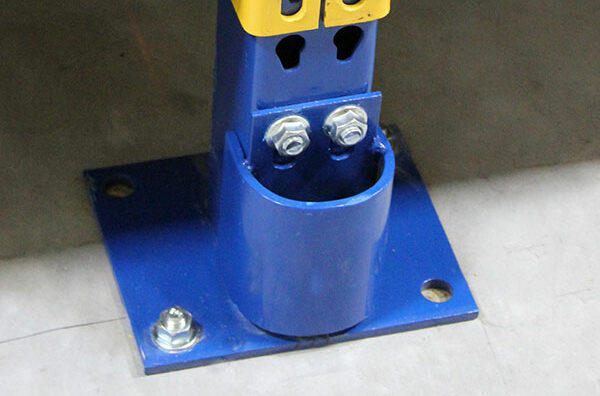
Structural Column Protectors
Thick 3/8" structural steel column bullnoses and straddle wrap protectors absorb accidental forklift collisions, preventing localized buckling of the primary vertical load channel.
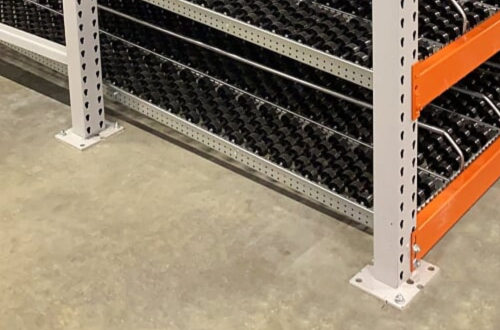
Heavy Seismic Wedge Anchoring
Upright baseplates feature multiple anchor punch holes supporting 3/4" to 1" heavy expansion or epoxy anchors, designed for effective embedment depths resisting intense overturning moments.
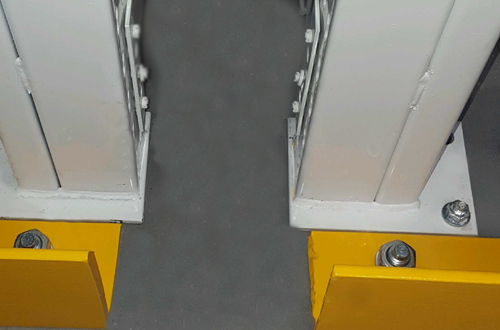
Slab Punching Shear Analysis
We calculate enlarged seismic baseplate dimensions (up to 14" x 14" x 3/4") to distribute concentrated column point loads across wide slab surface areas, averting foundation punch-through.
Frequently Asked Questions: Heavy Duty Steel Coil Racking
Technical guidance direct from our engineering teams to clarify load calculations, international certifications, cradle customization, and export logistics.
What international design standards and safety certifications govern your coil racking fabrication?
Our heavy-duty steel coil racking systems are designed and fabricated in strict accordance with ANSI MH16.1 (Rack Manufacturers Institute – RMI specification for industrial steel storage racks), AISC 360-16 (Specification for Structural Steel Buildings), and European standard EN 15512 (Steel static storage systems). Furthermore, all structural welding conforms to the rigorous quality controls of AWS D1.1 / D1.1M (Structural Welding Code – Steel). For projects situated in seismic regions, our structural engineers evaluate site-specific spectral acceleration parameters (Ss, S1) following ASCE 7 and international building codes (IBC), furnishing licensed Professional Engineer (PE) calculations and stamped layout drawings upon project commissioning.
What is the key structural distinction between roll-formed teardrop racks and heavy structural channel coil racks?
Roll-formed teardrop racking is manufactured from thin-gauge cold-rolled coil steel (typically 12 to 16 gauge) shaped into profiles via continuous roll formers. While economical for uniform palletized warehouse goods under 1,500 kg per pallet, it is fundamentally vulnerable to localized buckling under extreme, non-uniform point loads. In contrast, heavy structural coil racks are built from hot-rolled C-channels (ASTM A36/A572, up to 1/2" wall thickness) and heavy square structural tube. Structural racking features bolted connections that offer dramatically higher impact resistance, higher shear ratings at beam-column junctions, and superior torsional stiffness necessary to safely sustain single concentrated coil loads up to 45 metric tons.
How do you engineer V-cradles to prevent coil unwinding, egging (ovality), and surface scratching?
Coil protection requires careful balance between saddle angle geometry and contact material science. If the cradle angle is too steep, excessive lateral wedging forces push beams outward; if too shallow, the coil risks rolling out during seismic excitation. Our engineers calibrate saddle slope angles between 15° and 22.5° based on the specified diameter range. To safeguard high-finish surfaces (such as cold-rolled automotive skin panels, polished copper, or bright-annealed stainless), our cradles feature bolted, field-replaceable cast polyurethane linings (90-95 Shore A durometer) or virgin UHMW-PE liners. This prevents direct steel-on-steel friction, eliminates scratch damage, and evenly distributes bearing weight over an expanded circumferential contact arc to eliminate localized coil ovality.
What warehouse slab specifications are required to support multi-tier elevated coil storage?
Because total bay loading can easily reach 30 to 80 metric tons, the facility's reinforced concrete slab must be evaluated for both concentrated bearing capacity and punching shear. Typically, an uncracked concrete slab with minimum compressive strength of 4,000 to 5,000 psi (28 to 35 MPa) and a thickness of at least 8" to 12" (200 mm to 300 mm) is required for multi-tier heavy storage. To mitigate concentrated slab loads, our engineers design oversize baseplates (e.g., 300 mm × 300 mm up to 450 mm × 450 mm × 25 mm thick) equipped with dual or quad anchor patterns, ensuring distributed soil bearing pressure remains within the geotechnical subgrade capacity.
What parameters are needed for an accurate OEM/ODM engineering quote and layout design?
To produce an optimized engineering package and commercial quotation, our design team requires:
- Coil Parameters: Minimum and maximum Outer Diameter (OD), Inner Diameter (ID), width (face length), and maximum weight per coil.
- Material Handling Equipment: Overhead crane hook clearance and capacity, or forklift / VNA mast height, mast collapse height, and turning aisle width.
- Warehouse Environment: Architectural CAD drawings showing column grids, building clear height under roof joists, and fire sprinkler clearances.
- Seismic & Environmental Factors: Project geographic coordinates, building risk category, and local slab thickness / soil class.
How are oversized heavy structural racking components containerized for ocean freight?
As experienced tier-1 exporters, we custom-engineer ocean shipping bundles to optimize container payload limits while safeguarding powder-coated surfaces. Structural upright frames and long heavy-gauge box beams are banded using heavy steel strapping onto custom dunnage skids with wood separators, ensuring no direct metal-to-metal contact during sea transit. Small components, hardware, baseplates, and polyurethane pads are heat-sealed in moisture-barrier plastic wrap and crated in fumigated ISPM-15 compliant export plywood boxes. Heavy open-top containers (OT) or 40ft High Cube (HC) containers are stowed within maritime weight regulations, complete with lifting eyelets for seamless crane de-vanning at destination ports.
End-to-End OEM/ODM Manufacturing Advantages
From initial structural FEA modeling through automated fabrication and worldwide containerized export, we deliver comprehensive industrial reliability with single-source accountability.
Dedicated In-House Engineering
Over 35 structural and seismic engineers ready to evaluate complex coil configurations, custom mandrel cradles, and heavy crane interlocks with complete PE-stamped documentation.
Automated Powder-Coat Lines
Multi-million-dollar multi-stage pre-treatment and electrostatic powder-coating finishing lines provide continuous salt-spray and abrasion resistance under heavy industrial wear.
Fast-Track Export Lead Times
Streamlined raw material stockholding of Q235B, Q355B, and ASTM structural channel allows fast turnaround for multi-bay steel service center expansions and overseas EPC projects.