Standard & Custom Heavy-Duty Warehouse Racking Systems
Explore our heavy-duty roll-formed and structural pallet rack assemblies. Engineered for high seismic resilience, extreme load capacities up to 5,000 kg per level, and full compatibility with manual, semi-automated, and robotic warehouse operations.
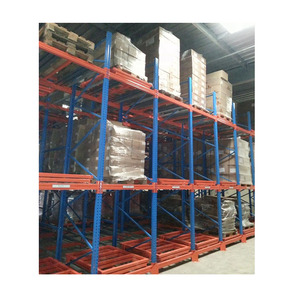
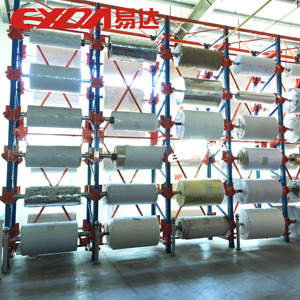
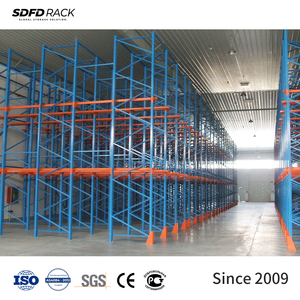
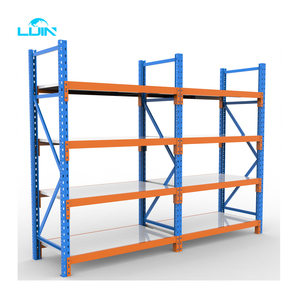
White Paper: Engineering Standards for Multi-Level Heavy-Duty Pallet Racking
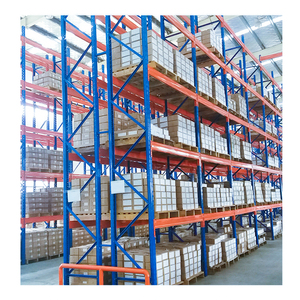
Modern distribution facilities, third-party logistics (3PL) conglomerates, and automated mega-fulfillment hubs operate in high-density environments where structural failure is not an option. Specifying China heavy-duty multi-level pallet racking demands a comprehensive understanding of metallurgy, cold-roll deformation behavior, dynamic seismic loads, and floor slab interactions. When sourcing industrial racking directly from leading Chinese OEM/ODM manufacturing facilities, global engineering directors must reconcile international standards—such as the American Rack Manufacturers Institute (ANSI MH16.1), the European FEM 10.2.02 / EN 15512 codes, and the Australian AS 4084 standard—with Chinese national steel grades (GB/T 700 Q235B, Q355B).
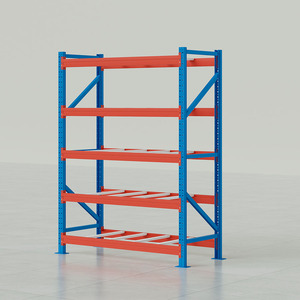
The structural integrity of a multi-tier or high-bay racking system rests fundamentally on its upright frames, horizontal step or box beams, diagonal bracing patterns, and baseplate anchorage. In cold-formed steel engineering, localized buckling and torsional flexure dictate allowable load thresholds. Premium Chinese manufacturers incorporate finite element analysis (FEA) into the preliminary drafting phase to model cyclic loading, beam deflection limits (governed by L/200 for roll-formed profiles or L/250 under stricter automated tolerances), and floor slab load dissemination.
Metallurgical Profiling: Q235B vs. Q355B and International Equivalents
A crucial factor in global procurement from China is raw material traceability. Reputable export factories source mill-certified coils exclusively from state-level prime steel producers (such as Baosteel, Shougang, or Ansteel). Mill test certificates (MTC) confirm carbon equivalents, yield strengths, and elongation attributes before coil slitting begins.
| Steel Grade (China GB) | International Equivalent | Minimum Yield Strength (MPa) | Tensile Strength (MPa) | Primary Structural Application |
|---|---|---|---|---|
| Q235B | ASTM A36 / EN 10025 S235JR | ≥ 235 MPa | 370 – 500 MPa | Standard selective pallet beams, diagonal bracing, wire decking channels |
| Q355B (Formerly Q345) | ASTM A572 Gr. 50 / EN 10025 S355JR | ≥ 355 MPa | 470 – 630 MPa | Heavy-duty high-bay uprights (>12m), multi-tier mezzanine columns, drive-in arms |
| Q420 / Q460 High-Strength | ASTM A656 / EN 10149 S460MC | ≥ 420 – 460 MPa | 520 – 680 MPa | Seismic-zone AS/RS clad-rack warehouse monoliths, extra-long span transfer girders |
Using higher-yield Q355B steel in upright column roll-forming permits thinner wall gauges while sustaining rated payload criteria. However, qualified engineers recognize that high-bay deflection and localized hole perforation stresses around teardrop, diamond, or hex-lock connector slots require rigorous physical compression testing to prevent premature column web yielding.
Technological & Industrial Development Trends in Warehouse Racking
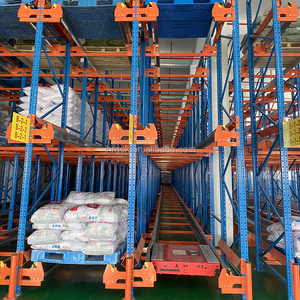
The global material handling industry is undergoing an unprecedented technological shift. Racking structures are no longer passive steel frameworks; they are precision-toleranced structural platforms serving automated guided vehicles (AGVs), autonomous mobile robots (AMRs), high-speed stacker cranes, and pallet-shuttle swarms. Leading Chinese manufacturing operations have upgraded production lines to satisfy these advanced criteria.
CNC Continuous Roll-Forming
Modern production facilities utilize 24-station to 32-station automated roll-forming lines. Integrated inline optical laser sensors monitor upright profile width and punch pitch tolerances within ±0.3mm across 15-meter single-piece frames, eliminating manual erection deviations in narrow-aisle environments.
Robotic Laser Beam Welding
To eliminate inconsistencies associated with manual metal inert gas (MIG) welding, robotic dual-arm welding cells execute three-point and four-point beam connector weld seams simultaneously. Penetration depth is monitored in real-time to guarantee joint rotational stiffness values under maximum permissible live bay loads.
Automated Electrostatic Coating
Multi-stage automated surface pre-treatment (degreasing, phosphating or silane conversion, and double deionized rinsing) prepares steel surfaces for TGIC-free polyester powder deposition. Fully automated lines cure coatings at 180°C–200°C, yielding a minimum 60–80 micron dry film thickness (DFT) with 500-hour salt spray corrosion resistance.
Structural Evolution: Rack-Supported Buildings & Seismic Engineering
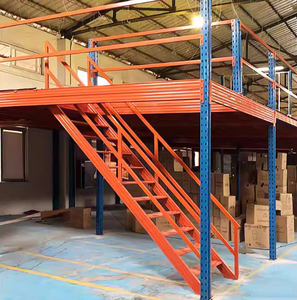
A notable technological milestone among top-tier Chinese manufacturers is the turnkey delivery of clad-rack structures (rack-supported buildings). In these architectures, the heavy-duty multi-level pallet rack system forms the internal storage matrix while simultaneously serving as the primary structural frame supporting the roof trusses, exterior wall cladding, and wind-load bracing systems. This approach eliminates the capital cost of separate structural building columns and maximizes vertical interior space utilization up to 40 meters high.
Simultaneously, seismic qualification has advanced through full-scale dynamic shake-table testing. Using seismic acceleration ground response spectra from the Uniform Building Code (UBC), International Building Code (IBC), and Eurocode 8, Chinese engineering divisions calibrate beam-to-column connector flexibilities (semi-rigid moment joints) to safely absorb earthquake energy without frame collapse.
Strategic Procurement Trends: The Next Decade in Racking Supply Chains
Procurement directors and supply chain executives managing large-scale distribution facility rollouts face volatile shipping dynamics, carbon accounting mandates, and compressed construction schedules. Understanding forward procurement trends ensures capital efficiency and operational readiness over multi-year asset lifecycles.
Modularity & Hybrid Layout Design
Warehouses now avoid monolithic, single-system setups. Contemporary procurement contracts prioritize modularity: standard teardrop or universal pitch frames configured so lower tiers function as carton-flow or push-back picking tunnels while upper levels house reserve bulk pallet staging.
Cold Chain Logistics Expansion
Global demand for temperature-controlled pharmaceutical and perishable food logistics has surged. Procurement specifications increasingly require hot-dip galvanized steel components (ASTM A123 / ISO 1461) or specialized sub-zero powder chemistries capable of enduring uninterrupted -30°C freezer operating cycles.
Digital Twin & BIM Procurement
Procurement teams now mandate complete Autodesk Revit BIM (Building Information Modeling) families from manufacturers prior to purchase confirmation. Digital clearance clashes with fire sprinklers, HVAC ducting, and structural roof trusses are resolved in 3D simulations before steel slitting commences.
Factory Verification & Enterprise Advantages: Why Source from China
Sourcing directly from tier-one Chinese manufacturing plants provides clear economies of scale, extensive engineering depth, and high vertical integration. Our direct OEM/ODM operations mirror the stringent engineering standards historically maintained by Western market leaders like UNARCO RACKING, while offering distinct manufacturing, tooling, and supply chain efficiencies.
Dedicated In-House Engineering
Over 40 senior structural engineers utilizing ANSYS and SAP2000 FEA software to provide stamped load capacity charts, floor slab punching shear audits, and custom CAD layout blueprints.
Certified Material Traceability
100% prime structural steel purchased directly from tier-one state mills. Every production run is backed by chemical heat analysis and mechanical physical yield stress documentation.
Automated Powder Paint Lines
Multi-million-dollar automated powder lines utilizing Swiss Gema guns. Delivers a durable, smooth electrostatic finish that resists chipping during heavy forklift loading cycles.
Export Packaging & Ocean Logistics
Precision bundled components with specialized steel-channel dunnage protection. Optimized container stuffing schemas minimize transit movement and maximize ocean freight volume utilization.
Request Complete Engineering Documentation & Capacity Tables
Planning a new logistics hub, mezzanine pick module, or automated rack-supported warehouse? Contact our structural engineering division for custom load calculations, technical DWG drawings, and comprehensive manufacturing quotes.
Get CatalogFrequently Asked Questions: Global Pallet Rack Procurement
Expert answers addressing structural engineering, seismic regulations, shipping logistics, and safety maintenance.
What international manufacturing and structural standards do your racking systems meet?
- United States: Rack Manufacturers Institute (RMI) ANSI MH16.1 – Specification for the Design, Testing and Utilization of Industrial Steel Storage Racks.
- European Union: EN 15512 (Steel static storage systems), EN 15620 (Tolerances, deformations and clearances), and FEM 10.2.02.
- Australia / New Zealand: AS 4084:2023 – Steel Storage Racking.
- Quality Management: ISO 9001:2015 quality assurance and CE marking certification for structural steel fabrications (EN 1090-1).
How do you engineer pallet rack anchoring to satisfy local seismic design categories?
What is the practical difference between roll-formed teardrop rack and structural C-channel rack?
Structural steel pallet rack: Fabricated from hot-rolled structural C-channel steel with heavy-duty bolted beam-to-frame connections. It features substantially thicker flanges and webs, offering exceptional impact resistance against forklifts. Structural rack is ideal for tough environments: cold storage and freezer vaults, drive-in/drive-thru lanes, dynamic push-back channels, and heavy industrial yards.
Can existing warehouse pallet racking be repaired instead of replacing entire upright frames?
What concrete slab thickness and compressive strength are required for heavy-duty racking?
What engineering parameters must be supplied to obtain a detailed layout design and quotation?
- Facility Architectural Drawings: Building dimensions, column grid centers, clear ceiling height, overhead obstructions, dock door positions, and egress paths.
- Pallet Load Profiles: Pallet dimensions (Width x Depth x Height including cargo overhang), maximum pallet gross weight, and minimum pallet structural quality.
- Material Handling Equipment (MHE): Forklift model, minimum right-angle stacking aisle width, mast lift height, and turning radius.
- Environmental & Seismic Criteria: Facility geographic location (for wind, snow, and seismic spectral data), operating temperature (ambient vs cold storage), and fire sprinkler design criteria (NFPA 13 in-rack sprinkler clearance).
How does your factory ensure anti-corrosion protection for export ocean shipments?
- Surface Pre-Treatment: Multi-stage chemical cleaning, acid pickling, and iron phosphating to ensure total paint adhesion.
- Automated Powder Coating: Thermosetting polyester powders applied electrostatically and baked at 200°C, providing uniform 70–90 μm film thickness without pinholes.
- Hot-Dip Galvanizing: For outdoor, humid, or sub-zero applications, components can be hot-dip galvanized in accordance with ASTM A123 / ISO 1461, delivering an 85+ μm zinc barrier.
- Protective Packaging: Export bundles are cushioned with plastic corner guards, wrapped in moisture-resistant PE stretch film, strapped with heavy steel banding, and supported on wooden or steel skids for smooth forklift destuffing.