High-Capacity Industrial Storage Systems
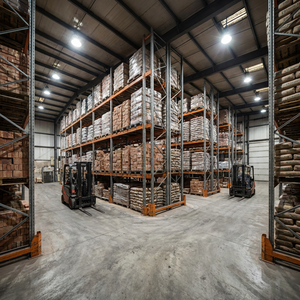
Manufactured using certified high-tensile structural steel profiles (Q235B/Q355B and S355JR), configured specifically for regional distribution centers, heavy manufacturing hubs, and open-yard logistics yards.
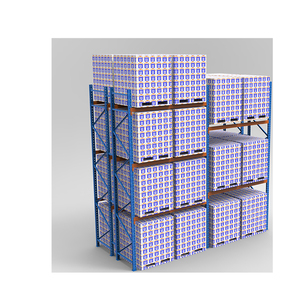
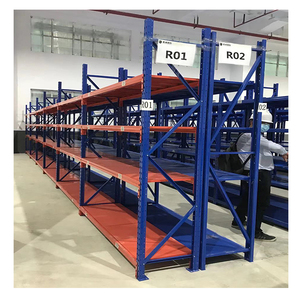
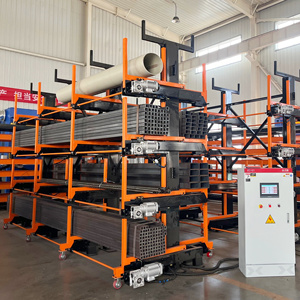
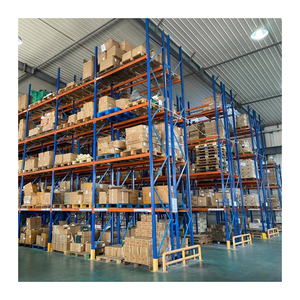
Engineering Structural Cantilever Racking for Middle East Load Realities
An in-depth structural analysis of hot-rolled versus roll-formed cantilever architecture under harsh climatic conditions, seismic mandates, and strict European CE Directives.
In high-density industrial warehousing, the storage of unpalletized, elongated, and irregular payloads presents mechanical challenges that standard selective racking cannot address. Industrial timber, structural steel hollow sections (HSS), pipeline bundles, aluminum extrusions, sheet metals, and composite paneling demand an uninterrupted horizontal storage plane free of frontal vertical columns. Cantilever warehouse racking addresses this logistical necessity. However, when deploying cantilever storage solutions within the United Arab Emirates (UAE) and wider Gulf Cooperation Council (GCC) zones, generic off-the-shelf catalog racks fail to withstand operational abuse, microclimate thermal swings, and local regulatory requirements.
1. CE Conformity: Navigating EN 15512, EN 15662, and the Machinery Directive
CE Certification serves as a benchmark of verifiable load predictability and structural safety. For warehouse cantilever systems exported to infrastructure hubs across Dubai (JAFZA, Dubai South) and Abu Dhabi (KEZAD), CE conformity signifies strict compliance with European Norms: EN 15512:2020 (Steel static storage systems – Adjustable pallet racking systems – Principles for structural design), EN 15620 (Tolerances, deformations and clearances), and EN 1090-1 / EN 1090-2 Execution Class 2 (EXC2) / EXC3 for load-bearing structural steel components.
Unlike roll-formed uprights that utilize mechanical interlocks without bolt clamping, CE-certified cantilever columns feature full-penetration robotic fillet welding of base plates, precision CNC-bored upright apertures, and high-tensile Grade 8.8 or Grade 10.9 structural bolt assemblies. Cantilever systems subjected to motorized mechanical handling (such as articulated four-way sideloader interaction or automated crane extraction) must also demonstrate compliance with safety risk assessment protocols aligning with the Machinery Directive 2006/42/EC where motorized components or telescopic arm extensions are integrated.
2. Hot-Rolled IPE/HEA Sections vs. Cold Roll-Formed Profiles
A primary engineering fork in cantilever design involves selecting between hot-rolled structural steel sections (IPE, HEA, HEB profiles conforming to EN 10025-2 S275JR or S355JR) and cold roll-formed sheet steel profiles (Q235B/Q355B). For light-to-medium manual-pick environments, cold-formed cantilever arms offer cost-efficient, low-deadweight solutions. However, in heavy industrial applications typical of UAE steel mills, pipe fabrication yards, and oilfield logistics hubs, hot-rolled IPE steel columns provide distinct structural advantages:
- Impact Plastic Deformation Resistance: Hot-rolled structural flanges exhibit significant resilience against fork impact. When an 8-ton counterbalance forklift strikes a cold-formed upright, the thin steel wall experiences localized web buckling, triggering systemic bay failure. Hot-rolled IPE columns absorb significant impact kinetic energy through elastic deflection before undergoing yield deformation.
- Deflection Elasticity Ratios: Under EN 15662 parameters, the maximum allowable vertical arm deflection under working load is restricted to
δ = L/200(where L represents the cantilever arm length). Our hot-rolled designs maintain an engineered upward pitch of 1.5° to 2.0° when unloaded, guaranteeing that upon full structural payload loading, the deflection vector approaches horizontal neutral without drooping downward—a condition that would otherwise create catastrophic payload roll-off risks. - Torsional Arm Rigidity: When uneven point loads occur—such as placing a dense 4,000 kg steel die across one arm edge—the hot-rolled structural cantilever connector bracket resists eccentric torsional forces, eliminating arm twisting that compromises adjacent aisles.
EN 1090-2 EXC3 Certified
Fabricated under stringent Factory Production Control (FPC). Ultrasonic and magnetic particle weld verification ensures crack-free performance under cyclic loading.
FEA Dynamic Simulation
3D Finite Element Analysis (FEA) validates stress concentration zones across arm root brackets, base flanging, and anchor bolt shear planes under multi-directional lateral loads.
Seismic UBC Zone 2A Compliance
Engineered to meet seismic acceleration requirements across the UAE tectonic plates (Dibba fault zone), accounting for non-cracked concrete anchor shear embedment.
Optimized Structural Applications Across UAE Industrial Zones
Tailoring heavy racking systems to the operational ecosystems of JAFZA, KEZAD, Sharjah Industrial Areas, and Ras Al Khaimah heavy fabrication corridors.
The UAE has transformed from a transshipment hub into an advanced industrial powerhouse driven by the Operation 300bn industrial strategy. Storage systems must directly mirror the logistical operations of specific industrial zones, taking into account environmental factors, local building codes, and sector-specific payloads.
1. Oil, Gas, and Petrochemical Tubular Staging (Abu Dhabi • KEZAD & Musaffah)
Within the Mussafah industrial district and Khalifa Economic Zones Abu Dhabi (KEZAD), logistics operators manage massive inventories of casing strings, drill pipes, tubing, and subsea manifold assemblies. These goods exhibit extreme linear density, ranging from 1,200 kg to over 5,000 kg per storage level. Here, cantilever racks are deployed as heavy-duty, double-sided independent columns reaching heights of 9 to 12 meters.
Because pipe bundles are prone to dynamic rolling inertia during crane drops or heavy sideloader retrieval, our engineering integrates custom removable end-stops (chock pins) engineered for 15% lateral payload impact capacity. Additionally, curved saddle supports lined with oil-resistant polyurethane are integrated to prevent metal-to-metal galvanic friction and surface scarring on exotic alloy tubing (such as Inconel or duplex stainless steels) used in offshore ADNOC developments.
2. Aluminum Extrusions & Architectural Systems (Dubai • JAFZA & Dubai Investments Park)
In proximity to Emirates Global Aluminium (EGA) downstream processors and architectural facade fabricators in JAFZA and DIP, storage challenges pivot from extreme tonnage to surface preservation and span deflection. Finished architectural aluminum profiles—often measuring 6 to 8 meters in length—suffer unrecoverable plastic bending if unsupported over wide spans.
For these facilities, we engineer multi-column cantilever arrays featuring tight column spacing (typically 1,000 mm to 1,200 mm centers) with low-profile, smooth-formed arms. Cantilever arms are equipped with continuous high-density polyethylene (HDPE) buffers or bolted wood stringers, preventing powder-coat abrasions or anodizing scratches during high-velocity selective picking via Combilift C-Series multi-directional forklifts.
3. Construction Timber, Rebar, and Gypsum (Sharjah Industrial Areas 1-18 & Ajman)
The building material trading hubs of Sharjah and Ajman handle variable timber bundles, marine plywood crates, PVC conduits, and high-tensile steel rebar. Warehouses in these older districts often feature lower ceiling clearances and uneven legacy concrete slabs. Our cantilever configurations for these regions utilize reinforced, wide-footprint base plates that distribute ground-bearing pressure across lower-capacity slabs (25 MPa to 30 MPa), preventing floor punching shear failures without requiring complete floor re-casting.
4. Coastal Salinity & Ambient Heat: Battling Environmental Degradation
The Arabian Gulf environment presents one of the world's most aggressive atmospheric corrosion profiles (classified as Category C4 to C5-M under ISO 12944). Warehouses located within 5 kilometers of the coastline (such as Port Rashid, Jebel Ali Free Zone, or Hamriyah Free Zone) experience extreme relative humidity cycles (exceeding 90%) combined with ambient air temperatures reaching 52°C in summer, alongside high airborne chloride and sand dust (silica) concentrations.
Standard indoor enamel paint formulations break down under UV exposure and salt-spray penetration, leading to rust blooms beneath the paint within 18 months. UNARCO RACKING mitigates this through advanced surface engineering:
- Hot-Dip Galvanization (ISO 1461): For open-air, canopy-covered outdoor yards in Jebel Ali and Ras Al Khaimah, all structural IPE cantilever columns, arms, and diagonal brace sets undergo hot-dip galvanization, receiving a minimum of 85 μm zinc thickness. This delivers over 25 years of maintenance-free service life resistant to sandblasting desert winds and coastal fog.
- Electrostatic Thermoset Architectural Powder Coating: For indoor climate-controlled and ambient facilities, we utilize automated 7-stage pre-treatment washing (zinc phosphating or nano-zirconium passivation) followed by electrostatic application of cross-linked polyester TGIC powder, cured at 200°C. This process guarantees 1,000+ hours of ASTM B117 salt spray resistance, anti-fading color retention, and chemical resistance against hydraulic fluids and battery acid exposure.
| System Class | Structural Profile | Load Rating / Arm | Max Column Height | Typical UAE Industry Application | Recommended Finish |
|---|---|---|---|---|---|
| Light-Duty Cantilever | Cold Roll-Formed C-Channel | 200 kg – 600 kg | 4,500 mm | Plastic conduit, light moldings, retail lumber | TGIC Epoxy-Polyester Powder (60-80 μm) |
| Medium-Duty Cantilever | Roll-Formed Box / Welded Lip | 600 kg – 1,500 kg | 6,500 mm | HVAC ducting, PVC piping, automotive panels | Thermoset Powder Coat (High Gloss) |
| Heavy-Duty Structural | Hot-Rolled IPE 180 – IPE 400 | 1,500 kg – 5,000 kg | 12,000 mm | Oilfield drill pipe, rebar, steel plate, granite slabs | Hot-Dip Galvanized / Heavy-Duty Marine Primer |
| Telescopic Arm System | Engineered Box Girder & Roller | 1,000 kg – 3,500 kg | 8,000 mm | High-value tooling dies, aerospace extrusions | Precision Polyurethane Industrial Enamel |
Macro Logistics Trends & "Make it in the Emirates" Realities
Analyzing how industrial automation, skyrocketing warehouse footprint costs, and sovereign economic programs are reshaping warehouse racking specifications.
The GCC supply chain ecosystem is witnessing a structural transformation. Driven by the UAE’s Vision 2031 and the sovereign Make it in the Emirates campaign, logistics infrastructure is moving away from low-density, sprawling floor layouts toward vertically integrated, high-cube automated architectures.
1. The Squeeze on Industrial Real Estate Lease Rates
Industrial land lease rates in core Dubai zones—particularly Al Quoz, Dubai Investment Park (DIP), and Dubai South Logistics District—have experienced consistent double-digit appreciation. As a result, operating standard 4.5-meter-high single-tier storage has become financially unsustainable for commercial third-party logistics (3PL) providers. Warehouses are maximizing vertical cubic volume, driving demands for structural cantilever racking columns reaching 9 to 14 meters clear height.
Operating at these heights requires advanced aisle planning. Conventional counterbalance forklifts demand wide aisles of 5.5 to 6.5 meters to turn 6-meter-long materials, forfeiting up to 60% of floor space to transit corridors. Progressive UAE facilities are pairing tall structural cantilever racks with Very Narrow Aisle (VNA) articulated reach trucks and Combilift multi-directional sideloader fleets, compressing aisle widths down to 2.2 to 2.8 meters. This integration expands storage density by up to 220% across existing footprints.
2. Civil Defense Safety Codes & ESFR In-Rack Fire Engineering
Stringent enforcement by the Dubai Civil Defense (DCD) and Abu Dhabi Civil Defence Authority (ADCD) under the updated UAE Fire and Life Safety Code of Practice has elevated fire engineering parameters for open racking. Elongated storage items, particularly PVC conduits, flammable timber crates, or hydrocarbon composites, present continuous burn surfaces that baffle ceiling sprinkler water cones.
Modern cantilever engineering must incorporate vertical structural conduit passages within columns to house integrated in-rack ESFR (Early Suppression, Fast Response) sprinkler piping. By routing internal water supplies behind structural column flanges and installing horizontal pipe shields, our cantilever designs prevent mechanical forklift punctures during loading cycles while ensuring compliance with NFPA 13, NFPA 230, and DCD inspection protocols.
Nearly 70 Years of Engineered Storage Excellence
Decades of continuous manufacturing innovation, strict RMI and European CE conformance, and multi-million-dollar automated fabrication lines.
Structural & Roll-Formed Dual Manufacturing
We operate dedicated production mills for both hot-rolled structural steel IPE channels and precision cold roll-formed upright profiles. This dual-capability allows us to engineer hybrid storage systems that balance structural load points with cost-efficient secondary levels, delivering significant capital expenditure optimization.
Automated Multi-Million-Dollar Paint Lines
Our automated production facilities feature fully conveyorized multi-stage pre-treatment, dry-off ovens, automated electrostatic reciprocator powder bells, and 200°C baking tunnels. This automated process ensures uniform film thickness (70–110 μm) without pinholes, drips, or unbonded zones, resisting micro-cracking during seismic flexing or structural load cycles.
Seismic Slab Anchorage Verification
We don't merely supply components; our in-house structural engineers evaluate your exact warehouse slab data (thickness, concrete compressive strength f'c, reinforcing rebar layout) to design baseplate geometry and specify heavy mechanical wedge anchors or chemical epoxy capsules that avoid shear failure under heavy seismic cycles.
Turnkey Export & Dedicated Engineering Accountability
Serving multinational clients and GCC distributors, our project engineers oversee container loading protocols, specialized export seaworthy crating, detailed structural CAD drawings, calculation dossiers, and localized site supervision for streamlined civil authority sign-offs.
Frequently Asked Questions by UAE Logistics Managers
Clear, engineering-backed guidance on regulatory approvals, Civil Defense clearances, import frameworks, and foundation requirements in the United Arab Emirates.
What are the mandatory Dubai Civil Defense (DCD) requirements for cantilever racking?
How does UAE building code seismic categorization influence cantilever baseplate and anchor design?
What certifications are required for customs clearance and Free Zone authority compliance in JAFZA/KEZAD?
Can cantilever racking be installed outdoors in UAE desert environments without rapid corrosion?
What warehouse slab specifications are necessary before installing heavy cantilever racking?
What operational clearances must be maintained between cantilever payloads and forklift handling equipment?
Consult Our Logistics & Racking Structural Engineering Team
Planning a new heavy industrial facility in Dubai, expanding storage in Abu Dhabi, or upgrading legacy layouts in the Northern Emirates? Connect directly with our certified technical engineering department for tailored CAD layout proposals, complete structural calculations, and rapid export quotation packages.