Specialized Pallet & Gravity Flow Solutions for Turkish Logistics Hubs
Precision-fabricated industrial racking modules tested for high-density staging, rapid pallet dispatch, and continuous stock rotation in seismic industrial environments.
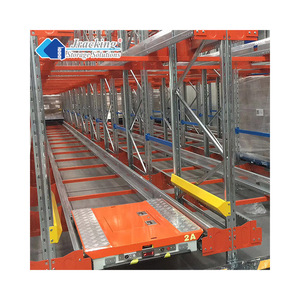
Jracking Heavy Duty CE Certified Radio Shuttle Rack
Two-way semi-automated radio shuttle pallet systems designed for deep lane storage and seamless material retrieval.
View Specifications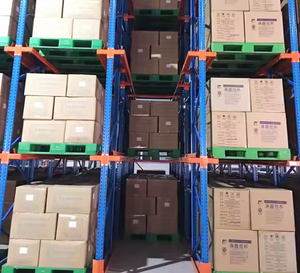
Heavy-Duty VNA Pallet Racking System Metal Drive-In
Very Narrow Aisle structural metal racking optimized for maximized vertical headroom and high cubic bay density.
View Specifications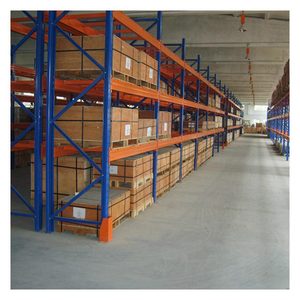
Heavy Duty Boltless Shelving Industrial Steel Racking
Precision roll-formed boltless modular system delivering rapid reconfigurability for 100% pallet accessibility.
View Specifications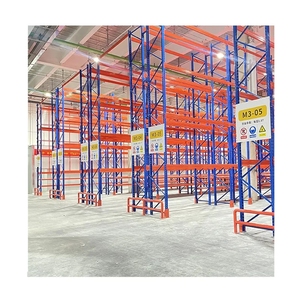
Adjustable Heavy Duty Steel Shelving Warehouse Racking
Versatile structural uprights configured to withstand heavy point-loads, seismic lateral forces, and forklift impacts.
View Specifications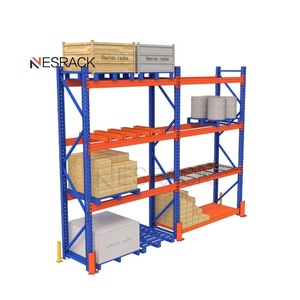
Nelson Manufacturer Metal Industrial Pallet Storage Shelves
Engineered wide-span bay assemblies specifically tailored for automotive components, packaging, and raw material storage.
View Specifications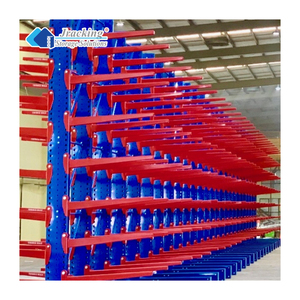
CE-Certified Cantilever Racking System for Long Profiles
Free-standing structural columns equipped with robust load arms for pipe profiles, timber, and steel coil staging.
View Specifications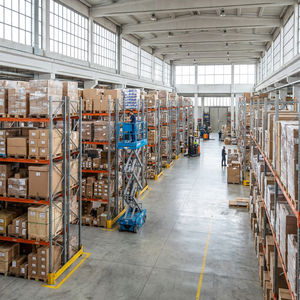
Professional Heavy Duty Pallet Rack Storage System
Direct-to-factory manufactured structural racking frameworks built to ANSI MH16.1 & FEM standards for global exporters.
View Specifications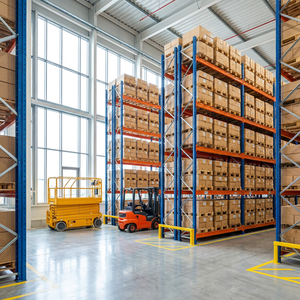
3000KG Extreme Load Multi-Level Industrial Racking
Ultra-high load capacity racking sections built with heavy-gauge steel uprights and safety load-locking beam connectors.
View SpecificationsThe Mechanics of Gravity Flow Racking in High-Density Material Handling
An engineering evaluation of First-In, First-Out (FIFO) dynamic storage physics, slope geometry calculations, and brake roller kinematics for high-throughput European-Eurasian supply corridors.
Gravity flow racking systems—widely recognized across the material handling sector as Pallet Flow Rack or Live Storage—constitute the apex of passive, high-density warehouse storage engineering. Unlike static selective racking or forklift-driven drive-in systems, a gravity flow racking system utilizes an inclined roller track bed (typically calibrated at an angle between 2.5% and 4.0% slope gradient) within a dedicated structural steel frame. Pallets loaded from the rear loading face travel smoothly down the declined lane under the controlled influence of gravitational force toward the forward discharge pick face.
This kinetic dynamic separates loading and retrieval into two completely isolated aisles, eliminating cross-traffic collisions, cutting forklift travel distance by up to 45%, and providing a mathematically strict FIFO (First-In, First-Out) product turnover cycle. For international logistics engineers and factory supply chain directors operating within the Republic of Turkey, the adoption of CE-certified gravity flow systems addresses two acute operational bottlenecks: rapidly escalating industrial real estate lease costs in key metropolitan corridors and severe warehouse seismic vulnerability challenges.
Strategic Deployment Across Turkey’s Industrial Super-Clusters
How leading industrial enterprises across Marmara, Aegean, and Central Anatolia leverage gravity pallet flow to achieve throughput efficiency.
Perishable Food & Cold Storage Logistics
Concentrated heavily in the Gebze, Bursa, and Izmir logistics corridors, cold-storage facilities face immense energy expenditures. Operating refrigerated and deep-freeze bays down to -30°C demands extreme cubic space utilization. Pallet flow systems eliminate redundant access aisles, compressing storage volume and reducing thermal leakage while preventing batch spoilage through autonomous FIFO stock expiration handling.
Automotive Tier-1 & OEM Staging
Centered in Bursa, Kocaeli, and Sakarya, automotive assembly plants demand strict Just-In-Time (JIT) and Just-In-Sequence (JIS) pallet delivery. Heavy-duty gravity flow racks serve as buffer dispatch staging beds immediately adjacent to manufacturing production lines, feeding stamped steel components, engine blocks, and sub-assemblies continuously to line-side picking tuggers without forklift interference.
Cross-Border E-Commerce & FMCG Hubs
With Istanbul establishing itself as a global megacity distribution hub bridging European and Middle Eastern consumer sectors, rapid pick-face replenishment is vital. Multi-tier carton flow and pallet gravity lanes are deployed within consolidated distribution platforms in Hadımköy, Tuzla, and Çerkezköy to accelerate split-case picking velocities and eliminate dispatch bottlenecks.
Market Evolution & Seismic Engineering Mandates in Turkey
Navigating the convergence of strict seismic design requirements, Eurocode conformity, and European nearshoring dynamics.
The Turkish warehousing and logistics landscape is undergoing an unprecedented modernization cycle driven by three structural catalysts:
1. Strict Compliance with Turkish Building Earthquake Code (TBDY 2018) & EN 15512: Turkey’s geographic exposure to active fault systems—notably the North Anatolian Fault Zone running directly beneath the Marmara industrial basin—makes seismic resistance an indispensable design criterion. Unlike standard static shelving, dynamic gravity flow racks contain kinetic masses rolling across sloped planes. Racking engineers must calculate vertical and horizontal seismic spectral accelerations, ensuring that baseplates, heavy anchor embedment depths, and cross-bay portal bracings prevent catastrophic frame collapse or pallet trajectory dislodgement during seismic vibrations.
2. Nearshoring and the Trans-Eurasian Logistics Corridor: As European and North American industrial operators diversify their supply lines away from Far Eastern reliance, Turkey has emerged as a premier nearshoring manufacturing hub. This shift requires export-grade warehouses in Mersin, Ankara, and Tekirdağ to mirror European Quality standards, necessitating CE marking, ISO 9001 certified manufacturing, and adherence to European Norms (EN 15620, EN 15629, EN 15635) for warehouse storage racks.
3. Transition from Static to Semi-Automated Material Handling: Rising labor costs and workforce safety regulations across Turkey's organized industrial zones (OSB - Organize Sanayi Bölgeleri) have accelerated the shift away from traditional counterbalance forklift maneuvering inside racking aisles. Gravity flow racking eliminates in-bay forklift travel, serving as a capital-efficient stepping stone toward full warehouse automation without requiring complex electrical grid installations or high-maintenance software integrations.
Engineering Specifications: Industrial Gravity Pallet Flow Racks
Verified structural parameters for procurement managers, structural engineers, and facility safety directors.
| Structural Parameter | Standard Specification | Heavy-Duty Option | Compliance Reference |
|---|---|---|---|
| Lane Inclination Gradient | 2.8% to 3.5% (Configurable) | Custom calibrated to pallet base | FEM 10.2.02 / EN 15512 |
| Individual Pallet Capacity | 500 kg to 1,000 kg | 1,200 kg to 1,800 kg per pallet | RMI / ANSI MH16.1 Design |
| Pallet Compatibility | Euro Pallet (800 x 1200 mm) | Industrial Pallet (1000 x 1200 mm) | ISO 6780 / EPAL / Turkkep |
| Speed Controller (Brake Rollers) | Centrifugal internal brake | Dynamic magnetic / hydraulic retarding | Automated Speed Capping <0.3 m/s |
| Steel Upright Profiles | High-tensile cold roll-formed Q235B/Q355B | Hot-rolled structural channel steel | EN 10025-2 / ASTM A36 |
| Surface Finishing | Electrostatic thermoset powder coat | Hot-dip galvanized (Cold storage) | ISO 12944 Corrosion Protection |
| Seismic Anchorage | Heavy-duty chemical/expansion anchors | Engineered seismic baseplates | TBDY 2018 / Eurocode 8 |
| End Stop Separators | Mechanical pedal separator | Pneumatic release pick face stop | Pressure-free extraction mechanism |
Why Industrial Buyers Rely on Our Global Manufacturing Architecture
Over nearly 70 years of engineered structural precision, certified fabrication, and end-to-end supply chain reliability.
Nearly 70 Years of Heritage & RMI Standard
Fabricating racking systems in strict compliance with current Rack Manufacturers Institute (RMI) specifications (ANSI MH16.1) and European CE standards. We build structural integrity into every upright frame, beam, and connector pin rather than delivering generic light-gauge metal profiles.
In-House Project Engineering & Seismic Analysis
Our dedicated engineering department conducts complete finite-element calculations (FEM), checking concrete slab thickness, anchor embedment dynamics, and building thermal variables to optimize floor space while upholding workplace life safety.
Multi-Million Dollar Automated Finishing Lines
Advanced multi-stage pre-treatment wash systems combined with automated electrostatic powder-coating guarantee uniform paint adhesion, abrasion resistance, and durable long-term protection against industrial atmospheric humidity and aggressive chemical environments.
Frequently Asked Questions by Turkish Warehouse Operators
Key technical, regulatory, and logistics answers for operations managers and corporate procurement teams.
How do dynamic gravity flow racks withstand high seismic activity in Istanbul and Marmara?
Dynamic racks located in seismic risk zones (such as Marmara, Kocaeli, or Izmir) are engineered under TBDY 2018 and Eurocode 8 standards. The kinetic energy of rolling pallets during an earthquake requires enlarged structural baseplates, reinforced anchor bolts with documented embedment depth, additional vertical bracing towers, and anti-jump roller clips to prevent pallet dislodgement.
Are gravity flow beds compatible with both Euro Pallets and non-standard Turkish wooden pallets?
Yes. While Euro Pallets (800x1200 mm) glide seamlessly on standard 3-track roller lanes, locally sourced wooden pallets across Turkey frequently exhibit irregular bottom runners, varying moisture levels, or missing bottom deck boards. We specify full-width steel cylindrical rollers or specialized staggered skate-wheel patterns combined with calibrated brake rollers to guarantee reliable flow across varying pallet bottom contours.
What safety devices prevent pallets from colliding violently at the discharge pick face?
Each flow lane incorporates centrifugal brake rollers installed at set intervals (typically every pallet length) that automatically limit pallet speed to a steady crawl below 0.3 meters per second. At the picking face, structural steel safety pallet separators isolate the lead pallet from back pressure exerted by trailing pallets, allowing forklift operators to lift the front pallet smoothly and without binding.
What documentation is necessary for customs clearance and installation permits in Turkey?
All imported industrial storage systems require complete CE Declaration of Conformity documents, EN 10204 3.1 steel mill test certificates, seismic structural calculation reports stamped by certified structural engineers, and detailed assembly drawings compliant with local Turkish municipality building regulations and fire department clearance specifications.
How does gravity flow compare in Total Cost of Ownership (TCO) against automated Radio Shuttle racking?
Gravity flow racking requires zero electrical power, zero charging routines, and contains no onboard electronics, lithium batteries, or drive motors. While semi-automated radio shuttle systems excel in ultra-deep lane configurations (up to 30 pallets deep), gravity flow delivers an outstanding TCO for lane depths of 4 to 12 pallets with minimal maintenance overhead, delivering instantaneous FIFO replenishment at zero operating power consumption.