Precision Warehouse Racking Systems for Kuwait Logistics
Custom fabricated with premium high-tensile structural steel (Q235B / Q355B / ASTM A572), advanced electrostatic epoxy-powder coating, and strict conformance to ANSI MH16.1 (RMI) and EN 15512 specifications.
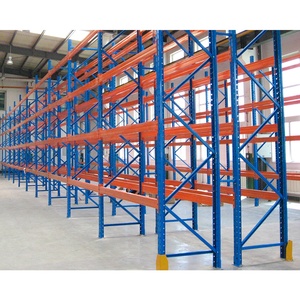
Customized Pallet Rack for Warehouse with Rack Safety
- Integrated column & frame protectors
- Load capacity: 1,000 – 4,500 kg/level
- Kuwait Fire Force (KFF) sprinkler gap
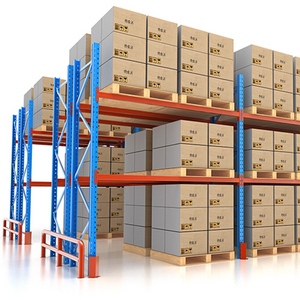
Heavy Duty Steel Single-Depth/Double-depth Selective Pallet Racks CE Certified Corrosion Protection Standard Wide Aisle Full
- 100% immediate pallet selectivity
- Epoxy thermoset anti-salt finish
- Reach truck & counterbalance layout
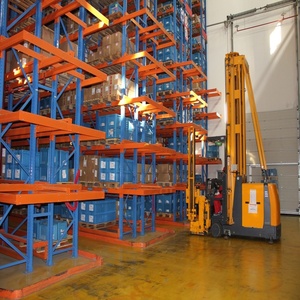
Heavy Duty VNA Pallet Rack Adjustable Steel 5 Layer Customized Selective Pallet Rack Industrial Warehouse Storage Racks
- Compact 1,600–1,800 mm operating aisle
- Vertical utilization up to 16 meters
- Floor guide rail or inductive wire guide
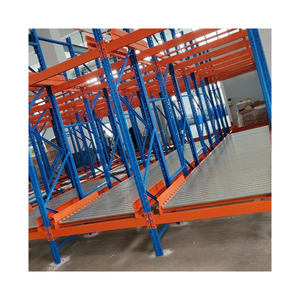
High Quality FIFO Gravity Carton Flow Rack Pallet Rack System Pallet Flow Racking Warehouse Equipment
- Gravity roller tracks with speed controllers
- Pure FIFO automatic stock rotation
- Ideal for fast-moving FMCG & pharma
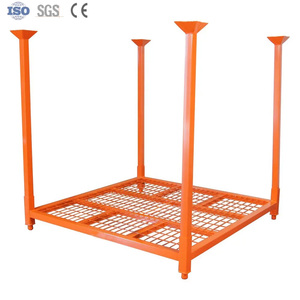
CE Certified Manurack Post Pallet - Hot-Dip Galvanized Stacking Rack For Euro Cold Storage & Logistics Efficiency
- ISO 1461 hot-dip galvanizing coating
- Sub-zero durability down to -30°C
- Modular stackable (3+1) layout
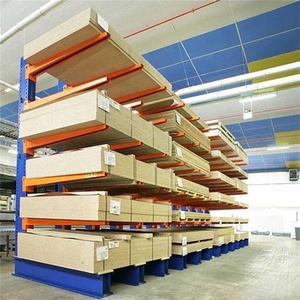
Heavy Duty Industrial Warehouse Storage Cantilever Arm Racking System
- Unobstructed frontal beam loading
- Steel pipes, building materials & timber
- Single-sided & double-sided profiles
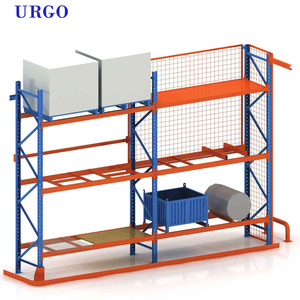
Very Narrow Aisle Pallet Rack / VNA Heavy Duty Racking System
- Up to 50% floor area footprint reduction
- Precision-engineered beam tolerances
- High throughput turret truck execution
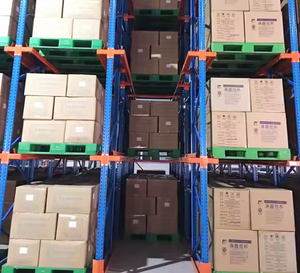
Heavy-Duty VNA Pallet Racking System Metal Drive-In Warehouse Rack Adjustable Features Chinese Supplier Factory Price Corrosion
- Maximum cubic volume utilization (LIFO/FIFO)
- Structural cantilever pallet support arms
- Heavy cold storage batch inventory design
High-Density Pallet Racking Systems in Kuwait: Engineering Resilience for Desert Climates and Supply Chain Sovereignty
A strategic overview of storage density optimization, mechanical yield limits under high thermal cyclical fatigue, and seismic anchoring criteria across Kuwait's key industrial zones.
The Geopolitical & Climatic Imperative of Kuwait Warehouse Infrastructure
The State of Kuwait represents one of the Middle East's most demanding logistics proving grounds. Under the national mandate of Kuwait Vision 2035 (New Kuwait), the nation is systematically positioning itself as a central regional trading, financial, and multi-modal logistics hub bridging East Asia, Europe, and the Northern Gulf. However, developers, general engineering contractors, and supply chain direct buyers in Kuwait encounter severe structural and environmental variables seldom seen in standard European or North American operations.
Summer surface temperatures across Kuwait regularly surge past 52°C to 55°C (125°F to 131°F), accompanied by intense ultraviolet radiation, micro-fine airborne silica dust storms (Simoom / Shamal winds), and seasonal relative humidity swings ranging from below 10% in arid desert zones to over 85% along Kuwait Bay and the coastal strips of Fahaheel and Mina Al-Ahmadi. For storage racking installations, this severe atmospheric environment rapidly triggers coating degradation, electrolytic corrosion around anchoring interfaces, and dynamic cyclic thermal stresses across high-bay continuous upright columns.
As a seasoned, high-capacity racking manufacturer and international exporter, our structural solutions address these specific GCC operational vulnerabilities directly at the metallurgical and chemical design stage. By uniting cold-rolled, high-yield steel coils with structural hot-rolled structural channels and cutting-edge multi-stage chemical pretreatment, our high-density racking frameworks are specified to deliver uncompromising load endurance over 25+ years of continuous service throughout Kuwait City, Shuwaikh, Subhan, Al-Rai, and beyond.
Cubic Density Versus Land Scarcity: The Kuwait Real Estate Equation
Industrial land scarcity in premier zones such as the Shuwaikh Industrial Area, Subhan Food Cluster, and Al-Rai Commercial Corridor has driven prime warehouse lease rates to historic highs. Warehouse operators can no longer justify low-density, wide-aisle (selective) floor configurations that squander 60% of clear building cubic height. Modern operations require high-density systems: Drive-In / Drive-Thru, Very Narrow Aisle (VNA), Pallet Flow (Gravity FIFO), and Automated Storage and Retrieval Systems (AS/RS).
High-density racking configurations reduce the required warehouse building footprint by 35% to 65% for the same pallet capacity. When operating in cooled or deep-freeze environments (-25°C cold storage) in Mina Abdulla or Sulaibiya, every cubic meter of chilled volume represents significant continuous kilowatt refrigeration overhead. Maximizing the pallet payload per refrigerated cubic meter with compact drive-in lanes or dynamic push-back carts directly reduces operational power expenditure (OPEX), providing a payback cycle often under 22 months.
Engineering Fact: Thermal Expansion Differential
In ambient warehouses where non-climate-controlled interiors swing from 14°C in winter nights to 52°C during summer mid-days (ΔT ≥ 38°C), standard continuous beam runs experience substantial axial thermal expansion. Our beam connectors are engineered with calibrated slip-clearances and multi-tang interlocking teeth to relieve cyclic shear strain without loosening safety lock clips.
Localized Engineering Applications Across Kuwait's Industrial Ecosystem
How our heavy-duty racking architectures integrate with Kuwait's primary trading clusters, municipal regulations, and regional free trade zones.
1. Shuwaikh & Al-Rai Commercial & Automotive Logistics
Operational Profile: Extreme land leasing costs, rapid throughput, diverse SKUs, proximity to Shuwaikh Port.
System Recommended: Very Narrow Aisle (VNA) Heavy-Duty Pallet Racks paired with high-reach turret trucks and high-strength Cantilever arms.
In Shuwaikh and Al-Rai, warehousing operators manage automotive spare parts, construction hardware, luxury furnishings, and FMCG distributor hubs. Clear ceiling heights typically range from 9 to 14 meters. Our VNA racking systems contract aisle dimensions down to 1.65 meters, multiplying available pallet locations by up to 55% over standard counterbalanced layouts while preserving 100% individual pallet selectivity.
2. Sulaibiya & Subhan Food, Beverage & Pharma Cold Chains
Operational Profile: Strict temperature control (ambient +20°C, chilled +4°C, deep-freeze -25°C), Kuwait Ministry of Health & KFF audits.
System Recommended: Pallet Flow (FIFO Gravity Roller Racking), Drive-In / Drive-Thru, and Hot-Dip Galvanized Post Pallets.
Subhan is Kuwait's premier food production and pharmaceutical corridor, while Sulaibiya houses central agricultural cold stores. For perishable commodities subject to strict expiration dates, our FIFO Pallet Flow systems utilize calibrated centrifugal brake rollers to guarantee unassisted, uniform flow. All components for cold storage feature deep hot-dip galvanization or low-temperature ductile structural steel to prevent low-temperature embrittlement.
3. Mina Abdulla, Shuaiba & Wafra Heavy Petrochem & Industrial Storage
Operational Profile: Coastal proximity, saline-laden marine breezes, heavy raw chemical drums, oilfield equipment, and raw polymers.
System Recommended: Heavy-Duty Structural Channel Pallet Racks (C-Channel Roll-Formed & Structural I-Beams) with Heavy Cantilever.
In Mina Abdulla and the Shuaiba Industrial Area, warehouses are exposed to atmospheric chlorides and sulfur vapors from refineries. Standard thin-gauge roll-formed racking suffers accelerated localized pitting. Our heavy hot-rolled structural steel channels (ASTM A36 / ASTM A572 Grade 50) provide substantial web and flange thickness, delivering exceptional structural resistance to physical lift truck collisions and saline corrosive microclimates.
High-Density Storage Architecture Engineering Comparison
A comprehensive structural, mechanical, and economic benchmark for Kuwait warehouse engineering teams.
| Racking Architecture | Floor Space Utilization | Pallet Selectivity | Inventory Logic | Floor Slab Deflection Tolerance | Kuwait Application Suitability |
|---|---|---|---|---|---|
| Selective Pallet Racking | 35% – 42% (Base) | 100% (Instant) | FIFO / LIFO (Flexible) | Standard DIN 18202 Table 3 | General retail, e-commerce, low-ceiling older warehouses in Al-Rai. |
| Very Narrow Aisle (VNA) | 60% – 72% (High) | 100% (Immediate) | FIFO / LIFO (Flexible) | Superflat F-Min 75 to 100 required | Automotive central parts hubs, high-bay 3PL logistics facilities. |
| Drive-In / Drive-Thru | 75% – 85% (Very High) | Low (Per Lane Face) | LIFO (Drive-In) / FIFO (Drive-Thru) | Moderate (F-Flat 35) | Cold storage freezers in Subhan, single-SKU beverage bottling distribution. |
| Pallet Flow (Gravity FIFO) | 80% – 88% (Ultra High) | Medium (Face SKU) | Strict FIFO (Gravity Lanes) | High precision pitch alignment | Dairy, produce, pharmaceutical distribution with mandatory expiry tracking. |
| Push-Back Cart Systems | 70% – 78% (High) | Moderate (2-6 Deep) | LIFO (Nested Steel Carts) | Standard to Moderate | High-density buffer storage, intermediate stage transit warehouses. |
| Heavy Cantilever Racks | Specialized Linear | 100% Frontal | Non-standard loads | Heavy point-load anchor slab | Steel pipes, aluminum extrusions, timber yards in Shuwaikh Industrial. |
Kuwait Structural Engineering Insight: Wind, Dust Deposition & Seismic Design Criteria
Warehousing facilities designed across Kuwait must comply with strict municipal and structural standards. When rack structures support roof cladding (Rack-Supported Warehouses) or exceed 12 meters in height inside pre-engineered metal buildings (PEB), racking engineers must account for localized seismic accelerations (IBC / UBC Seismic Zone 1/2A considerations for the Arabian tectonic plate boundary) and high wind stagnation pressures (> 1.15 kN/m²) causing building drift.
Furthermore, internal dust accumulation from local sandstorms can add uncalculated dead-weight loads onto upper horizontal shelf decks. UNARCO RACKING's project engineering department calculates all upright frame column profiles, diagonal truss bracing patterns, and heavy-gauge baseplate anchorage sizes with custom finite element analysis (FEA), ensuring an extra minimum safety factor of 1.65 to 1.95 on yield stress under fully loaded conditions.
Macro Trends Transforming Warehouse Automation & Material Handling in Kuwait
Key technological and regulatory shifts dictating procurement criteria across Kuwaiti supply chains over the next decade.
1. Accelerated Migration to AS/RS and Automated Shuttles
With operational labor costs rising and extreme summer warehouse temperatures reducing human picking productivity in non-chilled zones, Kuwaiti logistics leaders are rapidly pivoting toward semi-automated Four-Way Radio Shuttle racking and fully automated unit-load AS/RS crane structures. Our racking systems are fabricated with strict robotic tolerance thresholds (±1.0 mm per 10m upright height), meeting the rigorous interface parameters demanded by global European and Asian automated crane integrators.
2. Cold Chain Sovereignty & Food Security Mandates
Recent global supply chain disruptions reinforced Kuwait's sovereign commitment to maintaining emergency strategic reserves of poultry, grains, dairy, and pharmaceuticals for 6 to 12 months minimum. This has led to massive public and private capital deployment in mega-refrigerated distribution hubs along the Seventh Ring Road and northern logistics zones. The demand for cold-tolerant, corrosion-proof structural steel racking and hot-dip galvanized post pallets has surged exponentially.
3. Stringent Kuwait Fire Force (KFF) Compliance
The Kuwait Fire Force (formerly KFSD) has instituted some of the Middle East's most meticulous warehouse safety standards. High-density storage arrays exceeding 7.5 meters must incorporate strict transverse and longitudinal flue spaces (typically 150mm – 300mm) allowing overhead Early Suppression Fast Response (ESFR) ceiling sprinklers and in-rack sprinkler pipework to reach lower pallets unobstructed. Our engineered designs integrate laser-cut clearance brackets and open wire mesh decks designed for 70%+ water penetration.
Why Major GCC Contractors & Kuwaiti Enterprises Specify Our Racking Systems
Combining nearly seven decades of structural engineering legacy with high-capacity automated production lines.
Nearly 70-Year Engineering Pedigree
As established pioneers in engineered warehouse storage, our systems have been tested across thousands of major installations worldwide, including enduring relationships with Fortune 500 multinationals.
100% RMI / ANSI MH16.1 & CE Certified
Every beam profile, welded upright truss, and connecting claw is fabricated in strict accordance with the recognized design standards for industrial steel storage racks, verified by third-party testing.
Multi-Million Dollar Automated Finishing
State-of-the-art automated electrostatic powder-coating lines execute an intensive 7-stage pre-wash, iron phosphate conversion, and thermoset curing at 200°C for exceptional abrasion and humidity resistance.
Turnkey Export Logistics to Shuwaikh
Complete export packing, steel bundling with edge protectors, waterproof plastic wrapping, container stuffing optimization, and verified shipping documentation (Bill of Lading, Certificate of Origin, KUCAS/TUV inspection).
Frequently Asked Questions: Industrial Pallet Racking Procurement in Kuwait
Direct answers to legal, operational, engineering, and customs queries raised by Kuwaiti procurement managers.
What specific import certifications and standards are required for pallet racking entering Kuwait?
Shipments of industrial steel storage racks entering Kuwait via Shuwaikh Port or Shuaiba Port are subject to Kuwait General Administration of Customs and PAI (Public Authority for Industry) clearance regulations. Under the Kuwait Conformity Assurance Scheme (KUCAS / TER & TIR), technical documentation proving compliance with recognized international structural standards is mandatory.
Our manufacturing plant provides comprehensive factory test certificates (MTC - Mill Test Certificates) confirming chemical composition and mechanical tensile-yield properties (Q235B, Q355B, ASTM A36, ASTM A572), along with CE Declarations of Performance under EN 1090 / EN 15512, ANSI MH16.1 RMI compliance certifications, and Third-Party Pre-Shipment Inspection (PSI) reports via internationally recognized bodies like SGC, TUV, or Bureau Veritas as required by Kuwaiti customs brokers.
How do you engineer racking systems to withstand Kuwait's 55°C heat and hyper-saline coastal atmosphere?
Thermal stability and corrosion protection are engineered directly into our component fabrication workflow:
- Pre-treatment: Raw rolled coils undergo automated high-pressure multi-stage degreasing, pickling, rinsing, and phosphating to eliminate micro-scale mill scale and impurities.
- Powder Chemistry: We apply architectural-grade TGIC-free polyester or hybrid epoxy-polyester powder applied at 60 to 90 microns thickness, cured inside high-precision continuous infrared ovens. This ensures the coating does not blister, crack, or chalk under extreme dry heat or seasonal coastal humidity.
- Hot-Dip Galvanizing: For outdoor installations, open logistics yards, or deep-freeze facilities, all structural components can be specified with full immersion hot-dip galvanizing conforming to ISO 1461 / ASTM A123, delivering an ultra-durable zinc barrier thickness ≥ 70-85 μm that remains virtually impervious to atmospheric salt-fog attack.
Can your systems support both standard Euro pallets (1200x800mm) and GMA/Industrial pallets (1200x1000mm)?
Yes. Kuwait's retail and FMCG sectors encounter a diverse mix of pallet sizes: European Euro-pallets (800 × 1200 mm) predominantly found in pharmaceuticals and imported European foods; industrial perimeter-base pallets (1000 × 1200 mm) widely used across local GCC food and beverage manufacturers; and heavy US GMA pallets (48 × 40 inches) common in oil & gas and petrochemical supplies.
We custom-engineer frame depths (typically 1000mm or 1100mm) equipped with stepped pallet support bars (cross-beams), drop-in front-to-back hat channels, or heavy-duty welded wire mesh decking. This allows mixed pallet dimensions to sit safely and securely on the same beam level without risking localized fall-through or uneven beam point-loading.
What are Kuwait Fire Force (KFF) requirements regarding in-rack sprinklers and rack safety clearances?
The Kuwait Fire Force enforces strict fire containment protocols modeled on NFPA 13 (Standard for the Installation of Sprinkler Systems). For pallet racking arrays exceeding 7.6 meters (25 feet) in top storage elevation, or when storing Class I through Class IV commodities and plastics, warehouse designs must incorporate:
- Continuous vertical flue spaces (longitudinal flues ≥ 150mm between back-to-back rack rows, transverse flues ≥ 75mm between pallet loads along the beam run).
- Specific beam clearance cutouts and mounting brackets for in-rack ESFR pipework runs at intermediate tiers.
- Wire mesh decking with at least 70% open area to allow deluge water penetration from ceiling heads down to lower product levels.
Our engineering team coordinates beam elevations and frame row-spacers directly to match your fire protection consultant's hydraulic calculation drawings.
What slab thickness and concrete compressive strength are required for heavy-duty anchoring?
For standard heavy-duty selective and VNA installations carrying 1,000 kg to 1,500 kg per pallet position (up to 4,500 kg per beam level and 16,000–22,000 kg total frame load), the concrete floor slab should ideally provide a minimum thickness of 180 mm to 220 mm with a verified compressive strength of C25/30 or C30/37 (Cube compressive strength 30 to 37 N/mm²).
We supply high-tensile wedge expansion anchors or heavy-duty concrete screw anchors with rated embedment depths between 100 mm and 150 mm, certified under ETA (European Technical Assessment) Option 1 for cracked and uncracked concrete under seismic tension and shear design forces. Baseplates are oversized and laser-cut with multiple hole patterns to allow anchoring relocation if steel reinforcement rebar is struck during drilling.
What is the typical shipping transit time and container packing method from your factory to Kuwait?
Direct ocean freight shipments to Shuwaikh Port or Shuaiba Port generally have an ocean transit duration of 18 to 26 days from our primary container loading seaport. Total lead time from formal approval of CAD layout drawings to port arrival is typically 5 to 7 weeks depending on order volume and custom roll-forming requirements.
Uprights are nested and banded into rigid steel bundles with custom corner edge protectors, wood dunnage, and protective poly-wrap. Heavy load beams are palletized on custom wood cradles with clear mechanical tags for systematic bay-by-bay unloading. We optimize container volumetric filling across 40ft High Cube (40'HC) containers, typically loading between 22 and 26 metric tons per container to minimize your freight cost per pallet position.
Accelerate Your Kuwait Warehouse Project with Direct Factory Engineering
Share your architectural CAD floor plan, clear ceiling height, pallet load profiles, and lift truck specifications. Our licensed structural racking engineers will generate an optimized 2D/3D layout, static calculation report, and detailed FOB/CIF Shuwaikh quotation within 48 hours.