Featured Industrial & Dynamic Racking Systems
Precision-engineered pallet racking configurations available for custom OEM/ODM contract manufacturing, custom beam sizing, and turnkey European export delivery.
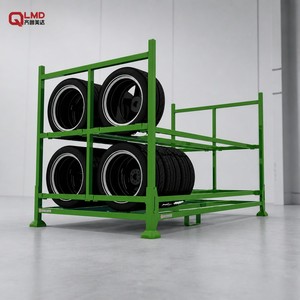
Boltless Riveted Steel Heavy Duty Storage Rack
- 5-Layer brushed anti-rust stillage
- 2000mm length, boltless lock pins
- High-yield cold-rolled steel
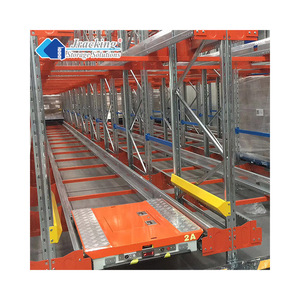
Heavy Duty CE Certified Radio Shuttle Rack System
- Automated 2-way pallet shuttle rails
- High-density FIFO/LIFO automation
- EN 15512 European structural standard
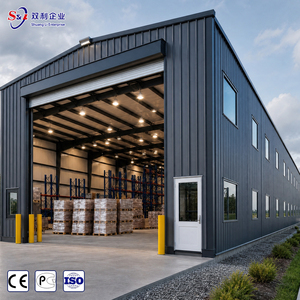
Industrial Steel Warehouse Mezzanine Platform
- Multi-tier storage multiplying usable floor
- Custom stairs, safety gates & handrails
- Integrated catwalks for pick modules
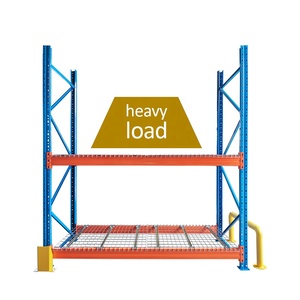
Selective Pallet Racking Warehouse Storage
- 100% immediate pallet selectivity
- Fully compatible with EPAL & EUR sizes
- Upright frames pitch adjustable at 50/75mm
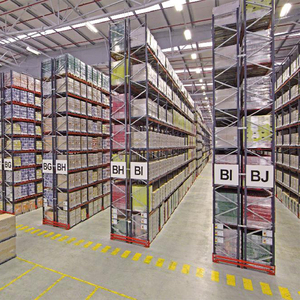
Adjustable Heavy-Duty Racking (2000kg-2500kg)
- High-tensile Q355B / S355JR structural steel
- Heavy box beams with secure locking claws
- Engineered for seismic slab tie-down
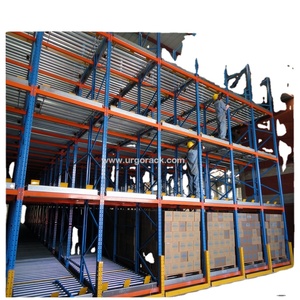
Order Picking Gravity Flow Roller Racking System
- Full-width galvanized rollers & wheel tracks
- Centrifugal speed brakes for smooth glide
- Automatic mechanical pallet separators
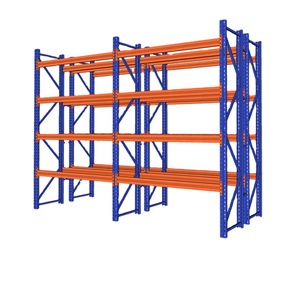
Customized 5-Layer Industrial Steel Pallet Shelf
- Tailored upright depth for specialized loads
- Heavy wire decking or solid steel panel options
- Multi-stage electro-powder coating
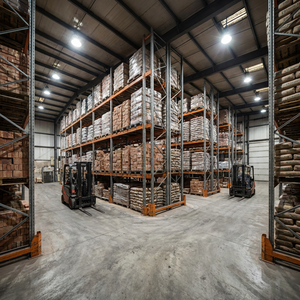
OEM Heavy Duty Selective Pallet Racking System
- Complete contract OEM/ODM engineering
- Structural hot-rolled & roll-formed profiles
- Strict quality validation to EN & RMI codes
Physics & Kinematics of Dynamic Pallet Flow Systems in Italy
In modern high-throughput intralogistics across Northern and Central Italy, warehouse footprint optimization has transitioned from a competitive advantage into a operational necessity. Known locally as scaffalature a gravità per pallet (o rulliere a gravità), roller pallet racking operates on an inclined dynamic bed (typically angled between 3.0% and 4.0% slope) relying exclusively on gravitational kinetic energy. This design facilitates an autonomous, strictly enforced First-In, First-Out (FIFO) flow pattern that maximizes space utilization by up to 60% compared to traditional selective racking arrangements.
From an engineering perspective, gravity pallet flow systems eliminate the need for operational access aisles between pallet bays. Pallets are fed from the upper loading aisle (charging face) and move controlled down the lane by gravity to the discharge face. To prevent excessive terminal velocity and pallet collisions, dynamic roller systems integrate two critical kinematic components: centrifugal speed controllers (magnetic or mechanical brake rollers) and end-of-lane mechanical load separators.
Centrifugal Brake Rollers & Velocity Control Dynamics
As standard EUR-1 (800 × 1200 mm) and EUR-2 / industrial (1000 × 1200 mm) pallets traverse dynamic lanes spanning anywhere from 4 to 30 pallets deep, their acceleration is governed by the gravitational vector $F_g = m \cdot g \cdot \sin(\theta)$ opposed by rolling resistance and mechanical braking forces. Unchecked acceleration on a 25-meter lane would result in severe terminal impact upon the front-stop, causing pallet splintering, structural fatigue, or cargo collapse.
Our OEM/ODM gravity roller systems integrate gear-driven internal centrifugal brake rollers spaced systematically along the track—typically every one or two pallet lengths depending on unit loads ranging from 300 kg to 1,500 kg. When a pallet rolls over the brake roller, its linear speed drives internal planetary gears. At velocities exceeding 0.30 m/s, internal brake shoes expand outward against the roller housing, establishing a counter-rotational friction torque that caps pallet transit speed at a safe, uniform 0.20 to 0.25 m/s regardless of individual pallet load variance.
Critical Italian Pallet Standard Interaction (EPAL Bottom-Board Direction)
In Italian distribution hubs, the bottom-board orientation of standard EPAL wooden pallets dictates roller bed configuration. Running pallets with bottom boards perpendicular to the rollers creates discontinuous chatter and rapid roller bearing wear. For longitudinal conveyance, our engineering utilizes triple-track split-roller channels with zinc-coated steel rollers mounted on hex shafts, preventing deflections and ensuring smooth transit even if lower pallet deckboards possess slight splintering or natural bow up to 8mm.
Mechanical Load Separators: Relieving Backpressure at Pick-Face
In high-density gravity lanes containing 15 to 25 pallets in series, the aggregate hydrostatic backpressure exerted on the lead pallet at the unloading face can reach several metric tons. For instance, in a 20-deep lane loaded with 1,000 kg pallets on a 3.5% gradient, the combined hydrostatic thrust acting on the first pallet exceeds 6,860 Newtons. Under such pressure, standard Italian reach trucks and counterbalance forklifts cannot safely extract the front pallet without dangerous friction drag and mast strain.
Our engineered systems deploy automatic mechanical safety separators. As the lead pallet glides into the final discharge stop, it triggers a floor-mounted rocker arm that disengages the roller section and raises a heavy-duty mechanical stop in front of the second pallet. This isolates the second pallet by approximately 150mm–300mm, absorbing 100% of line backpressure. Only when the forklift operator safely lifts and clears the lead pallet does the spring-loaded release linkage reset, permitting the subsequent pallet to advance safely to the pick face.
Pallet Flow vs. Alternative High-Density Racking in Italy
Direct technical comparison between engineered dynamic gravity roller systems, automated radio shuttles, and static high-density formats for Italian industrial operations.
| Storage System Format | Operating Principle | Footprint Utilization | Cycle Time / Speed | Seismic Adaptation (NTC 2018) | Ideal Applications |
|---|---|---|---|---|---|
| Gravity Roller Flow (Pallet Flow) | Strict FIFO (Gravity-Fed Dynamic) | 85% - 90% Max density | Continuous Gravity Glide (0.25 m/s) | High (Integrated dynamic dampening) | Food & Beverage, Cold Stores, Date-Sensitive Fast Goods |
| Automated Radio Shuttle | FIFO or LIFO (Lithium Battery Shuttle) | 80% - 88% High density | Intermittent (Shuttle positioning cycle) | Moderate to High (Specialized rail bracing) | Deep-freeze storage, Bulk manufacturing buffers |
| Drive-In / Drive-Thru Racking | Strict LIFO (Lift truck enters bay) | 65% - 75% Moderate | Slow (High collision hazard entry) | Requires Heavy Portal Bracing (Class 2/3) | Uniform seasonal stock, Low SKU diversity |
| Push-Back Cart System | Strict LIFO (Nested Cart Trolleys) | 70% - 78% Moderate | Moderate (2 to 6 pallets deep push) | Standard Floor Anchorage | Medium-turnover multi-SKU distribution, Staging lanes |
| Standard Selective Racking | 100% Immediate Pallet Accessibility | 35% - 45% High aisle loss | Fast individual pick, high travel distance | Standard Baseplate Anchor Embedment | Spare parts hubs, Low-volume broad-SKU sorting centers |
Italian Industrial Applications & Geographic Corridors
Tailoring engineered roller pallet racks to the specific structural, seismic, and hygienic demands of Italian manufacturing ecosystems.
Italy represents one of Europe's most specialized and demanding intralogistics landscapes. From the dense logistics spine extending from Milan, Piacenza, and Bologna along the Via Emilia corridor to the manufacturing hubs of Veneto and Lombardy, industrial real estate commanding record square-meter leasing costs makes volumetric space optimization imperative. Furthermore, Italy's stringent seismic safety code—Norme Tecniche per le Costruzioni (NTC 2018)—enforces structural design parameters far more rigorous than standard Central European racking specifications.
Emilia-Romagna Food Valley & Cold Chain
Strict FIFO compliance is non-negotiable for Italian PDO/PGI agri-food staples, including Prosciutto di Parma, Parmigiano Reggiano ripening warehouses, and industrial dairy. In cold chain facilities operating from -25°C to -30°C, space heating and cooling costs are proportional to cubic volume. Gravity flow systems maximize cold-store capacity while special cold-resistant roller bearings with synthetic low-temperature lubricants prevent roller freeze-up.
Pharmaceutical & Cosmetics Hubs (Lombardy)
Clustered around Milan, Monza, and Bergamo, the Italian chemical-pharmaceutical sector demands total lot traceability and zero expiry obsolescence. Pallet flow channels allow seamless separation of quarantine, incoming inspection, and released inventory. Smooth galvanization prevents flake contamination, maintaining cleanroom compatibility and compliance with European Good Distribution Practices (GDP).
Automotive Tier-1 & Industrial Equipment (Piedmont / Veneto)
Supplying assembly corridors near Turin and Bologna requires precise Just-In-Time (JIT) line sequencing. Heavy structural gravity racks buffer metal castings, stamped components, and drivetrain modules in standard steel stillages or wire baskets. Reinforced entry guides withstand heavy counterbalance mast interaction, while heavy-duty rollers rated at 150kg–240kg per roller resist shock loads.
Italian Logistics Trends: NTC 2018 Seismic Compliance & Transizione 5.0
Procuring pallet racking within the Italian Republic entails rigorous adherence to regional seismic risk zonings (Zone 1 through Zone 4) regulated by NTC 2018 (Capitolo 7: Costruzioni in zona sismica) and harmonized with UNI EN 15512 (Steel static storage systems – Adjustable pallet racking systems – Principles for structural design) and UNI EN 16681 (Adjustable pallet racking systems – Seismic design). In seismic-active zones such as Central Italy, Friuli-Venezia Giulia, and sections of Campania and Emilia, dynamic gravity racks provide unique engineering advantages over fixed tall racking.
Because pallets in a dynamic gravity rack rest upon rolling bearings on an incline, a significant portion of horizontal ground acceleration during a seismic tremor is absorbed through base friction slippage and dynamic roller dampening, rather than transmitting entirely into the structural steel columns. However, our OEM designs integrate enhanced heavy-gauge baseplates with dual concrete mechanical expansion or chemical epoxy resin anchors, braced upright trusses, and structural beam connectors that prevent transverse harmonic resonance.
Aligning with Piano Transizione 5.0 & Sustainable Green Warehousing
Under Italy's newly rolled out Piano Transizione 5.0, companies investing in physical logistics assets that deliver certified energy consumption reductions of at least 3% to 5% across production processes can access substantial tax credit incentives (crediti d'imposta). Gravity roller pallet racking represents an optimal zero-power logistics technology:
- Zero Electricity Consumption: Unlike automated AS/RS stacker cranes or motorized continuous conveyors, gravity flow lines operate solely on gravity, yielding zero direct kWh consumption for internal buffering.
- Drastic Reduction in Forklift Fleet Mileage: By isolating loading and retrieval aisles on opposite sides of the rack, forklift operating distances are reduced by up to 40%, lowering battery recharging demands and tire degradation in electric reach fleets.
- Compatibility with AGVs/AMRs: Italian warehouses increasingly deploy automated guided vehicles (carrelli a guida autonoma) for end-of-line pallet intake. Our OEM gravity flow discharge beds are engineered with precision optical sensor targets and zero-backpressure alignment stops for automated picking robots.
OEM/ODM Engineering Capabilities Built for Export Excellence
Nearly 70 years of precision structural manufacturing, rigorous material certifications, and custom fabrication tailored for international logistics contractors and Italian distributors.
Structural & Roll-Formed Integration
We combine high-yield cold-rolled profiles with heavy structural hot-rolled channel steel. Whether specifying teardrop-compatible patterns or European standard 50mm/75mm adjustable upright configurations, our automated roll-forming lines maintain precision hole punching tolerances within ±0.2mm along 12-meter continuous vertical uprights.
Automated Powder Coating Lines
Our multi-million-euro finishing facilities include automated shot-blasting, multi-stage phosphate pre-wash, and electrostatic powder coating. Cured at 200°C, our epoxy-polyester coatings exceed 500 hours of continuous salt-spray testing, delivering superior impact resistance, hygienic washdown compatibility, and custom RAL matching for Italian brand specifications.
Full Turnkey Engineering & Seismic Design
Every OEM/ODM shipment destined for the Italian market is backed by complete finite element method (FEM) structural calculations, verified beam deflections (limited strictly to L/200 under full load), slab punch resistance verifications, and tailored installation anchor blueprints ready for submission to local Italian civil engineers (Genio Civile).
Frequently Asked Questions for Italian Procurement Teams
Detailed structural, regulatory, and logistics answers addressing typical queries from Italian warehouse managers, system integrators, and procurement directors.
How do your roller pallet racking systems comply with Italian NTC 2018 and UNI EN 15512 standards?
All structural uprights, horizontal beams, bracing diagonals, and anchor footplates are modeled and manufactured in accordance with European standard UNI EN 15512 and the seismic calculation parameters of NTC 2018 (D.M. 17 gennaio 2018). When an order is placed for an Italian project site, our engineering team requires the site postal code to extract the specific seismic acceleration parameters ($a_g$, $S_s$, $S_t$) from the INGV database. We calculate base shear, inter-story drift, and frame stability under dynamic earthquake scenarios, providing certified structural calculation packets signed by structural engineers for municipal building authority permits (Deposito presso il Genio Civile).
What roller bed configuration is recommended for mixed EUR-1 (800x1200) and EUR-2 (1000x1200) pallets?
For operations handling both standard EUR-1 (800mm wide face or depth) and EUR-2/UK pallets (1000mm width), we engineer triple-track roller lanes featuring split steel rollers or high-durability polycarbonate staggered roller beds. This configuration guarantees that regardless of pallet orientation, all three bottom skids (runners) make uninterrupted contact with at least two roller lines simultaneously. For standard single-SKU lanes, full-width galvanized steel rollers (dia. 50mm or 60mm with precision ball bearings) provide maximum stability, supporting up to 1,500 kg per pallet position.
Can these dynamic gravity systems function reliably in cold storage and blast freezers down to -30°C?
Yes. We routinely export roller beds engineered specifically for deep-freeze logistics in Italian cold storage chains. Standard grease can solidify and lock bearings below -10°C; therefore, our sub-zero roller assemblies utilize hermetically sealed stainless steel or zinc-plated bearings packed with synthetic low-temperature aerospace-grade grease rated to -40°C. Centrifugal brake rollers for cold stores feature specialized non-hydroscopic friction linings to eliminate moisture condensation and ice glazing, preventing brake lockup or slippage.
What is the typical gradient tolerance required during installation on an Italian warehouse slab?
Standard gravity pallet flow lanes require a consistent longitudinal slope between 3.2% and 3.8% (approximately 35mm to 40mm of fall per meter of lane run). To accommodate deviations in building slab flatness (according to UNI EN 15620 Class 300 or 400 tolerances), our upright systems incorporate heavy-duty adjustable footplates with calibrated shims and multi-position beam connecting clips. This allows fine-tuning of the roller bed slope in 0.2% increments during physical commissioning to match the specific friction profile of the client's wooden or plastic pallets.
What OEM/ODM customization options are available for Italian racking distributors and system integrators?
We provide full-scope white-label manufacturing and ODM customization. This includes custom upright punching pitches (50mm or 75mm European standards), client-branded color schemes via automated electrostatic powder coating (standard RAL 5010 Blue, RAL 2004 Orange, RAL 7035 Gray, or bespoke company shades), proprietary beam connector claw tooling, custom pallet separator trip-mechanisms, and personalized brand labeling on roll-formed components. Documentation and installation manuals are supplied fully unbranded or customized with your corporate identity.
What are the shipping container logistics and lead times for export orders delivered to Genoa or La Spezia ports?
Components are pre-bundled in high-density steel cradles and weatherproof shrink-wrap designed for optimal cube utilization in standard 40ft High Cube (40'HQ) shipping containers. Uprights are nested, while roller lanes are pre-assembled in modular 3-meter or 4-meter cassette lengths to minimize onsite installation labor. Manufacturing lead times for standard 5 to 20-container OEM orders range between 25 and 35 working days. Ocean transit to primary Italian gateways (Genoa, La Spezia, Naples, or Trieste) typically requires 24 to 32 days, complete with full export documentation, EUR-compliant packing lists, Mill Test Certificates (EN 10204 Type 3.1), and CE declaration documentation.
Ready to Engineer Your Gravity Pallet Flow System in Italy?
Consult with our senior pallet racking structural engineers. Share your building layout drawings, pallet load specifications, and local Italian seismic requirements for a comprehensive structural analysis, lane velocity simulation, and direct OEM/ODM quotation.