Industrial Pallet Racking Systems Ready for Seoul Hub Deployment
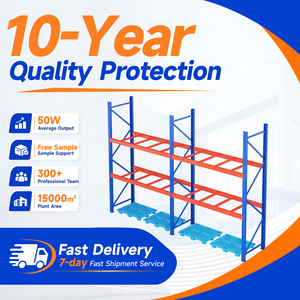
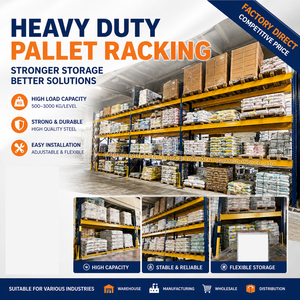
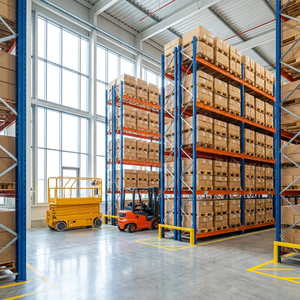
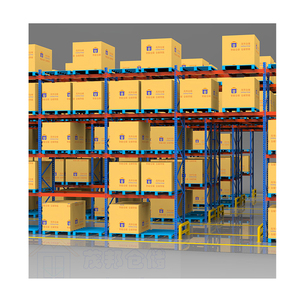
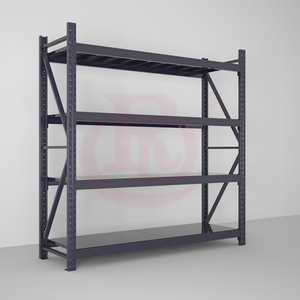
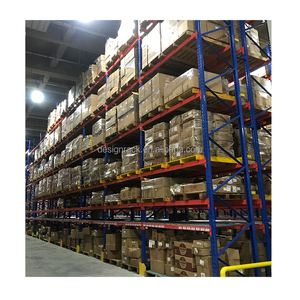
Precision roll-formed and structural steel storage racks manufactured under ISO 9001 and ANSI MH16.1 specifications, customized for cold storage fulfillment, cross-dock centers, and high-cube automated distribution hubs.
The Intralogistics Revolution in the Seoul Metropolitan Area (SMA)
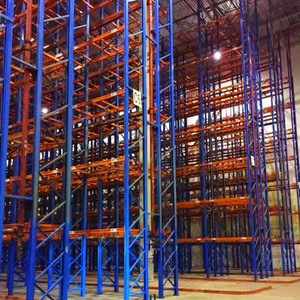
The Seoul Metropolitan Area—encompassing Seoul Special City, Incheon Metropolitan City, and the surrounding Gyeonggi Province (collectively known as Sudogwon)—represents one of the most hyper-dense consumer and logistics hubs on earth. With roughly 26 million inhabitants concentrated in less than 12% of South Korea's territory, warehouse space has transformed into an ultra-premium asset. Land prices across primary logistics corridors such as Icheon, Yongin, Gimpo, and Pyeongtaek have climbed to record highs, compelling warehouse operators, 3PL providers, and major e-commerce leaders (including Coupang, Market Kurly, and CJ Logistics) to move away from conventional single-tier floor layouts toward extreme verticality, high-cube automated pick towers, and automated storage and retrieval systems (AS/RS).
As international supply chain planners and domestic enterprise buyers evaluate racking suppliers for Seoul fulfillment sites, structural integrity, certified steel chemistries (such as high-tensile SS275, SM355, or international equivalents like ASTM A1011 and Q235B/Q355B), and precision fabrication tolerances represent non-negotiable baselines. Below is an engineering overview of the Top 10 manufacturers and export partners capable of meeting and exceeding the engineering thresholds required by the Seoul logistics market.
Top 10 Steel Pallet Racking Manufacturers & Exporters Serving Seoul
Comparative assessment of engineering capabilities, manufacturing footprint, seismic structural testing, and local delivery execution for South Korean distribution facilities.
| Manufacturer / Brand | Origin | Structural Specialization | Compliance / Certifications | Seoul Market Footprint |
|---|---|---|---|---|
| UNARCO Material Handling | USA | Heavy Structural C-Channel & T-Bolt Roll-Formed | RMI (ANSI MH16.1), ISO 9001, Seismic Engineered | Tier-1 Multi-national Exporter / AS/RS Towers |
| AJIN Rack (아진랙) | South Korea | Selective Drive-In, Medium-Duty Roll-Formed | KOSHA Standards, ISO 9001 | Domestic Hubs (Gyeonggi-do, Incheon) |
| SSI Schaefer Korea | Germany / Global | Automated AS/RS, Pallet Shuttle, VNA Systems | EN 15512, FEM 10.2.02, ISO 14001 | Mega E-Commerce Distribution Centers (Incheon/Yongin) |
| Dexion (Gonvarri Group) | Europe / Global | Heavy Duty Selective, Mobile Racking (MOVO) | EN 15512, FEM, ISO 9001 | Cold Storage Facilities in Pyeongtaek / Hwaseong |
| Samsung Logistics Systems (SLS) | South Korea | Automated Material Handling & High-Bay Racks | KDS 41 Seismic Code, KS Standards | Semiconductor, Electronics & High-Tech Supply Chains |
| Mecalux International | Spain / Global | Clad-Rack Warehouses, Automated Pallet Shuttle | ANSI MH16.1, EN 15512, ISO 9001 | High-Cube 3PL Logistics Corridors |
| Daifuku Co., Ltd. (Korea Division) | Japan / Global | Unit Load High-Bay AS/RS Rack Structures | JIS B 8941, ISO 9001, KDS Compliant | Automotive Parts & High-Volume Retail Depots |
| Hanel Racking Systems Korea | South Korea | Customized Selective Racks, Cantilever Arm Racks | ISO 9001, Local Industrial Permits | General Industrial Warehouses across Gimpo & Hanam |
| Jungheinrich Korea | Germany / Global | Narrow Aisle (VNA), Pallet Flow & Shuttle Systems | FEM 10.2.02, DIN EN 15635, ISO 9001 | Pharmaceutical & Temperature-Controlled Depots |
| Interlake Mecalux (Global Export) | USA / Global | High-Density Push-Back, Bolted Structural Frames | RMI Certified, AISC Specification Compliant | Export Projects to Foreign Direct Investment (FDI) Plants |
Engineered Racking Applications Across Greater Seoul Sectors
Sudogwon's supply chains operate under severe land-use restrictions, hyper-rapid delivery deadlines, and aggressive turn rates. Here is how modern racking systems are architected on the ground.
E-Commerce & "Dawn Delivery" Fulfillment
South Korea's renowned Saetbyeol Bae-song (Dawn Delivery) pioneered by Market Kurly and Coupang's Rocket Delivery relies on high-velocity order consolidation. Multi-tier carton flow pick modules and mezzanine structures integrated directly into multi-level pallet flow systems allow pickers to clear thousands of line items per hour within dense Gyeonggi warehouses without cross-aisle traffic delays.
Cold Chain & Sub-Zero Storage (Incheon Port)
In the sub-zero facilities (-25°C to -40°C) situated near Incheon Port and Gimpo Free Economic Zone, real estate cooling expenses are enormous. High-density drive-in, push-back nested cart systems, and automated radio shuttles dramatically compress footprint, minimizing refrigerated cubic airspace while maximizing structural steel ductile performance under extreme thermal contraction.
Automotive & Semiconductor Clean Parts (Hwaseong / Pyeongtaek)
Supporting industrial giants in the Gyeonggi southern industrial belt requires zero-deflection tolerances. Structural C-channel racking and heavy-duty selective beam configurations house massive stamping dies, delicate lithium battery packs, and semiconductor clean-room spares, equipped with custom wire-mesh decking and anti-drop safety baffles.
Strategic Trends Shaping Pallet Racking in South Korea
Three structural shifts are transforming warehouse racking specifications from simple shelving into advanced, connected civil-structural assets.
1. Multi-Story Ramp-Up Distribution Centers
Because industrial land values in Icheon and Yongin exceed $1,500 to $2,500 per square meter, new warehousing is almost exclusively built as 4 to 8-story facilities with spiral concrete truck ramps reaching top tiers. These layouts require ultra-low-profile baseplates and customized beam spans that align precisely with interior reinforced concrete building columns and ceiling fire sprinkler risers.
2. Stringent Seismic Enforcement (KDS 41)
Following seismic events in Gyeongju and Pohang, the Ministry of Land, Infrastructure and Transport (MOLIT) revised building codes. Pallet racks exceeding 6 meters in height are classified as non-structural building components requiring site-specific dynamic response spectrum analyses, oversized anchors with minimum effective embedment depths, and cross-aisle top-tie seismic trusses.
3. Autonomous Mobile Robot (AMR) & AS/RS Hybridization
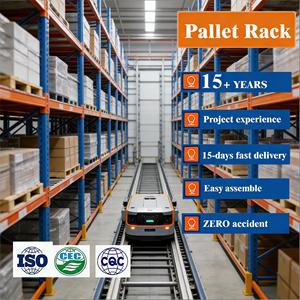
Widespread labor shortages across Korea's manufacturing sector have accelerated AMR adoption. Modern selective and double-deep racking installations now integrate laser-guided AMR pick corridors with bottom pick elevations engineered for floor-running robots, while upper tiers support bulk replenishment via narrow-aisle turret trucks.
Engineered to Protect Capital Investment & Floor Crews
Unlike commercial brokers who supply generic cold-formed sections, our fabrication lines prioritize heavy structural ductility, cold-formed tensile integrity, and state-of-the-art corrosion shielding.
-
✓Precision Steel Sourcing: Fabricated utilizing certified Q235B/Q355B and high-yield cold-rolled steel coils, delivering certified yield strengths of 235 to 355 MPa without micro-fracturing at beam connection weldments.
-
✓Automated Multi-Stage Powder Coat: Utilizing multi-stage pre-treatment, shot-blasting, and automated electrostatic powder coating lines curing at 200°C for superior chemical and abrasion resistance against rough forklift tine strikes.
-
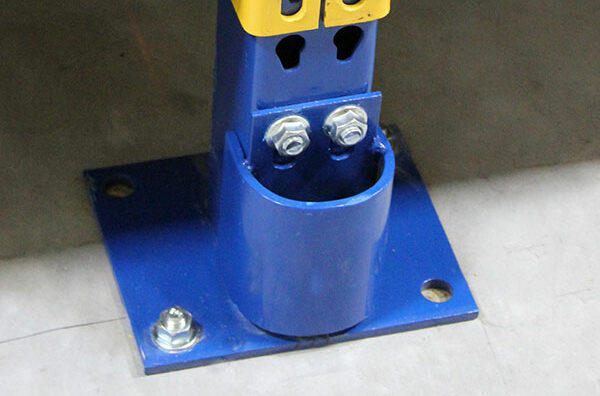
✓Custom Impact Mitigation: Patented heavy-gauge column protectors, wrap-around post guards, and bolted structural end-row shields designed to absorb forklift collisions up to 10 kJ impact energy without upright collapse.
-
✓Comprehensive Turnkey Verification: From Initial CAD floor plan optimization and anchor embedment calculations through project engineering, export crating, and on-site assembly supervision.
Frequently Asked Questions by Korean Warehouse Directors
Essential technical considerations when importing, planning, and deploying heavy-duty steel pallet rack systems in the Republic of Korea.
How do imported steel racking systems comply with South Korea’s KBC 2016 / KDS 41 seismic building regulations?
Under Korean Building Code (KDS 41 17 00), industrial storage racks with a height exceeding 6 meters are classified as non-structural storage equipment subjected to seismic design forces. Our structural engineering department uses Finite Element Analysis (FEA) to verify the baseplate dimensions, anchor bolt diameters (typically Hilti or Fischer mechanical/chemical wedge anchors), and cross-aisle bracing patterns against localized Korean ground acceleration coefficients (typically 0.11g to 0.22g based on Zone I/Zone II site classifications). Full engineering calculations and PE stamps can be supplied for local architectural review.
Can standard overseas pallet racks fit South Korea’s T-11 standard pallets?
Yes. The standard Korean industrial pallet is the KPS T-11 (1,100mm × 1,100mm), which differs slightly from the European EUR-pallet (800mm × 1,200mm) and North American GMA pallet (40" × 48" or 1,016mm × 1,219mm). We engineer custom beam lengths—typically 2,500mm or 2,700mm clear bay openings with standard 1,000mm to 1,050mm upright depths—to accommodate two T-11 pallets per bay with the required 75mm to 100mm clear flue space mandated by Korean fire insurance regulations.
What are the concrete slab thickness requirements for high-load racking in Gyeonggi logistics hubs?
Modern Gyeonggi distribution centers are generally engineered with reinforced concrete floor slabs measuring 200mm to 300mm in thickness, rated for distributed floor loads between 3.0 and 5.0 metric tons per square meter (30–50 kN/m²). Before specifying baseplate sizes, we require concrete core compressive strength data (f'c, typically ≥ 24 MPa). For systems exceeding 8 meters in height, oversized baseplates and staggered dual-anchor patterns are deployed to prevent concrete edge breakout and anchor pull-out failure.
What finish is recommended for sub-zero cold chain facilities near Incheon Port?
For temperatures between 0°C and -40°C, we advise either heavy-duty hot-dip galvanized (HDG) steel components (conforming to ASTM A123 / ISO 1461) or specialized low-temperature polyurethane powder coat coatings. Galvanizing prevents micro-corrosion caused by constant condensation and defrost cycles, eliminating rust-flaking that could compromise sanitary conditions in food logistics.
How does containerized export freight work for complete multi-tier racking projects?
Structural beams and upright frames are bundled with customized protective dunnage and heavy-duty steel banding to avoid transit abrasion. Bundles are loaded via open-top or 40-foot High-Cube (40HQ) maritime shipping containers directly routed to Incheon Port (ICN) or Busan New Port (PUS). Clear shipping marks, color-coded installation tags, and precise packing lists correspond directly to the approved CAD erection drawings for smooth on-site staging and installation.
Plan Your Next Seoul Distribution Center with Professional Engineers
Whether you are designing a high-throughput e-commerce warehouse in Icheon, a cold chain freezer near Incheon Port, or an automated automotive hub in Pyeongtaek, our structural design team is ready to analyze your floor plans, calculate seismic loads, and provide comprehensive quotation estimates.
Send an Inquiry