Adjustable Heavy Duty
Explore our precision roll-formed and structural warehouse racking lines, manufactured to withstand extreme point-loading and seismic vibration across Greater Paris distribution networks.
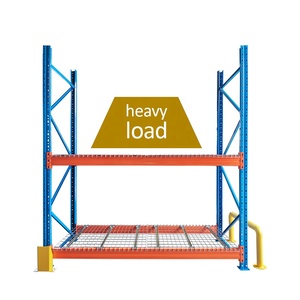
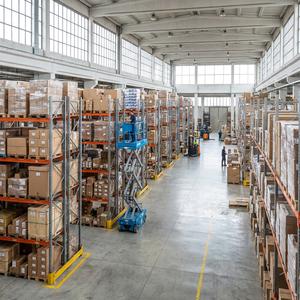
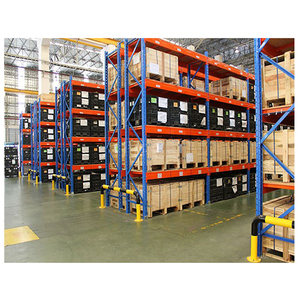
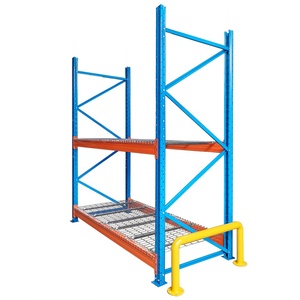
In high-bay racking design, the upright footplate—often referred to as the pallet racking foot, upright baseplate, or base shoe—is the singular critical interface transferring tremendous accumulated axial loads, horizontal shear stresses, and seismic overturn moments from vertical rack columns directly into the building's concrete slab foundation. While warehouse managers frequently direct structural evaluations toward beam deflection tolerances and upright cross-sections, structural failures overwhelmingly initiate at the floor-slab connection due to inadequate baseplate thickness, undersized anchor embedment depths, or defective non-shrink shimming.
Industrial concrete slabs constructed throughout the Île-de-France logistical corridor commonly specify compressive strengths rated between C20/25 and C30/37 according to NF EN 206+A2/CN. When upright columns support multi-tier selective pallet bays carrying up to 30,000 kg across an upright frame, the vertical concentrated force transferred to an individual leg routinely surpasses 120 kN. Without an engineered racking foot designed with optimal surface dimensions ($A_{base}$) and minimum steel gauge thickness (typically $\ge 6.0\text{ mm}$ hot-rolled structural steel or $\ge 4.5\text{ mm}$ high-tensile cold-formed steel), localized concrete crushing occurs.
Under Eurocode 2 (EN 1992-1-1) and the European storage rack design code NF EN 15512, the maximum permissible concrete bearing pressure ($\sigma_{Rd}$) must satisfy the localized design bearing resistance. Our engineered racking feet are dimensioned with precision-stamped stiffener ribs and flared perimeter contours that uniformly disperse concentrated loads, mitigating Hertzian shear cracking within unreinforced and steel-fiber-reinforced concrete floors.
Although Paris and the surrounding departments (Hauts-de-Seine, Seine-Saint-Denis, Val-de-Marne, Essonne, Yvelines, Val-d'Oise, and Seine-et-Marne) are designated as low to very low seismicity zones (Zone 1) under French decree Décret n° 2010-1255, multi-tier racking systems surpassing 8 to 12 meters in height amplify building sway modes. Under Eurocode 8 (EN 1998-1) and FEM 10.2.08, racking feet must possess verified rotational stiffness ($C_{j,\phi}$) to prevent secondary P-Delta instability during lateral seismic events or material-handling equipment (MHE) side-impacts.
Our heavy-duty seismic feet integrate pre-punched staggered anchor holes designed for heavy-duty torque-controlled mechanical wedge anchors (M12 to M16) or high-load injection chemical resin studs. This staggered geometry prevents micro-fracturing of the concrete along parallel aggregate lines, ensuring that each anchor bolt develops its full effective embedment tensile capacity ($h_{ef}$) without encountering localized slab breakout cones.
Precision-manufactured baseplates, seismic heavy-gauge boots, and slotted adjustment shims engineered to integrate with roll-formed teardrop, structural channel, and custom upright geometries.
Fabricated from high-tensile structural coil (S355JR / Q355B), stamped with multi-point bolt-hole patterns compatible with standard 75mm, 80mm, 90mm, and 100mm frame uprights. Finished with automated electrostatic powder coating or pre-galvanization for standard dry ambient warehouses.
Oversized footprint baseplates up to 160mm x 220mm x 12mm thickness. Engineered for automated storage and retrieval systems (AS/RS) and VNA systems exceeding 12 meters. Dual-channel anchor slots facilitate maximum shear dispersion across high-bay distribution centers.
Integrated combination footplates featuring monolithic reinforced front column bull-noses. Absorbs recurring dynamic reach-truck and counter-balance forklift impacts up to 400 Joules without deforming the interior load-bearing upright leg.
Laser-profiled leveling shims calibrated in 1.0mm, 1.5mm, 2.0mm, and 3.0mm increments. Slotted 'horseshoe' design allows rapid insertion beneath anchored baseplates without completely dislodging expansion anchors, fulfilling NF EN 15635 verticality tolerances.
Engineering storage foundations tailored to the diverse geology, building typologies, and regulatory standards across the Greater Paris metropolis.
Locations: Gennevilliers, Saint-Ouen, Pantin.
Challenge: Multi-story warehouse facilities built over reclaimed industrial grounds or intermediate concrete decks with strict floor point-load limits.
Footing Solution: Broad-flange load-spreading baseplates engineered to restrict floor stresses under 35 kN/m² while matching floor slab rebar patterns.
Locations: Sénart, Lieusaint, Tremblay-en-France, Roissy.
Challenge: 24/7 high-velocity operations featuring 10-meter selective pick modules and VNA automated guided vehicles (AGVs).
Footing Solution: Precision-milled anchor footings with Class 8.8 structural hardware, guaranteeing rigid vertical tolerance (< 1/750 deviation) under relentless traffic.
Locations: Rungis, Orly, Fresnes, Chevilly-Larue.
Challenge: Severe sub-zero thermal cycling (-25°C), high humidity, aggressive floor cleaning chemicals, and frost heave risks.
Footing Solution: Heavy hot-dip galvanized (HDG) racking feet conforming to ISO 1461 with insulated thermal break shims that prevent cold conduction into the foundation slab.
Locations: Poissy, Flins, Le Bourget corridors.
Challenge: Irregular heavyweight automotive molds, steel coiled sheet stocks, and metal stamping bins up to 2,500 kg per pallet.
Footing Solution: Structural channel base shoes with dual diagonal bracing tabs, engineered to transfer extreme concentrated weights without beam-to-column twist.
Regulatory imperatives, urban land scarcity, and environmental policies driving racking structural innovations across the Île-de-France region.
France's Climate and Resilience Law mandates zero net land take by 2050, severely curtailing horizontal warehouse expansion across Île-de-France. Logistics developers are forced to build vertically—deploying narrow-aisle racking systems reaching 14 to 18 meters. These towering structures elevate baseplate overturning moments, requiring high-moment-capacity foot assemblies fabricated from premium S355JR structural steel.
The acceleration of river-based logistics along the Seine axis (Haropa Port network connecting Le Havre, Rouen, and Paris) demands multimodal micro-fulfillment facilities adjacent to waterways. The alluvial soil conditions found near riverbanks necessitate specialized slab anchoring solutions where racking baseplates must accommodate micro-subsidence through adjustable leveling mechanisms.
French labor inspection authorities enforce rigorous workplace safety protocols under INRS ED 771 guidelines. Periodic warehouse safety inspections inspect damaged racking columns and dislodged footplate anchors. Facility managers across Paris increasingly mandate impact-absorbing base shoes and certified bolt-on upright repair kits that maintain structural warranties without requiring bay unstacking.
Comprehensive comparative engineering data for project engineers and procurement directors specifying racking hardware in French logistics zones.
| Footplate Series | Steel Grade / Standard | Plate Dimensions (mm) | Anchor Configuration | Design Vertical Capacity | Île-de-France Application Suitability |
|---|---|---|---|---|---|
| RF-STD-80 | S235JR (EN 10025-2) | 100 × 120 × 4.0 | 1 × M12 Anchor (Wedge) | 60 kN Static | Standard Retail / Mezzanines |
| RF-HD-100 | S355JR (High Tensile) | 120 × 140 × 6.0 | 2 × M12/M14 Staggered | 110 kN Static | General Logistics / Roissy / Sénart |
| RF-SEIS-120 | Q355B / S355 Structural | 160 × 200 × 10.0 | 2 × M16 Chemical Resin | 185 kN Dynamic | High-Bay VNA / Eurocode 8 High Bay |
| RF-COLD-HDG | ISO 1461 Galvanized Steel | 140 × 160 × 8.0 | 2 × Stainless A4-70 M12 | 130 kN Extreme Temp | Marché de Rungis Freezers (-25°C) |
| RF-SHOE-PRO | S355JR + Cast Ductile Lip | 150 × 180 × 12.0 | 3 × M16 Heavy Anchor | 220 kN Impact-Rated | High-Traffic FMCG Cross-Dock Hubs |
Synthesizing nearly seven decades of structural engineering excellence with certified French logistics compliance.
Our structural components are uniquely verified against both current Rack Manufacturers Institute (RMI / ANSI MH16.1) criteria and European standards (NF EN 15512, Eurocode 3). This dual qualification offers multinational logistics operators unprecedented structural integrity and audit readiness across both sides of the Atlantic.
Every racking foot and structural upright passes through high-capacity automated continuous conveyor powder-coating lines. Utilizing advanced multi-stage iron-phosphate wash cycles and thermosetting epoxy-polyester formulations, our finishes exceed 1,000 hours of neutral salt spray testing (ISO 9227) for extreme scratch and impact resilience.
Our dedicated structural engineering division conducts finite element analysis (FEA) on every custom upright base design, simulating floor point-loads, slab flexure, and dynamic forklift bump dynamics. We supply certified calculation notes ready for submission to French technical verification bodies (Apave, Bureau Veritas, Socotec).
In adherence to French occupational safety mandates, our patented bolt-on rack repair assemblies enable Parisian distribution centers to repair damaged bottom column sections in place. Restore damaged frame capacity up to 100% within 45 minutes without offloading upper pallet bays, minimizing operational downtime.
Authoritative technical answers addressing French safety codes, anchor certification, customs clearance, and concrete slab specifications.
Consult with our senior structural engineers today. Share your warehouse floor drawings, slab compressive specifications, and pallet load profiles for customized static baseplate calculations and factory-direct export quotations to Paris & Île-de-France.